


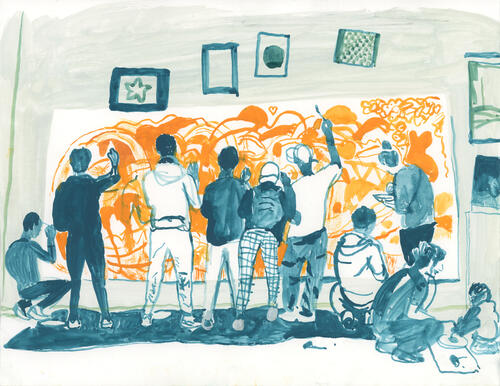
After six years of operation, Médecins Sans Frontières (MSF) is gradually withdrawing from Marseille, France. We will strengthen our work on the northern French coast, where the situation continues to deteriorate for migrants seeking to reach the United Kingdom.
Camille Niel, head of mission for France, reflects on a collective project that has helped hundreds of young people rebuild their lives.
What was the situation like for unaccompanied minors in France, and particularly in Marseille, when our project was launched in 2020?
In 2020, hundreds of young people were sleeping on the streets of Marseille in the middle of winter, due to a lack of support from public institutions. It was at this point that MSF decided to fund 100 emergency shelter beds, in collaboration with associations and collectives based in Marseille. This failure of the state prompted us to intervene more broadly and sustainably with unaccompanied minors in the city, by launching a shelter and care programme.
Unaccompanied minors are young people who arrive in France without their legal guardians. If they are officially recognised as minors by the State, they will be taken into care under child protection services, with access to education and healthcare, and cannot be detained or removed from French territory. If they are not recognised as minors, they will not receive any specific support.
Assessing their age is therefore essential. Each department in France is responsible for this and conducts an assessment through interviews with child welfare professionals. However, the results vary considerably depending on the location of these young people, with some départements (departments – administrative regions in France) having a low recognition rate. This is the case in the Bouches-du-Rhône department where Marseille is situated, even though it was for a long time the city with the second highest number of unaccompanied minors arrivals in France.

When their minority status is not recognised, these teenagers have the option of appealing this decision by petitioning a juvenile court judge. They are then referred to as “unaccompanied minors”; there were 300 such cases in Marseille in 2025. This is a lengthy process, sometimes lasting a year, during which, neither considered adults nor recognised as minors, unaccompanied minors receive no institutional support, and are left to fend for themselves, without access to housing, schooling, or medical care.
This extreme vulnerability has serious consequences for their physical and mental health. Many of the young people we encountered over these six years presented symptoms and disorders requiring long-term care, and for whom referral to appropriate psychological treatment facilities was essential.
In six years of operation, approximately 150 young people were accommodated by our teams, and nearly 1,500 consultations were carried out in the “MSF house”, a building that belonged to the Marseille city hall, where our teams took care of often very complex cases.
The situation of unaccompanied minors in Marseille remains problematic. They continue to be among the most excluded and invisible communities.Camille Niel, head of mission for France
Can you tell us about this house?
It was at the heart of the MSF project in Marseille. Its unique feature was that, beyond providing shelter, it offered comprehensive multidisciplinary support to the young people it housed: access to state medical aid (AME in France), education, transportation, a registered address, and basic necessities (clothing, hygiene products, food etc.). Furthermore, all the young people received support in their academic and professional development, and the majority of them were able to access apprenticeships.
On the legal front, our team assisted them with appeals related to their minor status, helping them obtain civil status documents and navigating the procedures for those who reached adulthood (residence permits and Youth Protection Certificates). It was also crucial that these young people become independent.
The organisation of the house and communal living, to which they contributed significantly, played a particularly important role. When we made the decision to withdraw from Marseille, the reorganisation was very gradual, and the teams took the time to support the young people until the very end of the project. They have all now left home with an alternative accommodation solution, social support, and stabilised health pathways.
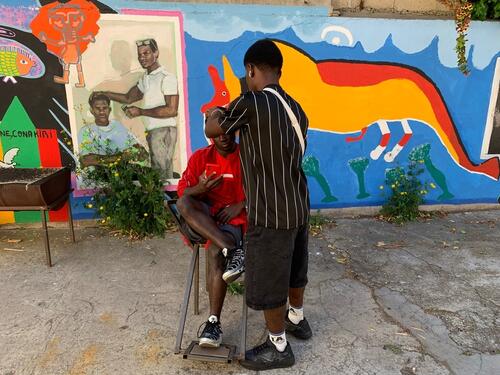
What is their profile?
Many were in difficult family situations before embarking on their journey or had fled armed conflicts. They took different routes, some passing through Libya against their will, sold by smugglers to human traffickers, or through Tunisia, managing to board a makeshift boat to cross the Mediterranean Sea. Most arrived via Italy, while others entered Europe through Spain via Morocco and Algeria.
Each journey carried its share of risk, violence, and suffering – right up to their arrival in France, and even once they arrived in the country. They have experienced traumatic events; for example, in Libyan detention centres, where torture is commonplace, or while crossing the Mediterranean. Some have lost one or more of the people they were travelling with, whether a friend or a family member. They have faced death and must live with that.
All have experienced the rejection of their minor status by the departmental authorities, following an assessment considered biased, even prejudiced, by organisations that support unaccompanied minors, including MSF. The assessment itself and its outcome are experienced as yet another act of violence, with this institutional violence all the more difficult for these young people to endure, because they were convinced they would finally be safe in France after months of travel. They were able to find respite within the “GR1”, a collective project created in 2024 by organisations based in Marseille.
It is essential that public authorities abandon their logic of exclusion... of unaccompanied minors, and work... to build dignified, legal, and sustainable reception conditions.Camille Niel, head of mission for France
What role does this structure play?
The needs of unaccompanied minors far exceed our capacity, particularly given the Bouches-du-Rhône department’s refusal to assume its responsibilities regarding child protection and shelter. With several partner organisations – Yes We Camp, Just, Secours Catholique, Ligue de l'enseignement, and the Salvation Army Foundation – we mobilised by creating a place called “GR1”, a name that refers to the gathering of young people in the Sahel region to chat over a cup of tea. It is the only day centre for unaccompanied minors in Marseille.
It is designed to be a true haven and provide respite for these young people. They can rest, wash, eat and cook, take French classes, receive support with legal procedures and access medical care. Up to 80 young people have been welcomed there daily. For two years, the MSF medical team provided medical consultations twice a week and offered individual sessions with a psychologist once a week.
For these teenagers, each day spent at the GR1 is one less day spent on the street, and an additional chance to rebuild their lives. The programme is now well established after several years of collaborative work and consultation. It is a model worth defending, a shared space that continues to thrive beyond its founding organisations, even if its foundations still need strengthening in the future.

You mentioned the needs of unaccompanied minors, which far exceed the capacities of associations – could you explain?
The GR1 is attempting to provide a response, notably with the support of the City of Marseille, and the Marseille community is mobilising extensively. However, these organisations are facing the underfunding of public services that affects all associations in France. Despite this, they are being called upon to address a reality that exceeds their capacity.
The situation of unaccompanied minors in Marseille remains problematic. They continue to be among the most excluded and invisible communities. This neglect exposes them to abuse, criminal networks, the dangers of life on the streets, and extremely strong stigmatisation, which is politically exploited.
We are faced with a policy implemented by the department that creates a largely avoidable situation and forces associations to step in where the state is failing. It is essential that public authorities abandon their logic of exclusion and invisibility of unaccompanied minors, and work with local stakeholders to build dignified, legal, and sustainable reception conditions.
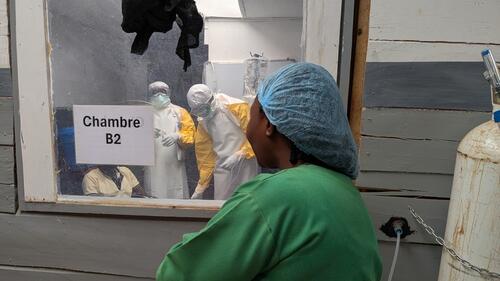
DRC Ebola outbreaks
Ebola disease outbreak spreads like a megafire in North Kivu as new hotspots multiply
Project Update
5 Oct 2026