


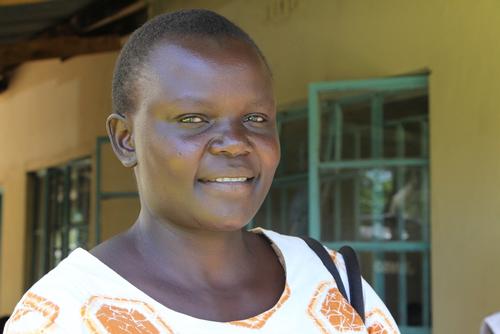
“My mane is Esther OREGE, I am 41 years old and I have five children. When we discovered that I was infected by HIV, in 2001, my husband left me. I was alone; I was sick and sad, so weak also. Then I joined the HIV program in Homa Bay and I could receive anti-retroviral for free. But it was far from my home, it cost me 400 KSH to go there and come back every month.
Fortunately, today, I can walk to Ndhiwa hospital to get my treatment, and I only need to come once every three months. And I am confident in the future, I can work, I take care of my family”.  *** Local Caption *** On April 11th, 2014 –Médecins Sans Frontières (MSF) and local health authorities officially launched a new HIV program that they will jointly run in Ndhiwa sub-county, Homa Bay County, in Western Kenya. In this region, more than one fourth of the population is leaving with HIV.
During the 4 years of activities, the program will aim at reducing the number of new infections among the population as well as the mortality related to HIV. This will be made possible by implementing universal and regular testing for the whole population of Ndhiwa sub county and setting up early quality treatment for people living with HIV as well as providing quality care for people hospitalized. Furthermore, the increase access to viral load testing will help ascertain that patients are at the lowest risk of transmitting the virus
The MSF / Ministry of Health program will focus on simplifying the way healthcare is provided to patients, through an adaptation of medical protocols and the inclusion of non-medical workers in the provision of care. Such medical protocols will include encouraging the community to get tested and receive ART as early as possible if found infected to reduce transmitting the virus to others, as well as to support adherence to the treatment. Systematic screening and provision of ART for all HIV positive pregnant women will be implemented, in order to reduce mother-to-child transmission (PMTCT) of the virus. HIV testing program will also be integrated in routine immunization programs for young children. Medical male circumcision will also be key in impacting the rate at which men get infected.
© Jean-Christophe Nougaret/MSF

Testimony: Esther Orege from Ndhiwa

© Jean-Christophe Nougaret/MSF
Ebola disease in DRC: find out how we're responding
Learn more

“My name is Esther Orege, I am 41 years old and I have five children. When I discovered that I was HIV-positive, in 2001, my husband left me. I was alone, I was sick and I was sad. I was also very weak. Then I joined MSF’s HIV programme in Homa Bay and was able to receive antiretroviral (ARV) treatment for free. But it was far from my home, and it cost me 400 KSH to go there and come back every month.

Fortunately, today, I can walk to Ndhiwa hospital to get my ARV drugs, and I only need to come once every three months. When we come to the clinic, there is a health educator who gives us advice in a group on our health, our treatment, nutrition… Then we give in our cards and we are called in, one by one, to be weighed and to see the doctor. We are asked if anything has changed, if we are well, and if there are any upcoming issues. Now my CD4 count [the number of infection-fighting white blood cells in the blood] is done every six months. When we come back for the next clinic, we are given the results. They update our files and then we collect our drugs from the pharmacy just behind the building. It is so much easier than before.

I am confident that, in the future, I will be able to work and I will be able to take care of my family. I’m going to live to my old age. Already I have a granddaughter, and I hope I will live to see my great grand-daughter.”