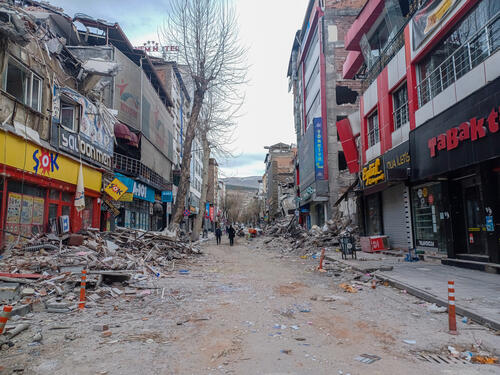
After the initial earthquakes that struck south Türkiye and northwest Syria, the region has registered hundreds of aftershocks, adding to the death toll, material damage and trauma of the survivors.
One month on, the search and rescue phase is over. While the dust has settled among the rubble, the needs remain acute. Ahmed Rahmo, Médecins Sans Frontières (MSF) project coordinator in Idlib, Syria, highlights the current medical and humanitarian needs, as well as our activities and support in the two countries.
What’s the situation in Türkiye and Syria today?
In northwest Syria, in the governorates of Idlib and Aleppo where we are present, the earthquakes compounded an already desperate humanitarian situation. The 180,000 people that have been displaced by the earthquakes add to the 2.8 million people already living in difficult and precarious circumstances after being displaced repeatedly during 12 years of war.
In Türkiye, as of 4 March, according to official numbers more than three million people have been forced to leave their homes, of which more than 1.5 million are now living in tent towns. The earthquakes have impacted 11 provinces, hosting 16 per cent of people in the country. Some of the quake-hit areas of Türkiye were already hosting millions of Syrian refugees in a very vulnerable situation and living in precarious shelters.
Despite the significant response by the authorities and the solidarity of the Turkish civil society, there are still unmet needs for many people affected by the earthquakes.
What are the most urgent needs?
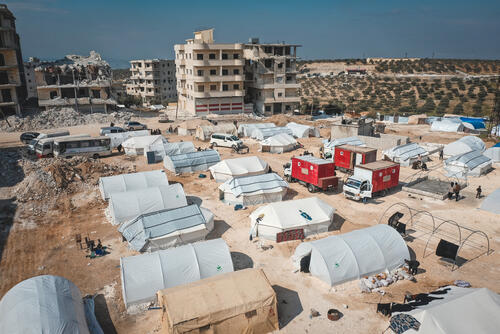
A lot of displaced people still don’t have shelter, food, clean water or any access to basic necessities. People need medical assistance, toilets, showers, heating systems, winter clothing, generators, blankets, hygiene kits and cleaning products. The acute emergency phase is over, however, people still urgently need relief support.
Many people have also lost their homes, livelihoods, relatives and loved ones, and are living through very hard times. Most people are sad, desperate, anxious, uncertain about the future and live with constant fear and post-traumatic stress caused by aftershocks on a daily basis. Many relive the experiences in their minds and believe that the destruction they have experienced could happen again. Hence, the provision of psychosocial support is crucial.
We continue to call for more access points to be made available for humanitarian support to enter northwest Syria.Ahmed Rahmo, MSF project coordinator in Idlib, Syria
In northwest Syria, where the healthcare system was already very weak , 55 healthcare facilities have been damaged and are not fully functioning.
How is MSF responding to this crisis?
In Syria, our teams are supporting the functioning health structures in Idlib and Aleppo governorates. We are also running mobile clinics, providing basic medical care and mental health in reception centres and displacement camps in both governorates. Our teams are also distributing relief items and kits to people who need them.
In Türkiye, we are working in partnership with different local organisations and civil societies to provide much-needed humanitarian and relief assistance.
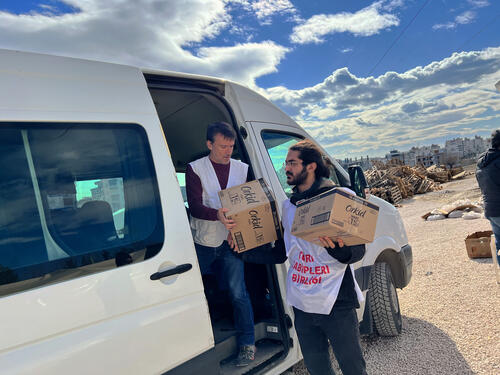
Among our support through partner local organisations in Türkiye, we continue to donate medical, food, water and logistical supplies, as well as hygiene kits and relief items, including blankets, electrical stoves and thermal undergarments to help people withstand cold temperatures.
We have also supported water and sanitation needs by constructing showers and toilets in makeshift camps. Our teams are supporting psychosocial activities, targeting survivors, volunteers and search and rescue teams through individual and group work.
Are people in Syria receiving enough support?
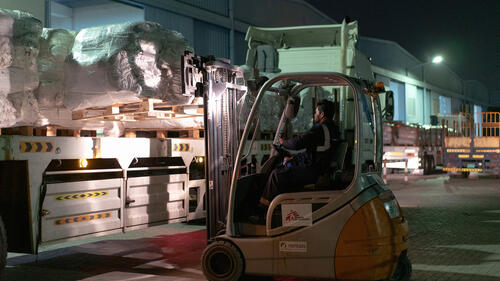
The humanitarian aid coming into northwest Syria has been extremely limited and too slow. There is still an enormous need for shelter, safe drinking water, washing facilities and heating equipment. Bab Al-Hawa is the main UN-supported humanitarian crossing between Türkiye and northwest Syria, through which essential lifesaving medical supplies can enter the region.
On 13 February, two additional humanitarian crossing points from Türkiye to northwest Syria, Bab Al-Salam and Al Ra’ee, were opened for an initial period of three months.
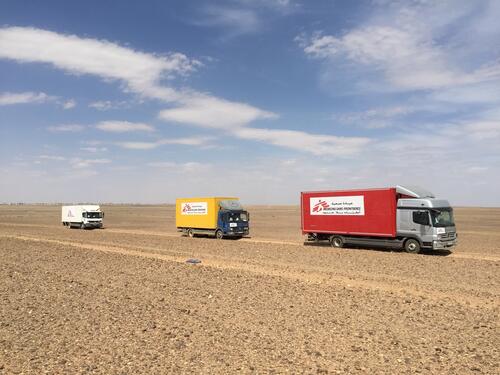
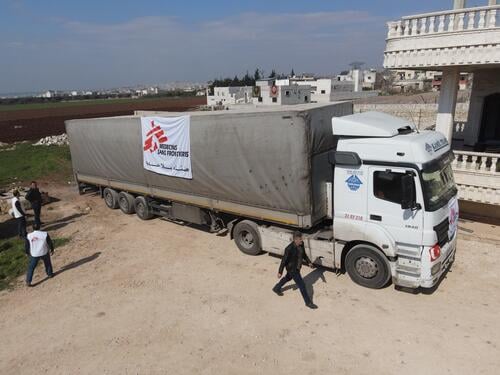
Although a second MSF convoy of 15 trucks crossed into northwest Syria on 26 February, with the facilitation of Al Ameen, supplies, especially for surgical procedures, are dwindling. The reality is, that the aid available to people in Syria is extremely far from sufficient. We continue to call for more access points to be made available for humanitarian support to enter northwest Syria.
In northwest Syria, MSF is currently supporting hospitals including a burns unit, in addition to general healthcare centres and ambulances for referrals. We also support mobile clinics and non-communicable diseases clinics serving displaced people in camps, and run water, sanitation and hygiene activities close to camps across the northwest.
In Türkiye, in collaboration with various partner local organisations supporting people in affected areas, our teams are constantly assessing and adapting our assistance to best respond to medical and relief needs. So far, our supported activities have taken place in locations such as Gaziantep, Malatya, Adiyaman, Hatay, Elbistan, Nurdağı, Kilis, Islahiyeh, Defne, Samandag, Antakya, Narlicia, Pazarcik, Iskenderun and Kahramanmaraş city.
Türkiye and Syria earthquake response
Six months of humanitarian action after earthquakes in northwest Syria
Project Update
11 Aug 2023
Syria
UN Security Council fails Syrian people with cross-border resolution collapse
Press Release
8 Aug 2023