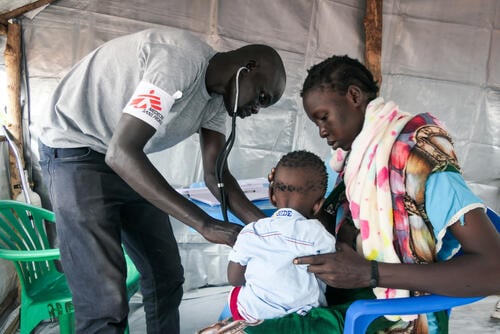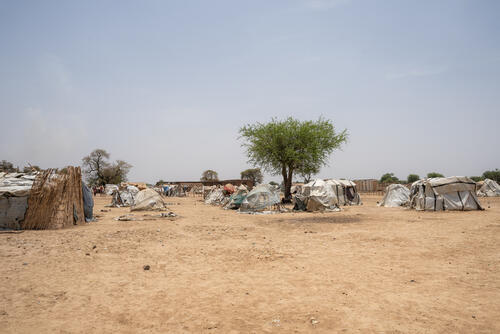
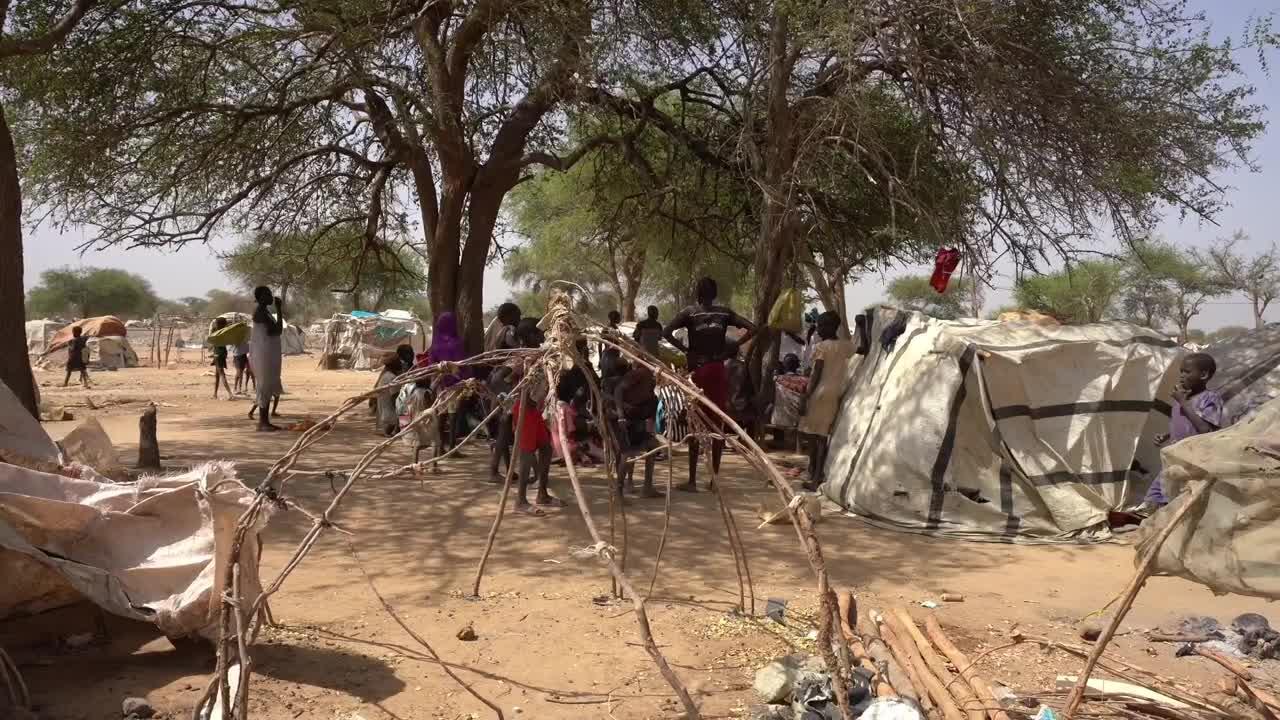
A group of more than 50 people have gathered under the shadow of a tree where Peter, a mental health counsellor for Médecins Sans Frontières (MSF) and Margaret Abuk, MSF community health worker, are conducting an awareness and educational session. It is a normal day in Gomgoi camp, South Sudan, where 10,000 people who were displaced due to violence, have settled since February 2022 after fleeing the city of Agok, located a few dozen kilometres north.
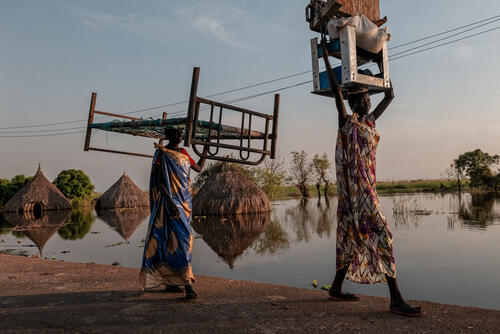
In this region of Warrap State, which lacks food, water and healthcare services, and faces recurrent outbreaks of diseases, displaced families in Twic County are encountering a dire situation, exacerbated by floods that have affected the west side of the county.
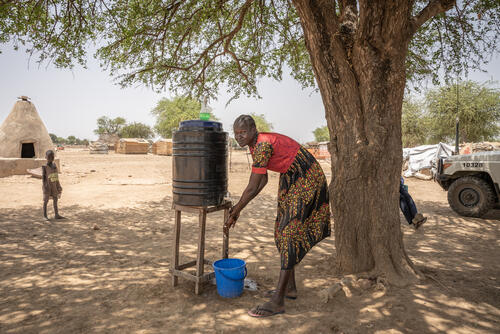
The floodwater destroyed the crops and made it impossible to harvest more, creating food shortages. Displaced families have lived for over a year in makeshift camps made of wooden sticks, and pieces of fabrics or plastic sheeting.
Video
Twic: One year on
Fleeing the violence and settling in camps
Margaret Abukis one of the people who fled south into Twic County. Since then, she has been living in a shelter with her three daughters, in Majak Aher camp, next to Turalei town.
“Because of the conflict, because we were afraid, because people were killing us and our children, we had to run,” says Abuk. “I decided to come to Turalei because I knew there was public administration and protection, as well as non-governmental organisations who could help us in the camp.”
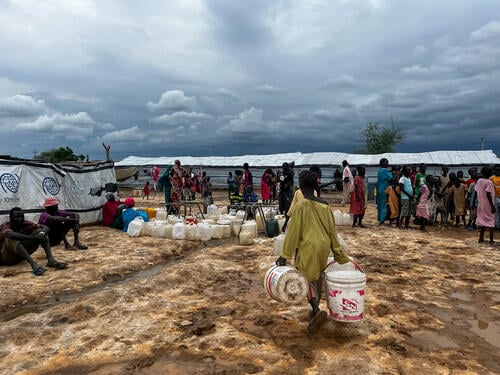
MSF moved activities from Agok — where we had been running a hospital for eight years — to respond to the urgent needs of the newly displaced people. Since March 2022, we have been providing humanitarian and medical assistance to displaced people within Twic County. Our teams have also distributed food, plastic sheeting, and other relief items, and built latrines and water points in six of the seven makeshift camps.
Today, 30,000 people are still living in dire conditions in the camps. Our teams have witnessed the consequences of violence and displacement through our patients.
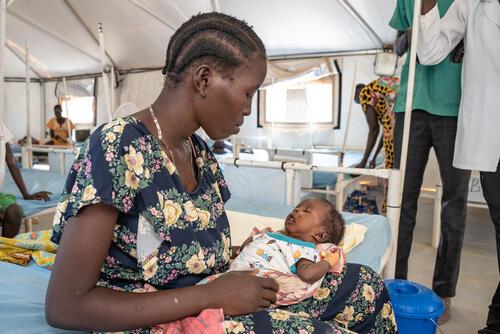
Amou Lang Deng is the mother of Adhar Deng, a 16-month-old girl, who suffers from severe acute malnutrition. She was admitted to the MSF-supported clinic of Mayen-Abun for fever and diarrhoea. The baby is anaemic and needs regular blood transfusion while still being fed through a nasogastric tube (a tube that carries food and medicine to the stomach through the nose).
“Life in the camp is very difficult as there is no food,” says Amou Lang Deng. “There are some organisations, but delays between distributions are significant, and the quantities are insufficient. When you look at my children, you can tell that food is missing, because they are very skinny.”
Providing comprehensive care
Since August 2022, MSF’s work shifted from an emergency response to comprehensive and decentralised medical care through an 86-bed hospital in Mayen-Abun, two health posts in Gomgoi and Nyin Deng Ayuel, and four community sites in the camps.
The conflict is still ongoing and considering that this area is likely to get flooded during the rainy season, the situation could become even more difficult for people here.Beatriz Martinez de la Fuente, MSF project coordinator in Twic County
At the MSF-supported clinic in Mayen-Abun, our teams work hand in hand with the Ministry of Health to provide comprehensive care, from outpatient consultations to emergency and maternity care. We also opened a chronic care unit to treat patients suffering from diseases such as HIV or tuberculosis.
In addition, our teams offer psychological support to people traumatised by violence and dire living conditions in the camps. To reduce the number of patients in the MSF-supported clinic in Mayen-Abun, we have started providing consultations in accessible locations inside the camps, or nearby health posts.
Challenges and gaps
The numbers of patients received in the MSF-supported healthcare facilities reflect the alarming extent of healthcare needs for people in the host communities and those who have been displaced.
“We receive many children with moderate or severe acute malnutrition,” says James Tikuei Nyibango Okoth, MSF medical activity manager in Twic County. “They come mainly from camps, but also from the host community, because food is missing all over the region.”
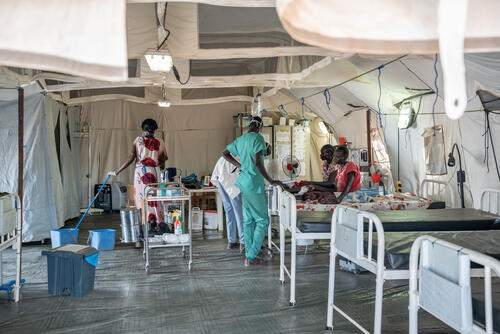
“We face an influx of patients suffering from malaria during the rainy season and a high number of malnourished children during the dry period. Our teams are stretched to capacity, and the needs are immense. If a patient is bleeding, or a pregnant woman has an obstructed labour, it is very difficult,” says Okoth.
MSF is rehabilitating an operating theatre in a hospital in Turalei, a one-hour drive from Mayen-Abun during the dry season. Another challenge is the climate, as the recurrent floods that occurred in the region for the past three years not only make many areas inaccessible, but also result in high peaks of waterborne diseases such as malaria.
More support needed
“The situation is still very severe,” says Beatriz Martinez de la Fuente, MSF project coordinator in Twic County. “The conflict is still ongoing and considering that this area is likely to get flooded during the rainy season, the situation could become even more difficult for people here.”
Given that the rainy season will worsen living conditions as well as increase the health needs, more support is needed from other medical and humanitarian organisations.
“We continue to run our medical programmes, but there are acute needs for food, water supply, sanitation, shelter and protection,” says de la Fuente.
While this region, along with other parts of South Sudan, suffer from soaring needs, cuts to funding or reduced humanitarian assistance put the lives of many in danger.
South Sudan
Aid woefully inadequate for returnees stuck in deplorable conditions in Renk
Press Release
3 Oct 2023