



Ebola disease in DRC: find out how we're responding
Learn more
7998 Results
 
Detail of the concertina wire.
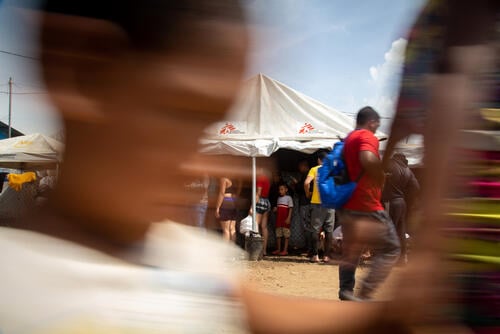
Refugees, IDPs and people on the move

Death, despair and destitution: The human costs of the EU’s migration policies

Our latest report on the migration crisis unfolding across Europe illustrates a shocking embrace of violent tactics, sanctioned by EU policies and EU member states. Report - 20 Feb 2024
 
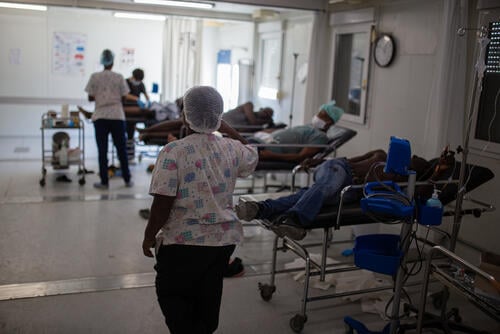
In June, in collaboration with the Ministry of Health, MSF team has started supporting Umdawanban hospital in Khartoum State, to improve healthcare services for the communities. Our teams are working to enhance essential paediatric, nutrition, and maternity services. Additionally, we provide vital support in energy, water, sanitation, and hygiene, in the hospital. MSF bought a generator for the hospital and is working on the water supply lines. In the first two weeks of the intervention, we've reported: approximately 250 admissions in maternity, 107 normal deliveries, and more than 80 admissions for paediatrics with 20% newborns.
Conflict in Sudan

Addressing myriad medical needs amidst conflict in Sudan

Our deputy medical coordinator in Sudan, Dr Mohammad Bashir, shares his experiences in providing desperately needed healthcare in the country amidst the relentless conflict. Voices from the Field - 15 Feb 2024
 
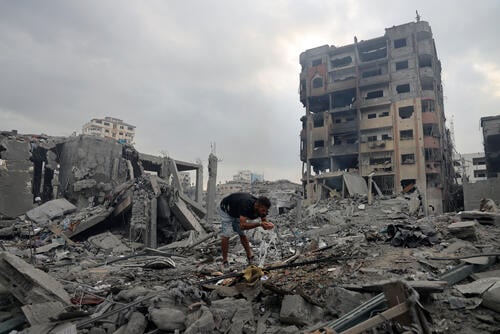
Nasser hospital
Gaza-Israel war

Displaced people forced to evacuate Nasser hospital have nowhere to go in Gaza

Israeli Forces have issued an evacuation order to thousands of displaced people sheltering inside Nasser hospital, Gaza, Palestine, leaving them with nowhere to go. Press Release - 14 Feb 2024
 
msf-placeholder
Activity Report

test 11:22

MSF medical resource - 13 Feb 2024
 
Palestinians in Rafah on the Egyptian border – once a town of 300,000, but now hosting 1.5 million displaced people from all over Gaza – struggle to find clean water for drinking, cooking or washing. Living conditions for people in this part of the enclave are desperate – a result of the overcrowding and of the lack of clean water, toilets, showers and sewerage systems, aggravated by the cold winter weather.
Gaza-Israel war

Ground offensive on Rafah would be catastrophic and must not proceed

Meinie Nicolai, MSF Director General, warns of the potentially catastrophic consequences of a ground offensive on Rafah in Gaza. Statement - 12 Feb 2024
 
Commune of Ranobe, Amboasary District.

People in the south-east of Madagascar are facing the most acute nutritional and food crisis the region has seen in recent years. MSF began setting up mobile clinics in Amboasary district in late March to screen and treat acute malnutrition in remote villages like those of Ranobe commune, providing ready-to-use therapeutic food and medical care.
Burkina Faso

MSF marks one year since the killing of two colleagues in Tougan

MSF pays tribute to our colleagues who were brutally killed while delivering humanitarian aid in Burkina Faso one year ago. Project Update - 9 Feb 2024
 
Medical staff providing treatment inside the MSF-supported Bolomba Ebola treatment center.
Ebola and haemorrhagic fevers

Vaccination halves mortality among people infected with Ebola

A study conducted by MSF's Epicentre and other research organisations confirms the importance of vaccination against Ebola during epidemics: vaccination reduces not only the risk of infection, but also the risk of death. Press Release - 8 Feb 2024
 
Youssef Al-Khishawi, an MSF water and sanitation agent, oversees a water distribution for displaced people in the southern Gaza town of Rafah’s Saudi neighborhood.
 He says: “In a normal situation, one person needs two to three liters of drinking water per day. Now, with the current shortage, the average for one family of six is one gallon of water (3.8 litres).” 

“The main challenge we face in distributing water is the lack of fuel to pump and transport it,” says Al-Khishawi. “The second is the lack of proper roads for our trucks to drive on, because there are tents even on the asphalt. The third is that there are no water distribution points – even they have been bombed. Water pipes, streets and infrastructures are destroyed.”
Gaza-Israel war

Lack of clean water brings disease and suffering in Gaza

Palestinians in southern Gaza are struggling to find clean water. The flow of humanitarian aid into Gaza must be restored to ensure people have access to essential items such as food, water and healthcare. Project Update - 8 Feb 2024
 
View of the intensive care unit building at the general referral hospital of Mweso, North-Kivu, supported by MSF teams since 2005 in partnership with the Ministry of Health. Between January and June 2023, about 1,400 admissions were recorded in the intensive care unit.
Democratic Republic of Congo

People and medical facilities caught in crossfire as violence escalates in North Kivu

A new wave of armed clashes in North Kivu, DRC, over the past couple of weeks has caused thousands of people to flee and MSF medical teams receiving huge influxes of war-wounded patients. Press Release - 7 Feb 2024
 
Contextual images of the impact of the earthquake taken on 7 February 2023. Idlib province, Northwestern Syria. 
MSF does not necessarily operate in the locations depicted here.
Türkiye and Syria earthquake response

One year after earthquake, mental scars are still raw in Syria

People in northwest Syria continue to struggle with the mental health impacts of more than a decade of war, compounded by the devastating earthquakes that struck the region on 6 February 2023. Project Update - 6 Feb 2024
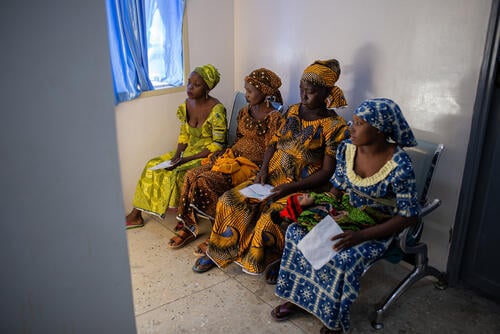
Four mothers posing in a corridor of the Hospital in Bili. All four of them are staying in the hospital with their child, that's suffering from a severe case of malaria. Since the beginning of the project in 2016, the pediatric ward already treated more than 4.000 cases of complicated/severe form of malaria.
Médecins Sans Frontières (MSF)

Independent medical humanitarian assistance

We provide medical assistance to people affected by conflict, epidemics, disasters, or exclusion from healthcare. Our teams are made up of tens of thousands of health professionals, logistic and administrative staff - most of them hired locally. Our actions are guided by medical ethics and the principles of independence and impartiality. We are a non-profit, self-governed, member-based organisation.

Learn more