



Ebola disease in DRC: find out how we're responding
Learn more
7999 Results
 
msf-placeholder
South Sudan

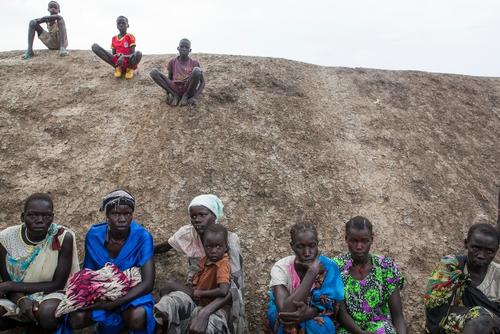
Dramatic influx of displaced people threatens medical crisis at PoC camp

“Many people arriving in the Malakal camp have been displaced for weeks or months already with extremely limited access to food and medical care,” says Victor Escobar, MSF project Coordinator in Malakal. “These already-vulnerable people urgently need a sanitary space to live and access to medical care. Otherwise, their health will continue to suffer.” Project Update - 21 Aug 2015
 
Between Chétimari and Gagamari, 17000 refugees from Nigeria have settled after fleeing their village Damasak, Northern Nigeria, from the threat of attacks from Boko Haram group.
Niger

Influx of Nigerian refugees in the Diffa region continues

"The families fled Nigeria in May, leaving everything behind while Boko Haram reduced their village to ashes. The refugees are now entirely dependent on humanitarian aid. While they have quickly built huts, and some have received plastic tarpaulins and other essential supplies, most do not have access to drinking water, and the hygiene conditions are appalling," says Ahmad Samro, MSF's Project Manager, about the situation in Diffa. Voices from the Field - 20 Aug 2015
 
MSF water distribution in Minawao/Gawar camp.
Cameroon

Tens of thousands flee Boko Haram violence

Tens of thousands of people in northern Cameroon are in need of humanitarian aid after fleeing attacks by Boko Haram in neighbouring Nigeria.“Boko Haram burned our house and took all our cows and belongings,” says Samuel, from Nigeria. “They kidnapped my wife and two of my children and held them in one of their jails. My wife managed to escape and is trying to join me in Minawao, but I don’t have any news of my children. I don’t even know if they are still alive.” Project Update - 20 Aug 2015
 
Situated in the Lake Chad region, the site of Koulkimé in Chad hosts approximately 1,800 displaced people according to OCHA. They have fled Islamic State's West Africa Province (ISWAP), also known as Boko Haram, as well as military operations carried out by the Chadian government.  MSF is working together with the Chadian Ministry of Health to support the primary health centre in Koulkimé.
Lake Chad Crisis

Lake Chad: Populations fleeing Boko Haram violence

Since May 2013, violent insurgencies by Boko Haram have led to widespread displacement and an escalating humanitarian crisis in the Lake Chad region. According to UNHCR figures, nearly 1.4 million people have been internally displaced in northeast Nigeria alone, and approximately 170,000 people have fled to neighbouring Cameroon (56,000), Chad (14,000) and Niger (100,000). At least 1,300 people have died so far this year. Crisis Update - 20 Aug 2015
 
msf-placeholder
Lebanon

Heat wave adds to the woes of Syrian refugees in Bekaa Valley

In Lebanon’s Bekaa Valley, temperatures have reached as high as 42 degrees. The heat isn’t just bringing discomfort; it’s bringing sickness. “We provide medicine and our health promotion teams explain how to reduce the spread of infection, but we can’t change the underlying cause of these problems, which are poor hygiene and precarious living conditions,” says Dr. Wael Harb, head of MSF's medical activities in the Bekaa. Project Update - 20 Aug 2015
 
On the morning of 26 August,  the MY Phoenix, jointly operated by MSF and MOAS was asked to standby as the Swedish coast guard ship, Poseidon, rescued an estimated 450 people from a wooden boat. The MOAS crew handed out life jackets and the MSF medics were asked to assist directly on board as there were many critical cases. Dr Simon Bryant and nurse Mary-Jo Frawley went into the hull of the boat, where they were literally lifting people’s heads out of the water to check if they were alive. A critical patient suffering from suspected fuel inhalation was stabilized in the MSF clinic onboard the Phoenix and medevac'ed via helicopter for further treatment on land.
At that point a second wooden boat carrying 550 people appeared and the MOAS search and rescue team immediately commenced rescued operations. More than 415 people were brought on the MY Phoenix, bringing the boat to capacity the remained 125 people were taken on board the Poseidon. Whilst this rescue was still underway, a rubber dinghy with an estimated 100 people on board arrived on the scene. The MOAS crew transferred the men, women and children on board to an Italian naval vessel, which was also on the scene.
“ The deaths of these 52 people today show that search and rescue is just a bandaid. It is merely a temporary solution to Europe’s failures, and not even a truly effective one.  Despite the increase in SAR efforts since late April, the death count still keeps mounting.  The only way to actually put an end to these avoidable tragedies is to create safe and legal ways for people to migrate or seek asylum in Europe. People's desperation to flee and survive forces them into taking these dangerous boats, into the hands of people who profit from their willingness to risk it all in the search of safety of Europe. Today, just like yesterday, Europe’s policy makers have blood on their hands. It is time for a change, a radical rethink and we need it now” -  Will Turner – MSF Emergency Coordinator on the MY Phoenix
Mediterranean migration

Proactive search and rescue operations essential life-saver

“Increasingly, we see that we are required to carry out multiple rescues from multiple boats within a matter of hours”, said Lindis Hurum, MSF Emergency Coordinator on board of the Bourbon Argos. “Our teams have also encountered boats with people who had already died from dehydration or asphyxiation during the journey. To me this suggests that despite the EU response supposedly being ‘bigger and better’ than last year, there are not enough boats available and in the right spot to adequately respond to the needs of those crossing the Mediterranean.” Project Update - 20 Aug 2015
 
msf-placeholder

Flood victims vulnerable to dengue fever

“This is peak dengue season and we need to remain vigilant after the floods to prevent further spread,” says Liesbeth Aelbrecht, MSF Myanmar Country Director. “We will focus on helping treat the disease as well as training Ministry of Health staff and volunteers on how to fumigate potential breeding sites and to spread messages to communities about dengue prevention.” Project Update - 17 Aug 2015
 
msf-placeholder
Project Update

A month in focus: August 2015

Ebola: a hope-bringing vaccine; Lebanon: Lives ruined by the conflict; Tanzania: Cholera, a new threat to Burundian refugees; Malawi: In the over-populated prisons; Antivenom serums: In worrying shortage; Yemen: "You come and do the work!".

Project Update - 17 Aug 2015
 
msf-placeholder
Syria

Airstrikes on nine hospitals in Idlib province, 11 civilians killed and 31 wounded

“These recent attacks are a clear violation of International Humanitarian Law, which prohibits military attacks on hospitals," says Sylvain Groulx, MSF's Head of Mission for Syria. "Airstrikes are capable of targeting specific buildings and these hospitals are known locations. They must be respected as neutral spaces where civilians can safely access their right to healthcare services. Civilians continue to suffer the daily brunt of this war with a massive number of deaths and injuries.” Statement - 14 Aug 2015
 
Achan Sleeps With Feeding Tube.
South Sudan

Severe malaria season - Testimonies from malaria patients & family

“The state Ministry of Health has created a malaria task force to improve coordination,” says Adbi Fatah Mohammed, MSF’s outreach manager. “But capacity is a serious problem and there is a risk of running out of drugs later in the season.” Large spikes in malaria across South Sudan are raising the possibility of a second consecutive season marked by exceptionally high numbers of malaria cases and preventable deaths unless urgent action is taken to reinforce access to treatment in the most high-risk areas. Voices from the Field - 14 Aug 2015
Four mothers posing in a corridor of the Hospital in Bili. All four of them are staying in the hospital with their child, that's suffering from a severe case of malaria. Since the beginning of the project in 2016, the pediatric ward already treated more than 4.000 cases of complicated/severe form of malaria.
Médecins Sans Frontières (MSF)

Independent medical humanitarian assistance

We provide medical assistance to people affected by conflict, epidemics, disasters, or exclusion from healthcare. Our teams are made up of tens of thousands of health professionals, logistic and administrative staff - most of them hired locally. Our actions are guided by medical ethics and the principles of independence and impartiality. We are a non-profit, self-governed, member-based organisation.

Learn more