




Ebola disease in DRC: find out how we're responding
Learn more
123 Results
 
msf-placeholder
Ebola and haemorrhagic fevers

Ebola crisis update - 21st November 2014

The outbreak is currently affecting four countries in West Africa: Guinea, Liberia, Sierra Leone and Mali, and has claimed 5,420 lives. Crisis Update - 21 Nov 2014
 
msf-placeholder
Ebola and haemorrhagic fevers

Ebola crisis update- 7th November 2014

Since the Ebola outbreak in West Africa was officially declared on 22 March in Guinea, it has claimed 4,959 lives in the region. The outbreak is the largest ever, and is currently affecting four countries in West Africa: Guinea, Liberia, Sierra Leone and Mali. Crisis Update - 7 Nov 2014
 
msf-placeholder
Nigeria

Outbreak of cholera in Borno State

An epidemic of cholera broke out in Borno State in the northeast of Nigeria at the end of September. Already operating in this remote state that is difficult to get to and where the provision of healthcare is extremely limited, MSF is now responding to this latest epidemic. There have been 4,500 cases and 70 deaths from cholera in barely a month in Borno State’s capital and principal town Maiduguri and the number of cases continues to rise. Project Update - 3 Nov 2014
 
msf-placeholder
Ebola and haemorrhagic fevers

Ebola Crisis update - 30th October 2014

The outbreak has claimed 4,919 lives, and is currently affecting four countries in West Africa: Mali, Guinea, Liberia and Sierra Leone. Crisis Update - 31 Oct 2014
 
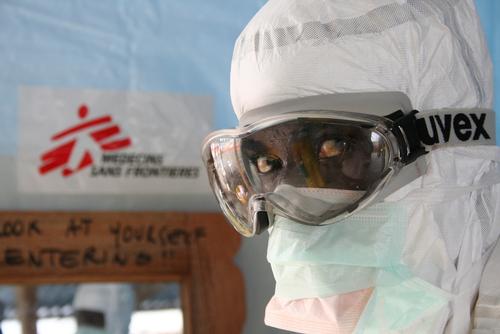
One of the MSF staff members at the Ebola management Centre in Monrovia. At the moment, MSF deployed a team of 350 people in Liberia only. A number which should increase in the days / weeks to come.
Ebola and haemorrhagic fevers

The failures of the international outbreak response

Ebola – the failures of the international outbreak response
Opinion - 29 Aug 2014
 
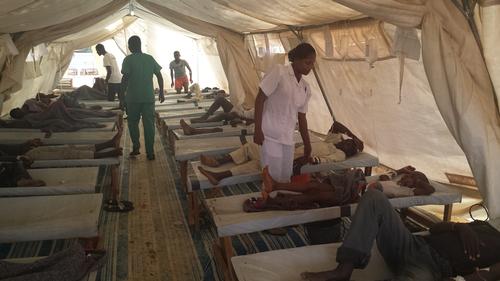
In January, Bauchi State, northeastern Nigeria, Bauchi state were affected by a cholera outbreak.  More than 15,500 cases were reported in 5 months and about 14 000 of those were treated by MSF teams two treatment of cholera center. 40 to 45% of cases were severe, requiring hospitalization for intravenous rehydration. 30 oral rehydration points were set up by MSF in the district to treat non-severe cases.<br>
It is also important to contain the outbreak through preventive measures such as targeted hygiene measures to avoid contamination (especially of drinking water). In Bauchi, water supply is mainly from either public or private wells. A total of 3 536 wells were chlorinated, 33 150 house hold contacts were traced and about 6 000 modified hygiene kits were distributed to the most affected population.
Nigeria

MSF treats overs 13,500 cholera patients

MSF combats the cholera outbreak in Nigeria Project Update - 17 Jul 2014
 
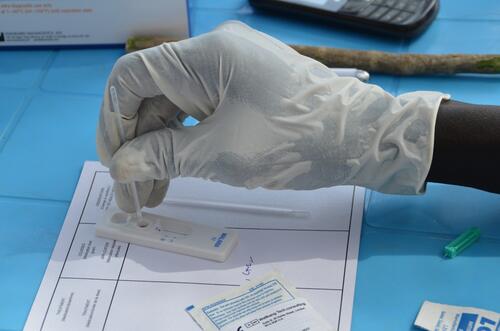
Malaria rapid test. The beginning of the rainy season is always followed by a peak of malaria cases.

MSF is providing medical care in two camps in Juba, South Sudan, where 40,000 people are seeking refuge from widespread fighting that erupted in mid-December. Over 27,000 people are living in deplorable conditions in Tomping camp. The first rains of the season have left a significant part of the camp flooded and further degraded the poor sanitation conditions.
Malaria

Paediatric Pharmacovigilance: Use of Pharmacovigilance Data Mining Algorithms for Signal Detection in a Safety Dataset of a Paediatric Clinical Study Conducted in Seven African Countries

Use of Pharmacovigilance data mining algorithms for signal detection in a safety dataset of a paediatric clinical study. Journal article - 1 May 2014
 
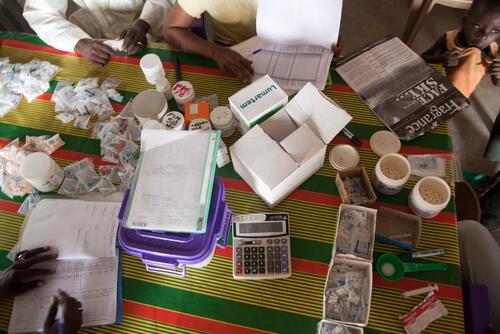
The drug dispensary at MSF's "Mango Clinic." The clinic is just outside Abare one of seven villages in Zamfara State, where MSF runs outreach clinics treating children affected by lead poisoning.
Nigeria

Association of Blood Lead Level with Neurological Features in 972 Children Affected by an Acute Severe Lead Poisoning Outbreak in Zamfara State, Northern Nigeria

Association of blood lead level with neurological features in children affected by Lead Poisoning in Nigeria. Journal article - 16 Apr 2014
 
National Reference Laboratory, Abovyan. Sputum culture is currently used to detect TB, together with chest X-rays, sputum smear microscopy and Mantoux test. However, the growth of TB bacteria in culture is the only method allowing determining complete drug-susceptibility.<br> *** Local Caption *** Treatment options for patients with drug-resistant TB remain far short of what is needed. Treatments are long (up to 2 years), toxic (serious side-effects) and expensive. Furthermore, the cure rate is only 50%.
Bedaquiline, one of two new TB drugs to be developed in 50 years, is as yet only available for compassionate use, i.e., patients for whom most antibiotics are not effective. MSF has been administering a new treatment including bedaquiline to around thirty patients in Armenia since April 2013. Although we can not draw any definitive conclusions (at this point), several patients have shown significant signs of improvement and we have not observed any side effects associated with bedaquiline until now.
But, while compassionate use of this new drug gives cause for optimism to patients who have lost hope, it is not the solution for treating the hundreds of thousands of patients worldwide suffering from DR-TB. New, shorter, less toxic and cheaper treatments including bedaquiline and delamanid, the other new TB drug, need to be developed.
Tuberculosis

Intensive-Phase Treatment Outcomes among Hospitalized Multidrug-Resistant Tuberculosis Patients: Results from a Nationwide Cohort in Nigeria

Studies on Intensive-Phase Treatment Outcomes among Multidrug-Resistant TB Patients. Journal article - 10 Apr 2014
 
In April 2010 MSF is started a measles vaccination campaign targeting 38,000 children under 5 this week at Argungu LGA (Local Government Area), Kebbi. During the campaign, 47,569 children aged 6 months to 5 years were vaccinated. The teams       
believe mobilisation of the community, which included the involvement of senior community and religious leaders, was very effective.
Nigeria

MSF responds to measles outbreak

Since the end of 2012, Katsina State in northern Nigeria has experienced a measles outbreak, which has just ended after lasting 28 weeks. MSF supported the authorities by providing epidemiological surveillance and case management in Katsina’s 34 local government areas. Project Update - 13 Aug 2013
Four mothers posing in a corridor of the Hospital in Bili. All four of them are staying in the hospital with their child, that's suffering from a severe case of malaria. Since the beginning of the project in 2016, the pediatric ward already treated more than 4.000 cases of complicated/severe form of malaria.
Médecins Sans Frontières (MSF)

Independent medical humanitarian assistance

We provide medical assistance to people affected by conflict, epidemics, disasters, or exclusion from healthcare. Our teams are made up of tens of thousands of health professionals, logistic and administrative staff - most of them hired locally. Our actions are guided by medical ethics and the principles of independence and impartiality. We are a non-profit, self-governed, member-based organisation.

Learn more