



Ebola disease in DRC: find out how we're responding
Learn more
123 Results
 
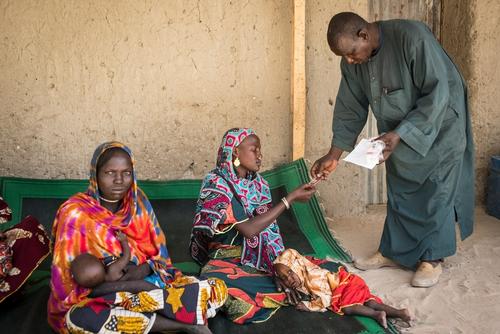
Situated in the Lake Chad region, the site of Koulkimé in Chad hosts approximately 1,800 displaced people according to OCHA. They have fled Islamic State's West Africa Province (ISWAP), also known as Boko Haram, as well as military operations carried out by the Chadian government.  MSF is working together with the Chadian Ministry of Health to support the primary health centre in Koulkimé.
Lake Chad Crisis

Lake Chad: Populations fleeing Boko Haram violence

Since May 2013, violent insurgencies by Boko Haram have led to widespread displacement and an escalating humanitarian crisis in the Lake Chad region. According to UNHCR figures, nearly 1.4 million people have been internally displaced in northeast Nigeria alone, and approximately 170,000 people have fled to neighbouring Cameroon (56,000), Chad (14,000) and Niger (100,000). At least 1,300 people have died so far this year. Crisis Update - 20 Aug 2015
 
msf-placeholder
Nigeria

“Our team is working all the time, because IDPs arrive every week.”

“None of the hospitals outside of Maiduguri and Biu are currently functioning. And most of them were completely destroyed with bombs. Those that weren’t destroyed were looted,” says Dr. Faisal Ga'al, MSF project coordinator in Maiduguri. “This is now the first stage of the crisis in Borno state, but the gaps will be huge when people start going back to their homes. They will need emergency support for some time. They are going back to zero – there is no means for people to make a living in the area.” Voices from the Field - 23 Jul 2015
 
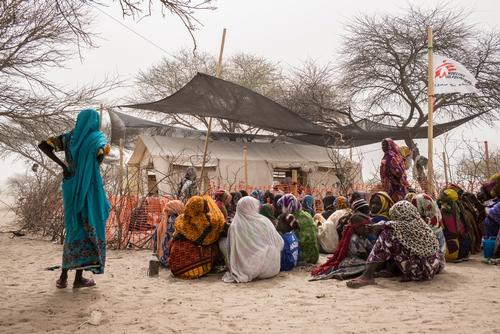
MSF mobile clinic in Forkouloum. Forkouloum is a village located few kilometers from Ngouboua which have been attacked by Boko Haram in February. Many people are displaced in the area and this mobile clinic is their only way to have healthcare. Each week MSF make 850 consultations mainly for diahhreoa and respiratory infections.
Refugees, IDPs and people on the move

Lake Chad: Waves of displacement and fear

Due to the conflict in Nigeria and the regular attacks around Lake Chad, there are today more than 1.5 million displaced people in the region looking for safety. Project Update - 19 Jun 2015
 
msf-placeholder
Nigeria

An estimated 6,000 new IDPs are living in very precarious situation in Maiduguri

New camp currently has no latrines, no water on site and insufficient shelter. Project Update - 31 Mar 2015
 
msf-placeholder
Nigeria

International Women's Day: Delivering comprehensive obstetric care for young mothers in Nigeria

eenage pregnancy is the norm in Jahun, Nigeria, leading to high maternal mortality rates. Project Update - 4 Mar 2015
 
msf-placeholder
Ebola and haemorrhagic fevers

Ebola crisis update - 13th January 2015

The Ebola outbreak in West Africa has claimed more than 8,200 lives since it was officially declared. Crisis Update - 13 Jan 2015
 
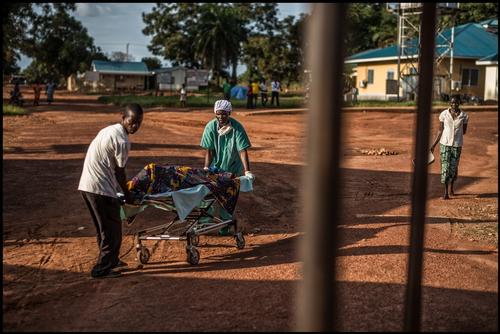
A patient is brought from the prenatal ward into the main theatre. The road to the theatre can sometimes be challenging especially, during the rainy season.
Nigeria

MSF assists survivors of deadly Boko Haram attack

An MSF team in Maiduguri is assisting survivors of Baga attack. Project Update - 13 Jan 2015
 
msf-placeholder
Nigeria

“There are only two doctors in the whole of north Borno State”

Our programme manager in Nigeria tells us what MSF has achieved in the country and the organisation’s plans for 2015. Voices from the Field - 13 Jan 2015
 
msf-placeholder
Ebola and haemorrhagic fevers

Ebola crisis update - 18th December 2014

The Ebola outbreak in West Africa has claimed 6,387 lives since it was officially declared. Crisis Update - 18 Dec 2014
Four mothers posing in a corridor of the Hospital in Bili. All four of them are staying in the hospital with their child, that's suffering from a severe case of malaria. Since the beginning of the project in 2016, the pediatric ward already treated more than 4.000 cases of complicated/severe form of malaria.
Médecins Sans Frontières (MSF)

Independent medical humanitarian assistance

We provide medical assistance to people affected by conflict, epidemics, disasters, or exclusion from healthcare. Our teams are made up of tens of thousands of health professionals, logistic and administrative staff - most of them hired locally. Our actions are guided by medical ethics and the principles of independence and impartiality. We are a non-profit, self-governed, member-based organisation.

Learn more