



Ebola disease in DRC: find out how we're responding
Learn more
123 Results
 
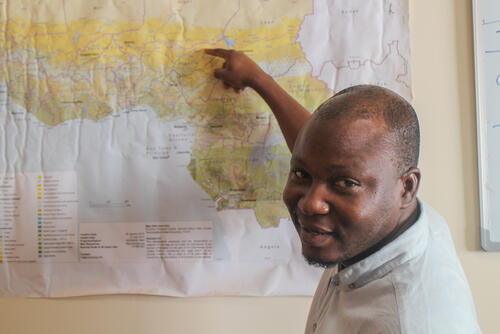
Franck Ale - MSF regional epidemiologist based in Dakar.
Cholera

How to identify the causes of an epidemic and respond strategically

Epidemiologist Franck Ale explains the cholera situation in the Lake Chad region and how surveillance and investigation are helping to identify the causes of epidemics and guide strategic responses by MSF and others. Interview - 21 Aug 2019
 
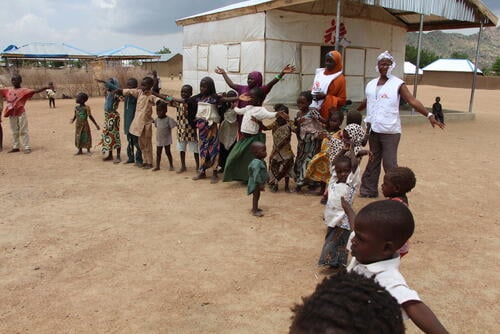
Many children in Pulka have experienced very distressing situations – such as losing parents and relatives to the violence and witnessing killings. MSF’s mental health team provides indoor and outdoor recreational activities for children and encourages them to express themselves, for example in drawing sessions, to help identify who needs their support.
Nigeria

More mental health support needed for people in Pulka

Desperate living conditions and a lack of protection in Pulka, northeastern Nigeria, are exacerbating people’s acute mental health needs. Project Update - 5 Aug 2019
 
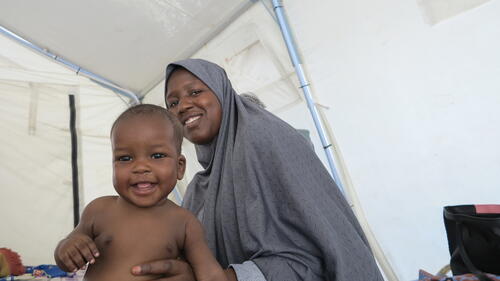
Hajara Adamu fled Damasak, about 150 kilometers to Maiduguri back in 2011. She started a new life. Seven years later, she holds her 5months son Abubakar Abdullahi at the State Specialist Hospital. Abubakar was brought in when he showed measles-like symptoms. Since November 2018, (MSF) has treated over 2922 children for the potentially life-threatening disease.
Nigeria

“I have not seen such high numbers of measles cases”

Maiduguri, in Borno State, northeastern Nigeria, is experiencing a severe measles outbreak, with thousands of children admitted to MSF treatment units in hospitals. The outbreak of the highly infectious disease has spread because of low vaccination coverage rates. Project Update - 17 May 2019
 
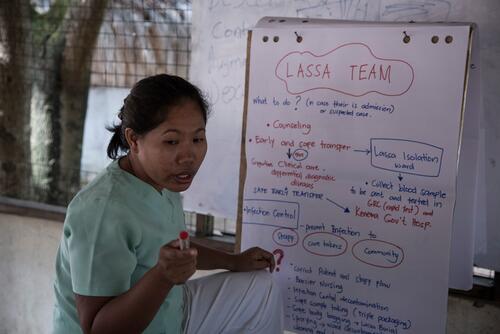
Honney Maymor Pannes, MSF Filipino nurse responsible for the Lassa isolation ward, briefing her team members about  patient and staff flow inside the ward, decontamination of medical instruments and strict procedures for handling patients suspected of Lassa.
Neglected diseases

Lassa fever: A challenging disease to diagnose and treat

Despite affecting up to 300,000 people a year across West Africa, and causing more than 5,000 deaths annually, Lassa fever is a poorly understood disease that is challenging to diagnose and treat. Research is urgently needed to develop more effective and affordable diagnostics and treatments. Project Update - 18 Jan 2019
 
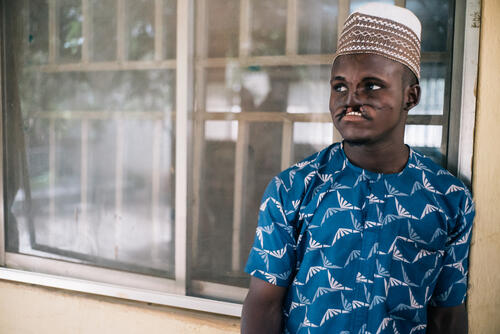
Bilya, a 20-year-old noma patient from a village near the border with Niger, waited for almost four years before his first surgery. 

Bilya thinks he first contracted noma when he was one year old. 

Outside his village, people would run away when they saw his face. "They didn’t see me as a human being," says Bilya. 

Sokoto, Nigeria.
13 April, 2017.
Noma

The neglected disease that destroys faces and lives

Noma, a neglected and little-known non-contagious disease, mostly affects children under five living in poverty. Nigeria’s Sokoto Noma Hospital, supported by MSF, is one of the few in the world fully dedicated to treating this deadly bacterial disease. Project Update - 15 Nov 2018
 
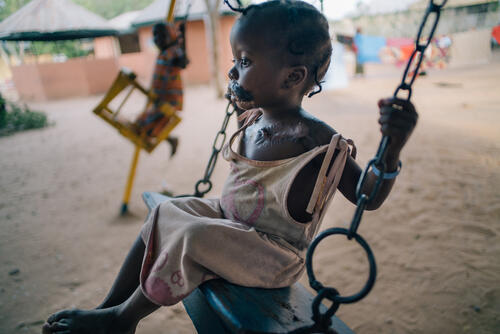
Maryam, aged four, plays in the courtyard of the noma hospital. 

She arrived at Sokoto Noma Hospital with her mother from Borno state and was first admitted in March 2016. 

She has already undergone four reconstructive operations, including a skin graft taken from her chest to replace tissue destroyed by noma. 

Sokoto, Nigeria.
2 November 2016.
Website

Noma, a neglected disease

MSF website dedicated to noma, a disfiguring, neglected disease that affects mostly children under five living in poverty. Learn about the disease, people who have it, and what MSF is doing to support them in Sokoto Noma Hospital in Nigeria. noma.msf.org/
 
On August 16, MSF launched inpatient services for severely malnourished children under five years-old, as well as paediatric care for patients under 15 years-old with severe malaria and other diseases, in a facility with a capacity of 30 beds. The medical intervention began as a response to a lack of healthcare assistance to newly arrived displaced people in Bama. Over 1.7 million people have been displaced by the conflict between the Nigerian military and non state armed groups in northeast Nigeria.
Nigeria

Critical humanitarian situation unfolding among internally displaced people in Bama, Borno state

Médecins Sans Frontières (MSF) has started emergency nutritional and paediatric activities in Bama, Borno state, in response to a critical humanitarian situation among newly arrived internally displaced people. Press Release - 17 Aug 2018
 
Athadjara, 20 years old, is a Nigerian refugee. She fled her village almost 4 years ago and settled in an informal camp site nearby from Diffa town. Since then she struggles to live on in precarious conditions with her two children.
Lake Chad Crisis

Fighting psychological fears in conflict-affected communities

Mental healthcare is an increasingly important part of MSF’s work with refugees, internally displaced people and host communities in the Lake Chad region. Project Update - 3 Aug 2018
 
A general view of the hospital compound.
Due to the ongoing insecurity, most of the eastern countryside of Borno state where these large displacements are happening remains difficult to reach for humanitarian organisations, with the exception of a few towns. Most of the aid agencies working in the state are present in the capital, Maiduguri, but only a few are able to operate continually in the hard-to-reach areas where assistance is most needed.
Nigeria

Borno State crisis update – November 2017

The conflict between the Nigerian military and armed opposition groups has been ongoing for more than eight years, with serious humanitarian consequences. Crisis Update - 30 Nov 2017
 
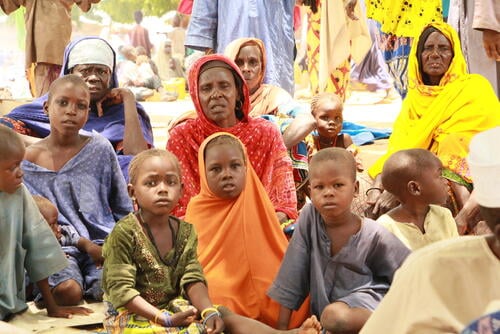
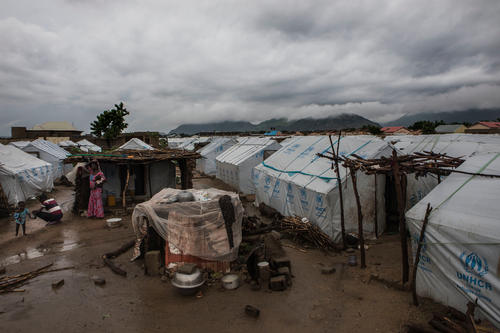
Camp for internally displaced people (IDPs) in the Nigerian town of Pulka, in the northeastern Borno state, close to the border with Cameroon.
Nigeria

What’s happening in the northeast?

More than two million people have fled their homes, with little chance of returning in the near future. An unknown number of people are out of reach of any humanitarian assistance. Project Update - 23 Nov 2017
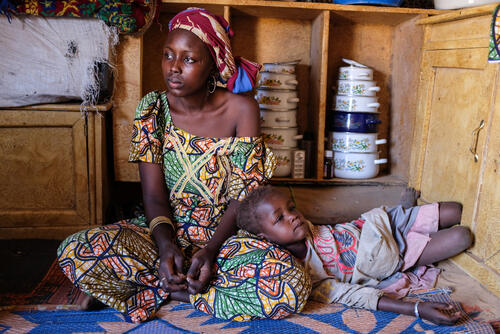
Four mothers posing in a corridor of the Hospital in Bili. All four of them are staying in the hospital with their child, that's suffering from a severe case of malaria. Since the beginning of the project in 2016, the pediatric ward already treated more than 4.000 cases of complicated/severe form of malaria.
Médecins Sans Frontières (MSF)

Independent medical humanitarian assistance

We provide medical assistance to people affected by conflict, epidemics, disasters, or exclusion from healthcare. Our teams are made up of tens of thousands of health professionals, logistic and administrative staff - most of them hired locally. Our actions are guided by medical ethics and the principles of independence and impartiality. We are a non-profit, self-governed, member-based organisation.

Learn more