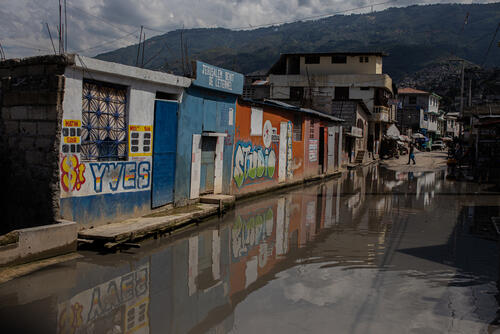
In the summer of 2021, a wave of unprecedented violence hit Martissant, a poor neighbourhood in the west of Haiti's capital, Port-au-Prince, as armed groups fought for control of the area.
Médecins Sans Frontières (MSF) had been running an emergency centre in Martissant for 15 years. On 3 June, 2021, heavy clashes in Martissant started and the frontline moved rapidly. On 26 June, the emergency centre found itself in the middle of the fighting, and fewer patients could reach it.
“The only patients who arrived then were those who needed lifesaving care, because they were taking great risks to reach our facility,” says Dr Frandy Samson, MSF medical manager.
A difficult decision to close
The medical team was small and worked 24-hour shifts to avoid unnecessary travel to and from the centre, to lessen their exposure to gunfire. “At each staff rotation, we asked for a ceasefire to let the team through once a day,” says Dr Samson. “It was extremely complicated.”
We soon suspended activities at the centre and had no choice but to stop medical activities permanently after shots were fired at the centre on 2 August, 2021. Deciding to suspend free, quality care where it was clearly needed was a difficult choice, but the hospital had become a target and the safety of patients and staff could no longer be guaranteed.
“Closing the Martissant Emergency Centre was the most difficult decision I had to make,” says Dr. Samson.
At each staff rotation, we asked for a ceasefire to let the team through once a day. It was extremely complicated.Dr Frandy Samson, MSF medical manager.
Hell on earth
One year later, armed groups continue to fight for control of this strategic area of the capital, which is crossed by the only accessible road to the southern half of the country. No one knows how many people have been killed or wounded in the fighting, nor the exact number who have fled the area. Part of the commune of Martissant is now deserted, with those who can afford it having moved to safer areas.
“Haiti is hell on earth,” says Gerard, an MSF worker who lives in Martissant. “We have to sleep with the sound of bullets in our ears. There are people who have died in their homes because of stray bullets. A week ago, I was almost hit in the foot by a bullet.”
Continuing to provide care despite everything
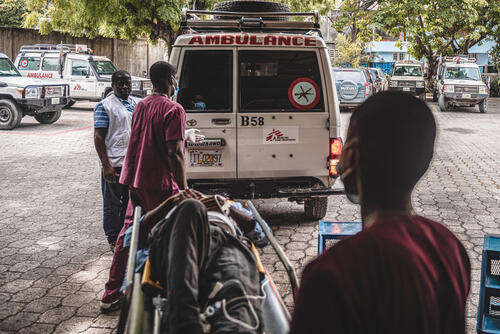
Today, the commune of Martissant is split in two, with a front line dividing the areas. In order to continue providing medical services to people in Martissant and the surrounding area, MSF moved its emergency services in August 2021 to another structure in Turgeau - a safer neighbouring area in the east of Martissant.
Since late 2021, MSF has also been providing support to the emergency room of the Raoul Pierre Louis public hospital in Carrefour, a neighbourhood West of Martissant.
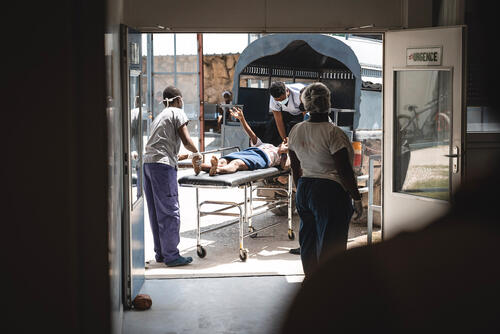
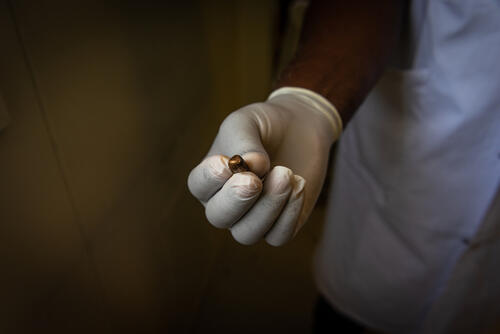
The clashes continue to claim victims. Since the beginning of 2022, the MSF emergency centre in Turgeau has received 538 patients with gunshot wounds, 37 per cent from Martissant.
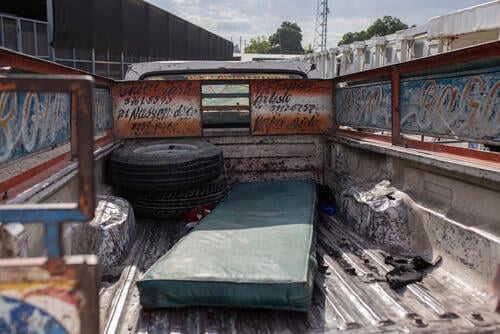
Mano, who lives in Carrefour, is now in Turgeau hospital after being shot seven times in the arm while trying to cross the front line in Martissant. It happened while taking a bus to the city centre. As soon as the bus reached Martissant, heavily armed individuals opened fire and riddled the bus with bullets. “I don't know why they shot at us," he says, “I could have died.”
Gerard, an MSF worker who lives in Martissant
“Haiti is hell on earth. We have to sleep with the sound of bullets in our ears. There are people who have died in their homes because of stray bullets.”
No more doctors or pharmacies
“Most of the residents [in Martissant] left when the violence broke out a year ago... but we stayed because we have no money,” says Nadège, who came to the Turgeau emergency centre with her two-year-old child, who is suffering from vomiting and a fever.
Apart from insecurity, the most serious problem remains access to medical care. “Access to care is very difficult. The health centre I go to now only has nurses because the doctors no longer come. To find a pharmacy, you have to go outside Martissant,” says Nadège.
Haiti’s fragile health system is further weakened by each new crisis. There are few functioning health facilities for the more than 3.5 million people. When these facilities close, either as a result of violence or in protest to the insecurity and kidnapping of medical staff, the options are further reduced. For those who cannot afford to access to private centres, the situation is even more dire.
“Of course, I'm thinking of leaving the country,” says Gerard. “In four or five years, by the time I save money, I will leave. That way I can help my family from the outside.”
Haiti
MSF forced to suspend activities in Haiti hospital after armed men kill patient
Press Release
27 Jan 2023