The second wave of COVID-19 in India has been devastating, with a catastrophic rise in the numbers of new infections in recent weeks. The country has now recorded over 18.7 million cases and over 208,000 deaths.Source: <a href="https://coronavirus.jhu.edu/map.html">John Hopkins University</a>, data as of 30 April. The outbreak of the new coronavirus is overwhelming for all healthcare providers. The situation is dire, with a lack of medical supplies including oxygen concentrators and ventilators, and limited human resources. Médecins Sans Frontières (MSF) is currently responding in Mumbai, the capital of Maharashtra state in western India. Below we outline four questions and answers on the current COVID-19 crisis in India.
1. How bad is the COVID-19 situation in India?
India has been experiencing a severe second wave of COVID-19 over recent weeks. The number of recorded people newly infected with the new coronavirus are reaching new highs; for over a week, the country has averaged around 350,000 new cases each day. Nearly 390,000 new infections were recorded yesterday, 29 April – a record.
Healthcare facilities and staff across the country are struggling to cope with the surge in cases. Overall reports describe hospitals are experiencing a crippling shortage of hospital beds for people with severe cases, a shortage of oxygen supplies, and shortages of medicines being used to treat mild, moderate and severe forms of COVID-19.
Overall access to health care is currently compromised. In Mumbai, care for COVID-19 care is organised in dedicated hospitals, but care for non-COVID-19 care is under stress, as the whole health system is dealing with this crisis.
2. What explains the sudden increase in cases in India?
There can be several factors to explain the new surge of cases. From October 2020 to mid-February 2021, India witnessed a decline in new confirmed COVID-19 infections. Some public health experts think that this led people to believe in a false sense of security, dropping measures such as wearing masks and maintaining a physical distance. Some super-spreader events, like rallies and social events, are also likely to have played a key role.
In addition, population density is very high, especially in a city like Mumbai, where it becomes difficult to follow required measures in public places.
There is currently there is not enough evidence to confirm the role that variants of SARS-CoV-2 have contributed the sudden exponential spread of COVID-19.
3. What is MSF doing to respond to the crisis?
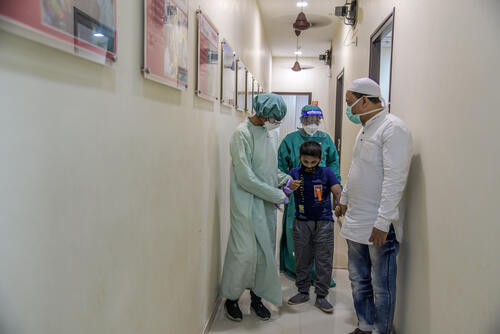
Our teams are currently working in Mumbai in response to the crisis:
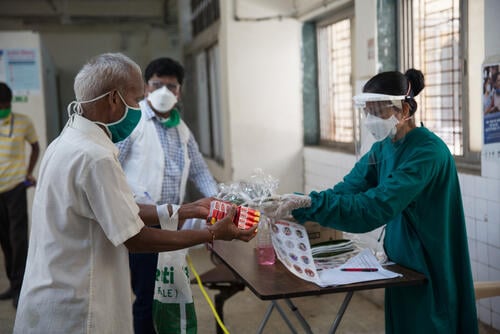
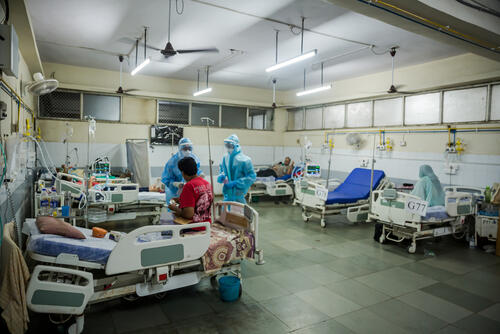
- We have a team of doctors and nurses working at dedicated COVID-19 health centres in the city. The centre, operated in collaboration with the Municipal Corporation of Greater Mumbai, is composed of two tents, each with a capacity of 1,000 beds, to provide treatment to people with moderate and severe COVID-19.
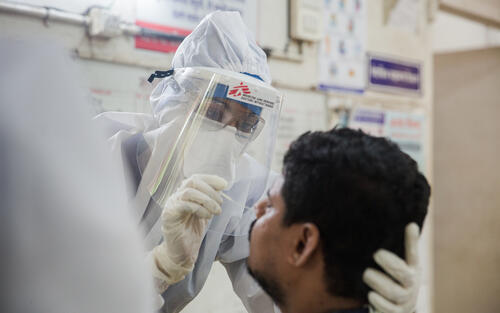
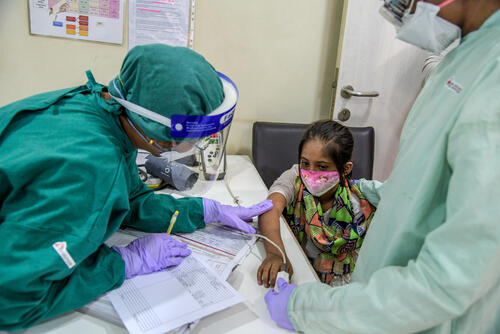
- We are scaling up screening, shielding,Shielding consists of creating ‘green zones’, or safe zones, where individuals more susceptible to COVID-19 are kept protected from any potential source of infection. The areas where they stay can either be inside the household or in separate locations, in the neighbourhood. During the shielding phase, these people should have minimal physical interactions with their relatives and other community members. testing and referral activities for drug-resistant tuberculosis (DR-TB) patients. MSF teams are ensuring continuity of care to over 2,000 DR-TB patients under treatment at the MSF independent clinic and Shatabdi hospital.
- We are providing health promotion messages in the community, along with water and sanitation activities, in Mumbai’s M-East Ward. Health promotion at the community level, including through digital channels, is also part of preventing the most vulnerable from getting infected in the densely populated informal settlements.
4. What is MSF most concerned about?
We have three main concerns about the current situation:
- Vulnerable people: We focus on vulnerable groups of people who have another illness, such as diabetes, HIV and/or TB. Our work involves informing these people on what protective measures to take and that they have the means to protect themselves.
- Infections of healthcare staff can happen easily in a situation when staff are overwhelmed by large numbers of patients. This could lead to a reduced and exhausted workforce. Safety for healthcare workers should be a top priority in every healthcare facility since they are the first line of defence in the pandemic.
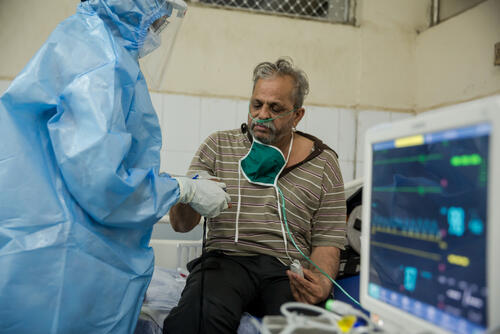
- Timely access to quality of medical care, including oxygen therapy: The surge in severe cases of COVID-19 has increased the number of people requiring hospitalisation and oxygen therapy. It is for this reason that MSF has begun supporting the dedicated COVID-19 hospital in Mumbai, including with the donation of 10 High Flow Nasal Cannula machines to the facility, to support oxygen therapy.
MSF has previously responded to COVID-19 in different states in India, including in Bihar, where we treated people with mild to moderate cases of COVID-19 in a 100-bed treatment facility in Patna, in June 2020.
MSF teams also provided treatment to people with moderate disease in a 1,100-bed facility in Mumbai, which closed in mid-February 2021.
Tuberculosis
Sustainable solutions for children and adolescents at risk of drug-resistant tuberculosis
Project Update
30 Mar 2021