


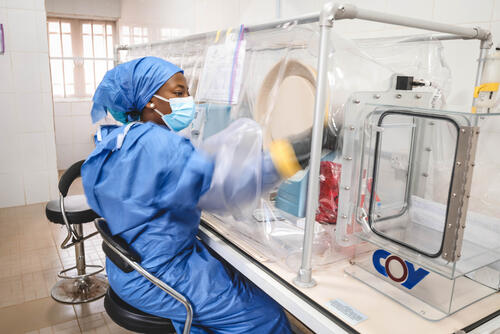
After seven years of critical support from Médecins Sans Frontières (MSF), local health authorities in Ebonyi state are now well equipped to take on care for Lassa fever with improved infrastructure and training — saving lives and restoring confidence in the healthcare system.
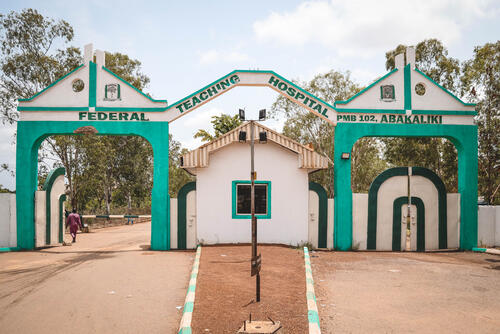
In early 2018, Ebonyi state in southeastern Nigeria faced a serious public health concern. Lassa fever - a potentially deadly viral haemorrhagic neglected tropical disease – recorded a particularly high seasonal outbreak, overwhelming hospitals and claiming numerous lives, notably among healthcare workers who are particularly exposed to infection.
“We lost doctors, nurses, and cleaners,” recalls Dr Nnennaya Anthony Ajayi, then head of clinical services at the virology unit of the Alex Ekwueme Federal University Teaching hospital in Abakaliki (AE-FUTHA), the state’s main referral centre. “There was panic. In the hospital, 16 healthcare workers passed away. People were afraid to go near the emergency room.”
Though the federal and state governments had already made strides—building an isolation ward and setting up a virology lab—AE-FUTHA was not prepared for the outbreak’s scale. Personal protective equipment was scarce. Infection control procedures were unclear. Samples had to be sent to distant labs for confirmation. Suspected patients were sometimes kept in open spaces, and the risks for staff were devastating.
It's in that context that MSF arrived in Abakaliki to support the response. What began as an emergency intervention soon evolved into a seven-year partnership with the Ebonyi state Ministry of Health, laying the groundwork for sustainable, locally led Lassa fever care.
Protect health workers, improve care for patients
From the outset, MSF’s top priority was clear: stop the loss of healthcare workers.
“We had to put an end to this series of avoidable deaths,” says Alain-Godefroid Ndikundavyi, MSF’s most recent project coordinator in Ebonyi. “Our main objective was to reverse that trend and to reinforce the hospital’s capacity to better receive and treat patients with the disease.”
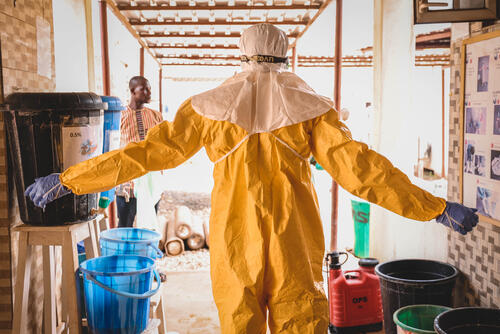
MSF's intervention was wide-ranging. We built triage and observation areas, distributed personal protective equipment, implemented robust infection prevention and control systems, and trained local staff to manage Lassa cases safely and effectively.
“They helped us structure patient flow, infection prevention and control, and biosafety measures, and provided what we needed to work safely,” says Dr Ajayi. “They brought structure, training, and most importantly, hope.”
They brought structure, training, and most importantly, hope.Dr Nnennaya Anthony Ajayi, then head of clinical services at the virology unit
In total, over 230 training sessions for healthcare workers were delivered, and laboratory capacity was strengthened, enabling faster diagnosis. Eventually, a new model of care was put in place to protect staff and better support patients.
Between 2018 and 2024, MSF supported the treatment of 1,701 suspected and 427 confirmed Lassa fever cases. MSF also paid the full cost of patient care—including dialysis, medications, and meals—which significantly reduced fatalities.
Crucially, deaths among healthcare workers fell dramatically, with years passing without a single death being recorded.
Reaching beyond the hospital
But MSF understood that stopping Lassa fever required action far beyond hospital walls. The disease thrives in communities where public health awareness is low and early detection is lacking.
“To bridge that gap, we mobilized health promotion teams that conducted over 4,500 education sessions and nearly 1,300 community visits across Ebonyi state,” says Ndikundvyi. “These efforts demystified the disease, corrected misconceptions, and encouraged early care-seeking behaviour.”
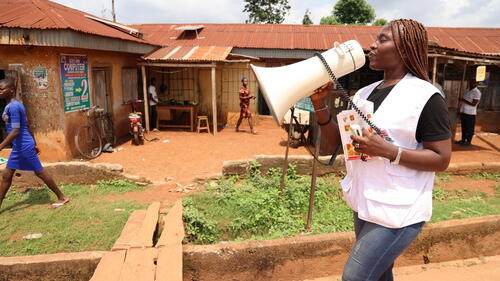
MSF also supported two clinics in rural areas—Izzi Unuhu and Onuebonyi—providing training, lab equipment, medical supplies, and even building water towers to ensure safe sanitation. The goal was to catch Lassa fever early and ease the burden on AE-FUTHA.
“We realised that to truly fight Lassa, the response had to start at the community level,” says Ndikundavyi.
A new chapter
In 2025, MSF formally handed over operations to the Ebonyi state Ministry of Health and AE-FUTHA. This transition was carefully planned and included donations of medical equipment, ambulances, and waste management tools. Enough supplies were provided to last through the next Lassa fever peak season.
“We officially handed over management responsibilities at the end of 2024 but kept an observational team on until March of this year, in case the Ministry needed additional resources,” Ndikundavyi said.
MSF also supported the creation of internal committees within AE-FUTHA to maintain standards in infection control, patient care, and outbreak response—ensuring that progress would continue after our departure. More broadly, MSF experts partnered with the Nigeria Centre for Disease Control and Prevention, and state and federal authorities, to improve detection, prevention, and medical care guidelines.
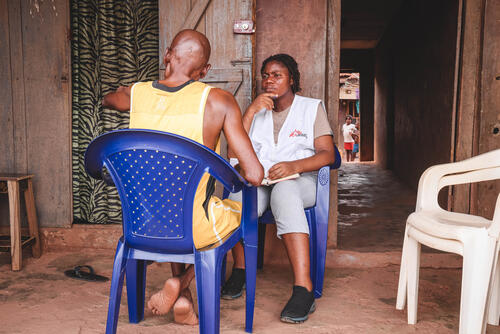
Today, AE-FUTHA is a different place. Gone are the days of improvised gear and terrified staff. Healthcare workers now operate with confidence, knowledge, and proper equipment. Patients are treated with dignity, and survivors return home with hope. Not as outcasts, but as symbols of resilience.
The fight against Lassa fever is not over. In 2024 alone, 24 confirmed cases were recorded in AE-FUTHA, with one death among the hospital staff—still tragic, but a far cry from what happened in 2018, when 16 healthcare workers alone were lost.
“We are no longer afraid,” says Dr Ajayi. “MSF helped us believe that we could fight Lassa fever—and win.”
Nigeria
MSF treats the long-term consequences of malnutrition among children in Nigeria
Project Update
4 Aug 2025
Nigeria
Mobilisation is urgently needed to avoid further deaths from northern Nigeria malnutrition crisis
Press Release
25 Jul 2025