


Dear members of the European Parliament and European Member States,
As negotiations move forward around key files of the EU Pact on Migration and Asylum, we call upon you with the greatest urgency to immediately change course, even in these last few days; to prioritise the safety of those seeking sanctuary and cease the instrumentalisation of human suffering for political currency.
This new Pact is not a reform of Europe’s asylum and migration policies. It is not a solution to Europe’s ‘migration crisis’, nor is it an historical agreement. It is simply the continuation and intensification of containment and deterrence policies, with rapid processing and returns at their core. We have seen that these policies have not worked but have instead led to unimaginable suffering.
For years, Médecins Sans Frontières (MSF) has seen the consequences of people returned to Libya where they face detention, violence, sexual assault, extortion and forced labour. It’s a disgrace that outsourcing border management in unsafe countries like Libya forms the cornerstone of the Pact.
For years, MSF has seen the consequences of people returned to Libya where they face detention, violence, sexual assault, extortion and forced labour.
Such outsourcing is being used as a blueprint to sign similar agreements in other countries like Tunisia – a country where patients onboard our search and rescue vessel, Geo Barents, tell us they face growing discrimination, violent attacks and collective expulsions.
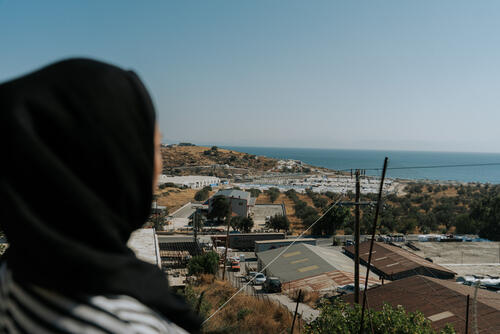
Rather than ensuring people who seek safety in Europe are met with dignified reception conditions, the Pact only institutionalises de facto detention and undermines the right of people to seek asylum. We know from our work in Greece that fences, barbed wire and detention are extremely harmful to people’s health and cannot be a solution.
We have seen across our projects in Europe how European States have capitalised on the notion of ‘crisis’ and ‘extraordinary measures’ to lower safeguards for people in dire need. These notions have been a breeding ground for violent practices such as pushbacks at borders and prolonged and arbitrary detention. Applying emergency ‘crisis’ measures have restricted independent humanitarian assistance and civil society monitoring, making it increasingly difficult to respond to individuals in need.
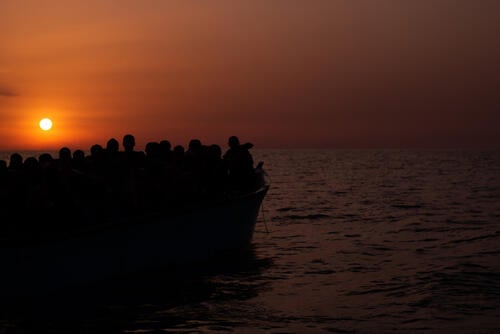
The Pact does nothing to stop people dying in the central Mediterranean Sea. Instead, hiding behind vague wording, EU leaders are free to steer away from their duty to rescue, while continuing their sabotage and criminalisation of civil society search and rescue activities.
The Pact does nothing to meaningfully address the large-scale and systematic use of violence at Europe’s borders. Across Europe, our patients report being subjected to pushbacks, ill treatment and violence at EU borders. Such pushbacks are accompanied by physical assault, detention, verbal humiliation or other degrading forms of treatment. And in most cases, they are reportedly carried out by state authorities.
Instead of challenging the structural causes that have allowed this violence to proliferate unchecked, the Pact risks continuing to institutionalise such deterrence tactics by maintaining pressure on Europe’s external borders, condoning the derogation of people’s rights to safety and protection, and perpetuating dehumanising narratives about people in need.
The solutions currently proposed by the Pact do not provide an answer to the continued and preventable loss of lives at Europe’s borders. We urge you to adopt humane policies that minimise risks to people’s health and wellbeing and protect human lives.
This means:
- Categorically rejecting proposals that further incentivise the outsourcing of border management and control;
- Ensuring dignified reception conditions for all people seeking protection and safety, regardless of the circumstances of their arrival;
- Unequivocally and unconditionally removing the possibility of NGOs being associated with instrumentalisation and thereby avoid further crackdowns on lifesaving activities;
- Stopping the largescale and systematic use of violence at Europe’s borders and address the structural causes that have allowed this violence to proliferate unchecked.
Refugees, IDPs and people on the move
MSF statement in response to the EU “Crisis Regulation”
Statement
6 Oct 2023

Poland
New ban on Poland-Belarus border risks blocking MSF from people in need
Press Release
11 Jun 2024
Costa Rica
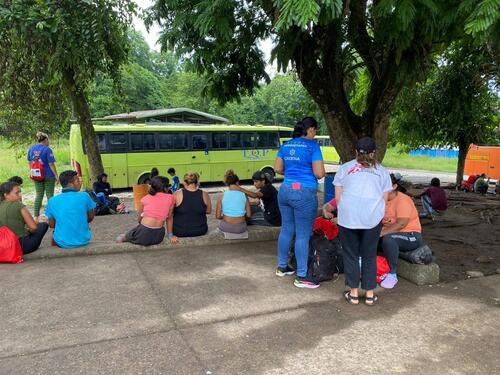
Survivors of sexual violence in the Darién Gap receive care in Costa Rica
Press Release
31 May 2024