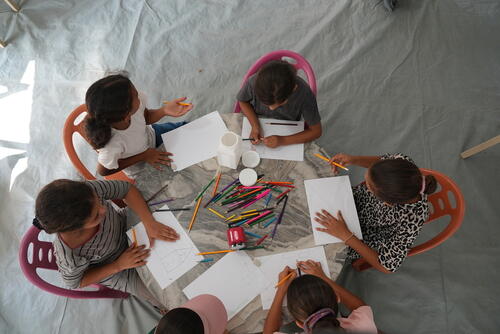
The queue to collect food, the rain pouring through the tent, the tank bulldozing buildings, the omnipresent quadcopter, or the friends they used to play with. Dina, Rahaf, Motassem, and several other children from Gaza, Palestine, quietly explain the meaning of their drawings, but the stories they tell are anything but quiet.
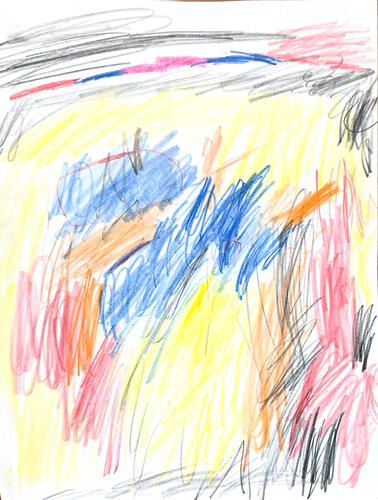
Done during group psychosocial sessions organised by Médecins Sans Frontières (MSF), the drawings recount what these children see and feel — their memories of a childhood defined by fear and violence.
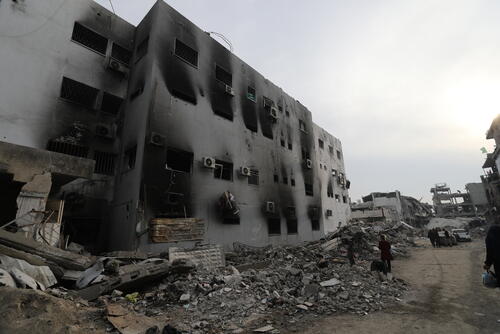
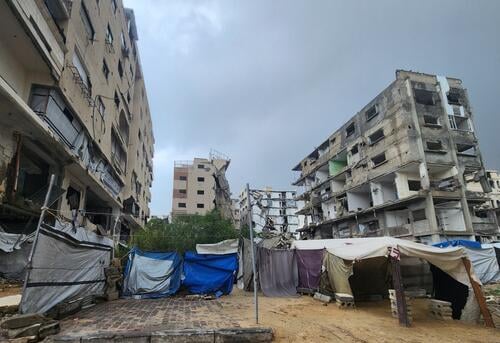
Three years of brutal Israeli military offensive have had a devastating toll on the mental health of the younger generation of Gazans. Many have lost family members, homes, schools, and friends, while repeated displacement and catastrophic living conditions have taken away the spaces where children should be able to feel like children and play without fear.
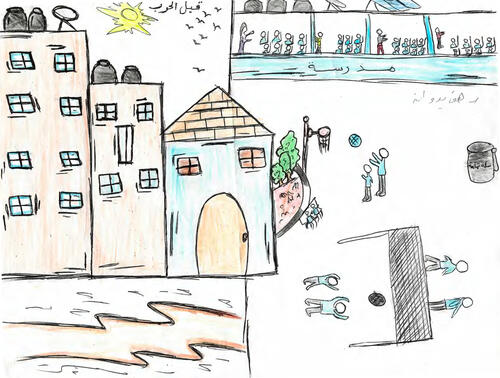
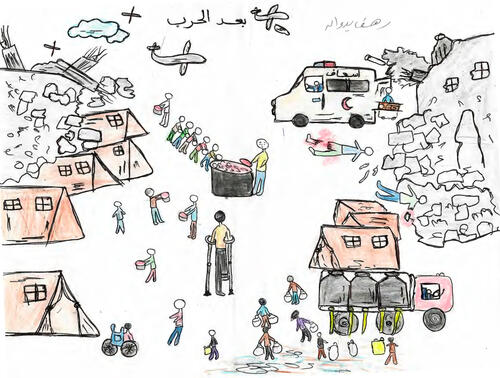
“Across Gaza, we are seeing overwhelming levels of grief, anxiety, sleep disorders, and psychological distress among both adults and children,” says Franz Luef, MSF's head of mission for Palestine. “These symptoms are being exacerbated by a crisis that has evolved into a less visible phase, characterised by Israel’s systematic dismantling of conditions necessary for Palestinians' survival.”
According to the World Health Organization, the number of people in Gaza requiring urgent mental health and psychosocial support has more than doubled since before the conflict, from around 485,000 to more than one million people. Mental health care has become a crucial part of MSF’s work: teams provide individual consultations, and psychosocial and psychoeducational group activities for adults, as well as recreational activities for children and adolescents, who are particularly vulnerable.
Childhood stolen by genocide
For those children who were old enough to remember life before Israel’s genocide, almost nothing remains of the world they knew. The places where they grew up have been destroyed. The basic things that should define childhood – feeling safe, playing with friends, going to school, and spending time with family – have been stolen from them, replaced by memories of violence, the constant threat of further attacks and the sight of destruction.
Fetching water, queuing for food, or helping their families survive are now part of their daily responsibilities. For younger children, the consequences are different: some have never known anything other than displacement and the sound of airstrikes.
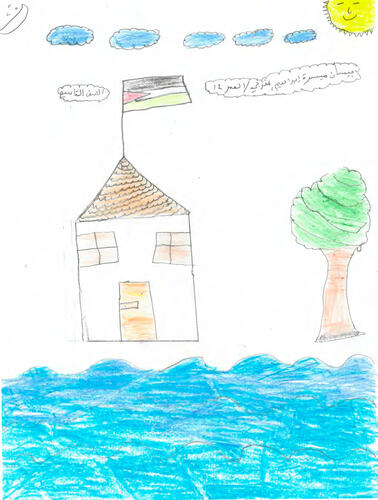
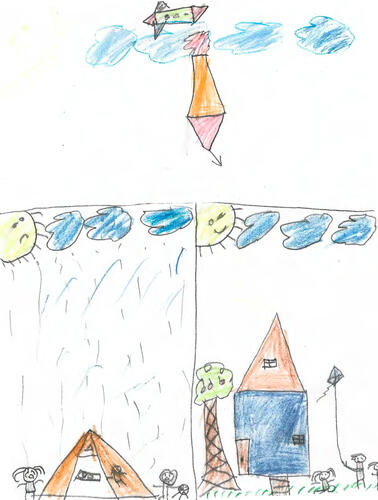
“Children who grew up during the war, who are today three or four years old, have lost their understanding of so many fundamental concepts,” explains Mahmoud Al-Balbisi, an MSF mental health counsellor. “Many don't know what ‘home’ means. The tent has become their home, because they have never experienced living in a house.”
Children have also begun to recreate what they see around them through play and drawings. Instead of games reflecting an ordinary childhood, counsellors see children imitating aid distributions, describing attacks, or playing among the rubble of destroyed buildings.
Dina, a nine-year-old girl, remembers being forced to leave her home with her family, pushing her injured father in a wheelchair after his foot was run over by a truck while collecting aid. Dina longs for something simple: “That we go back to how things were before. My grandma and grandpa.”
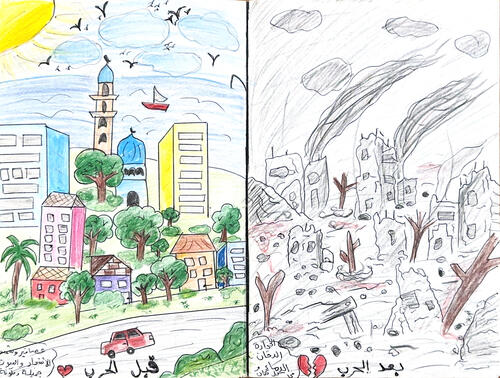
Rahaf, an eleven-year-old girl, said: “Sometimes I stand at the window and see the tanks firing. I tell my mum, ‘Come inside, because the tanks are firing and shooting shells’. I’m scared for my family, so I tell her to come inside. My girl cousin was killed. I can’t forget her. I used to play with her all the time.”
Effects of prolonged violence in everyday behaviour
Despite their resilience, the effects of prolonged violence are visible in children’s everyday behaviour. Counsellors report increased anxiety, fear, screaming, aggressive behaviour, nail-biting, and involuntary urination among children.
At MSF’s Zaytoun clinic in Gaza City, counsellors provide psychosocial support to children through music, games, stories and drawing, giving them a space to express themselves. In follow-up sessions, counsellors help children reconnect with who they were before the war and understand their emotions.
“We try to remind the children of their humanity and that they are children,” says Al-Balbisi.
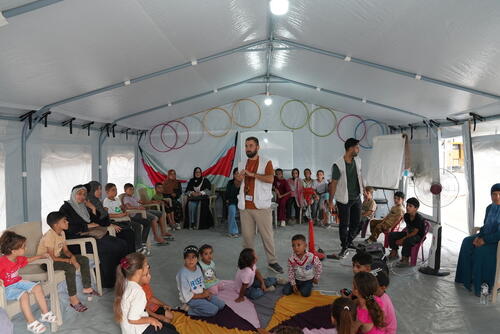
Activities such as ‘My body is my kingdom’1 help them recognise their right to safety and bodily protection in an environment where children are increasingly exposed to danger.
“After three years of violence, inhumane living conditions and loss, children are not simply carrying memories of war; their experiences have reshaped how they understand safety and childhood itself,” says Luef. “There is still no safety for children in Gaza. Bombing can happen at any moment, and they continue to live in constant fear, with no opportunity to recover or escape from what they have already endured.”
“Mental health needs in Gaza are enormous but the services and the spaces available for children to recover remain severely limited following the systematic decimation of the health system by Israeli forces,” says Luef.
Between late 2023 and September 2026, MSF teams provided more than 132,000 individual mental health consultations and supported more than 246,000 people through group mental health activities.
‘My body is my kingdom’ is a programme for children to learn their bodily boundaries. It is used for children to understand consent, as well as the dangers around them, in an age-appropriate way. MSF teams use this programme to communicate to children that their safety and protection is of the utmost importance.
Palestine
MSF calls for protection of Palestinian communities after Israeli settlers injured staff member
Statement
19 Oct 2026
Gaza-Israel war
MSF urges release of detained Palestinian medics in Israel as World Medical Association begins General Assembly
Opinion
6 Oct 2026
Gaza-Israel war
Three years on, Israel is asphyxiating Gaza and dismantling the means of survival
Press Release
5 Oct 2026