


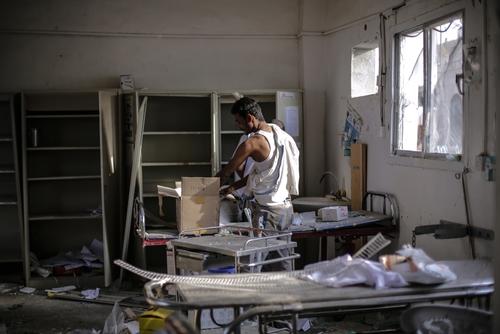
Médecins Sans Frontières (MSF) is extremely concerned about the recent declaration made by the official spokesperson of the Joint Incidents Assessment Team (JIAT) on Yemen, Mansour Ahmad Al-Mansour, about the bombing of Abs hospital, in Hajjah governorate, on 15 August 2016. This public declaration does not reflect the conversations MSF had in Saudi Arabia with the JIAT and military forces after the attack. MSF also conducted its own investigation into the incident, which has been shared with the Saudi authorities.
Following JIAT declarations, MSF would like to stress the following:
Firstly, Abs hospital was identified by a large logo (2m x 5m) painted on its roof, and the hospital was functional and its location well known.
Secondly, the car that was targeted was already inside the hospital compound when it was bombed. In fact, the car – carrying at least one injured patient – had travelled through unpopulated areas for more than 10 kilometres before arriving at the hospital, where it was parked at the entrance of the emergency room for several minutes before being targeted. So there is no possibility that the car was "shelled immediately" after the first attack, as claimed in the public declaration.
Thirdly, the JIAT statement refers to seven fatalities. In fact, 19 people died in the incident, including one MSF hospital worker, while another 24 were injured.
Fourthly, the GPS coordinates of Abs hospital had been shared with the Saudi-led coalition at least every three months since July 2015. Most recently, the GPS coordinates for all MSF operations in Yemen, including Abs hospital, were shared on 10 August, just five days before the incident.
We do not consider this incident an “error”, but a consequence of conducting hostilities with disregard for the protected nature of hospitals and civilian structures. Warring parties should verify surroundings before engaging in airstrikes on moving targets, and should take all precautionary measures to avoid civilian deaths and damage to hospitals.
The airstrike on Abs hospital showed a significant and unacceptable disregard for these measures. The airstrike on Abs hospital by Saudi Arabian warplanes is totally unjustifiable, and MSF strongly rejects the public justification of this attack by JIAT. Its declaration shows, once again, that potential violations of International Humanitarian Law should be investigated by independent bodies.
MSF internal investigation of the 15 August attack on Abs hospital Yemen: Summary of findings
pdf — 384.4 KB
Download
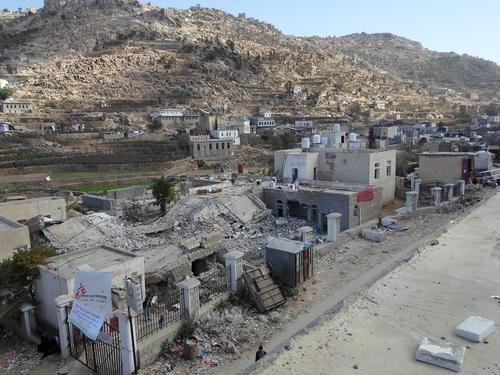
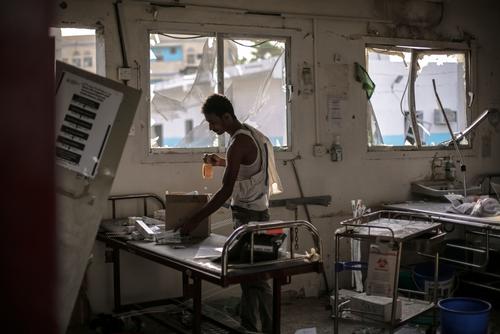
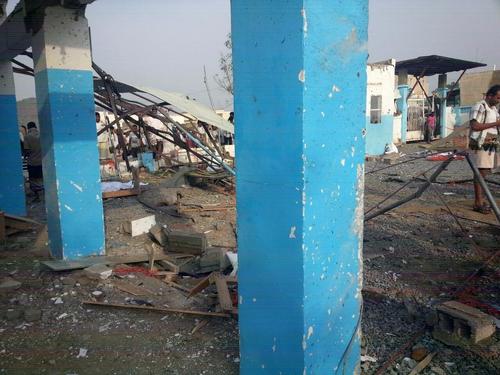
Yemen
Death toll rises to 19 in airstrike on MSF-supported Abs hospital in Hajjah
Project Update
16 Aug 2016