



Ebola disease in DRC: find out how we're responding
Learn more
2094 Results
 
msf-placeholder
Syria

Khan Sheikhoun victims have symptoms consistent with exposure to chemical substances

The MSF team provided drugs and antidotes to treat patients, and protective clothing for medical staff in the hospital’s emergency room. Statement - 5 Apr 2017
 
MSF teams in and around Mosul have received more than 1,800 patients in need of urgent or lifesaving care in the last two months. 1,500 of them needed treatment for conflict related trauma. As the scale of the non-trauma needs also became apparent, MSF opened maternity services in eastern Mosul at the beginning of February, and since then the teams have assisted 100 births and performed 80 C-sections.
Iraq

The patients we receive are the “lucky ones”

"Every day, we see the worst of the worst injuries inflicted by this war" Voices from the Field - 4 Apr 2017
 
Patients in the waiting room at Meshta Nour Hospital, Kobane, 23 january 2017.
Syria

Describing the toll of war on health in absentia

"In war-torn Syria, patients are besieged and in inaccessible areas. True numbers are unknown but those we do see paint a picture so bleak that the size and scale of an emergency health response seem unimaginable." Journal article - 3 Apr 2017
 
Mortar remnants of war amid the rubble, Kobane, January 23, 2017.
Syria

Explosive devices have deadly impact on people fleeing or returning home

“Booby-traps have been planted everywhere – under the carpet, in the fridge, even in children’s teddy bears,” says Karline Kleijer, MSF’s emergency manager for Syria. Report - 2 Apr 2017
 
During the second week of July 2016, MSF organised an exploratory mission and an emergency distribution for more than 15,000 displaced people leaving in dire conditions in the city of Banki, in Borno State – Nigeria.
Nigeria

Case Study on humanitarian response in North-east Nigeria

This case study examines the humanitarian response to the conflict-related crisis in the North-East of Nigeria, focusing primarily on the period from 2015 to the end of 2016. The aim is test the central hypotheses of the Emergency Gap project: that the current structure, conceptual underpinning and prevalent mindset of the international humanitarian system limits its capacity to be effective in response to conflict-related emergencies. Emergency Gap - 1 Apr 2017
 
msf-placeholder
Syria

Medical staff and patient killed in an attack on MSF-supported hospital

A hospital in northern Syria supported by Médecins Sans Frontières (MSF) has been hit in an aerial attack. Press Release - 31 Mar 2017
 
The Al Salamah hospital has become a reference in the area. In 2016, it had 46,337 outpatient consultations, 2,489 inpatient consultations, 26,091 emergency room treatments, 1,933 surgical procedures and there were 578 deliveries. It refers also patients to Turkey.

In the picture, a doctor who is operating an old lady places a sonda in her.
Syria

An obligation to tell the world

This case study illustrates the article: "No eyes on the ground. MSF’s dilemmas of using third party medical data and patient testimonies". Project Update - 30 Mar 2017
 
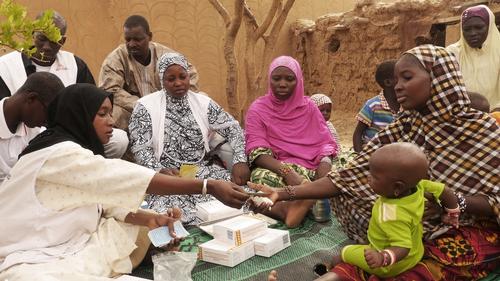
Between August and November 2015, MSF and the Ministry of Health of Mali launched a chemoprevention campaign against seasonal malaria, the leading cause of infant mortality in the country, which reached more than 45,000 children between three months and five years old in the Ansongo district, in the Gao region in the north of the country. During the campaign, MSF took the chance to complete the children’s vaccination records.
Mali

MSF warns about the use of humanitarian aid for political and military interests

The incursion of military and political actors in the humanitarian field is putting the provision of humanitarian aid at risk in Mali, according to a new report. Report - 24 Mar 2017
 
View from Al Thawra hospital in the besieged area of Taiz.
A siege has been impoased on the city by Houthis since late August 2015. MSF was not able to enter medical aid into the enclave area for five months. Only on January 16th, MSF got the authorization and delivered medical aid to Al-Thawra hospital inside the enclave area.
Yemen

MSF withdrawing from Ibb Al-Thawra hospital

"Due to our inability to run activities according to MSF’s principles of independence and impartiality, we have made the difficult decision to withdraw from Al-Thawra hospital in Ibb," says Hugues Robert, MSF Program Manager for Yemen. Statement - 23 Mar 2017
 
MSF teams in and around Mosul have received more than 1,800 patients in need of urgent or lifesaving care in the last two months. 1,500 of them needed treatment for conflict related trauma. As the scale of the non-trauma needs also became apparent, MSF opened maternity services in eastern Mosul at the beginning of February, and since then the teams have assisted 100 births and performed 80 C-sections.
Iraq

“Yesterday, it was calm; we only received 20 war-wounded patients”

Testimonies gathered on 18 March from two MSF surgeons working in the field trauma centre. Voices from the Field - 22 Mar 2017
Four mothers posing in a corridor of the Hospital in Bili. All four of them are staying in the hospital with their child, that's suffering from a severe case of malaria. Since the beginning of the project in 2016, the pediatric ward already treated more than 4.000 cases of complicated/severe form of malaria.
Médecins Sans Frontières (MSF)

Independent medical humanitarian assistance

We provide medical assistance to people affected by conflict, epidemics, disasters, or exclusion from healthcare. Our teams are made up of tens of thousands of health professionals, logistic and administrative staff - most of them hired locally. Our actions are guided by medical ethics and the principles of independence and impartiality. We are a non-profit, self-governed, member-based organisation.

Learn more