



2109 Results
 
Mother and daughter in an IDP camp

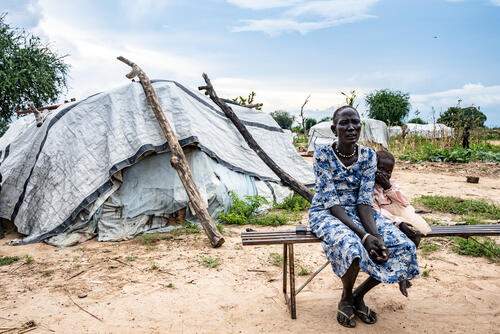
Arual Manyok, 32, and her daughter Adit Ayuel, 3, who received Malaria Drug Administration( MDA), talk to MSF staff in front of their tukul.

"If we compare before and after MSF started bringing malaria drugs, there is a big difference. All the children who got the medicine have not had malaria again. Only the children who did not get the drugs are getting sick.” says Arual

South Sudan is at the middle of the malaria season. The majority of patients at Mayen Abun Hospital are positive for malaria, some of them suffering from severe cases.

As this is a recurring situation, MSF has been running a mass drug administration (MDA) rounds since 2023, providing prophylactic treatment to children under the age of 15.

This has already had a massive impact on the community: positive rates among children are much lower than in previous years (even though the country as a whole is experiencing an increased malaria peak compared to previous years due to the influx of refugees and flooding), and the rate of severe cases is also much lower.

An MSF outreach team visited one IDP camp to check some of the children who had already received 3 rounds of prophylaxis and to discuss the impact with the families.
South Sudan

Gaps in healthcare threaten lives as violence escalates in South Sudan

Amid escalating violence, disease outbreaks, healthcare shortages, and decreasing aid funding, South Sudan’s health system is stretched to breaking point. Press Release - 9 Dec 2025
 
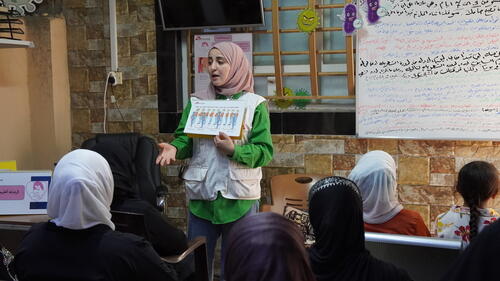
Women gather at Al-Ubor clinic for a health education session led by MSF staff, focusing on pregnancy care and maternal health — empowering women with knowledge to make informed choices.
Iraq

Mosul’s health system: From the brink of collapse to recovery

MSF has handed over the Al-Ubor health centre in Mosul, Iraq, to the Iraqi Red Crescent Society, marking a successful transition from emergency response to sustainable care.  Project Update - 27 Nov 2025
 
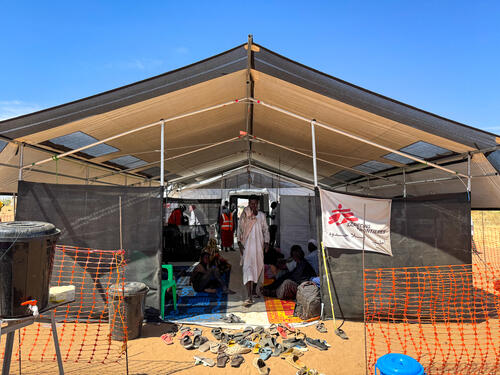
MSF set up a healthcare post in Tawila Umda to stabilise newly arrived people and refer the most serious cases, such as the wounded or those requiring surgery, by ambulance to Tawila Hospital. 
Tawila Umda
Conflict in Sudan

People who escaped El Fasher are struggling to survive one month after RSF takeover

MSF teams are treating people who have escaped the horrific violence in El Fasher, Sudan, as they arrive to unsuitable living conditions in Tawila. Project Update - 26 Nov 2025
 
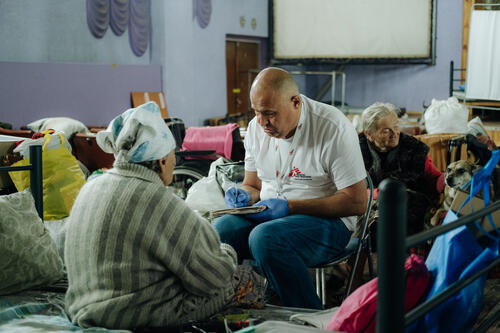
People from the frontline areas arrive at the transit centre for IDPs in Dnipropetrovsk region (eastern Ukraine). They usually spend a few days here before moving further west. The Médecins Sans Frontières mobile clinic comes here twice a week. Our doctors and nurses examine patients. They often have chronic illnesses, and some of them arrive with injuries from the hostilities. Our health promoters and psychologists also work with patients to identify their needs and provide psychological support.
Ukraine

Working near the frontline of the war in Ukraine

In two documentaries, we share stories from our colleagues who are living and working near the frontline in Ukraine. Documentary - 21 Nov 2025
 
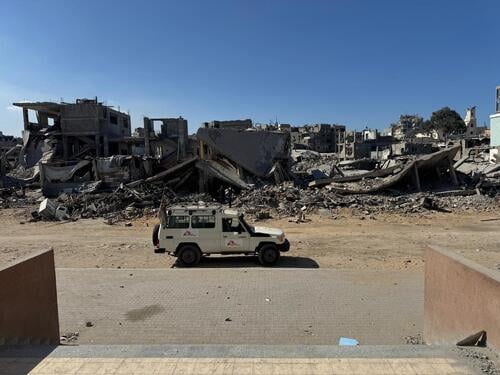
An MSF vehicle is parked outside Al Rantisi Hospital in Gaza City, amidst the rubble and destruction in the area. The photo, taken from the hospital’s entrance, looks out onto the street.
Gaza-Israel war

MSF denounces more bloodshed in Gaza

Our teams are treating people who were critically wounded by Israeli airstrikes and quadcopters on 19 November. Press Release - 21 Nov 2025
 
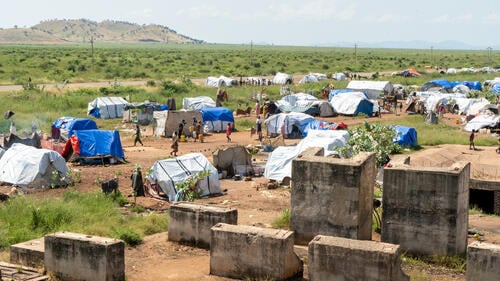
Concrete remains of the old mining factory, abandoned since the 2011 conflict, now stand surrounded by makeshift huts and families seeking safety.
Conflict in Sudan

How many more atrocities must people in Sudan endure?

Jean-Nicolas Armstrong-Dangelser, our senior operations adviser for Sudan, explains how the devastating conflict in Sudan represents a systemic failure. Voices from the Field - 18 Nov 2025
 
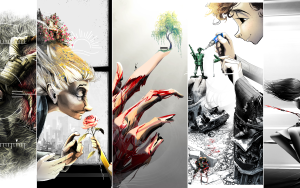
A selection of illustrations by Ella Baron, composed from testimonies of patients in Cherkasy and Vinnytsia, Ukraine.
Ukraine

Ukraine: Battles of the mind

Ella Baron, an illustrator from the UK, visited our projects in Cherkasy and Vinnytsia, Ukraine, to capture testimonies through drawing. Photo Story - 4 Nov 2025
 
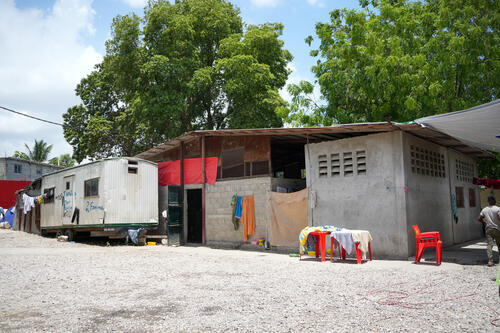
View of a displaced person’s camp housed in the premises of a former MSF hospital in Port-au-Prince.
Haiti

People and the health system are trapped in escalating violence in Haiti

Our teams in Haiti continue to treat victims and survivors of violence, while the health system struggles to cope with people's needs. Project Update - 3 Oct 2025
 
People from the frontline areas arrive at the transit centre for IDPs in Dnipropetrovsk region (eastern Ukraine). They usually spend a few days here before moving further west. The Médecins Sans Frontières mobile clinic comes here twice a week. Our doctors and nurses examine patients. They often have chronic illnesses, and some of them arrive with injuries from the hostilities. Our health promoters and psychologists also work with patients to identify their needs and provide psychological support.
Ukraine

Displaced people struggle in eastern Ukraine’s overcrowded shelters

MSF teams are running mobile clinics for people who have been newly displaced by intensifying fighting in eastern Ukraine. Project Update - 2 Oct 2025
 
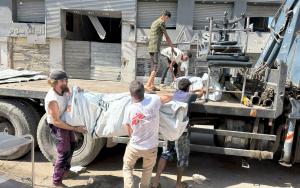
Five MSF staff load tents on to a truck in Gaza City
Gaza-Israel war

MSF forced to suspend Gaza City activities amid intensified Israeli offensive

The intense Israeli forces' offensive in Gaza City, Palestine, is putting our staff and patients at an unacceptable level of risk to continue our lifesaving activities.
Press Release - 26 Sep 2025
Four mothers posing in a corridor of the Hospital in Bili. All four of them are staying in the hospital with their child, that's suffering from a severe case of malaria. Since the beginning of the project in 2016, the pediatric ward already treated more than 4.000 cases of complicated/severe form of malaria.
Médecins Sans Frontières (MSF)

Independent medical humanitarian assistance

We provide medical assistance to people affected by conflict, epidemics, disasters, or exclusion from healthcare. Our teams are made up of tens of thousands of health professionals, logistic and administrative staff - most of them hired locally. Our actions are guided by medical ethics and the principles of independence and impartiality. We are a non-profit, self-governed, member-based organisation.

Learn more