



2109 Results
 
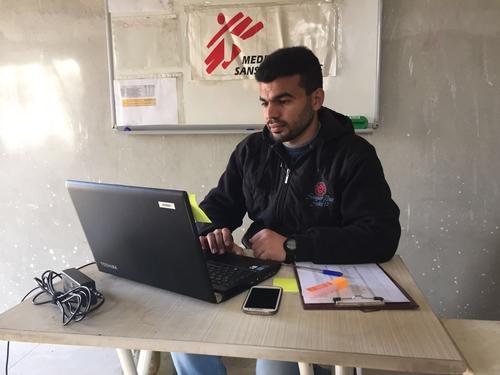
Ahmed is the manager of the MSF pharmacy in Kilis, Turkey. At present he is working on MSF´s donation programme, which provides donations of drugs and medical supplies to more than 15 hospitals and health centres inside Syria, and distributes essential household goods to internally displaced people caught up in the conflict.
Syria

“Our own staff have had to gather their families and flee”

Ahmed is the manager of the MSF pharmacy in Kilis, Turkey. At present he is working on MSF’s donation programme, which provides donations of drugs and medical supplies to more than 15 hospitals and health centres inside Syria, and distributes essential household goods to internally displaced people caught up in the conflict. Voices from the Field - 11 Feb 2016
 
Bab Al Noor camp, northern Syria –
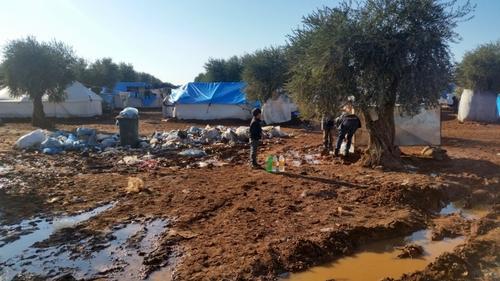
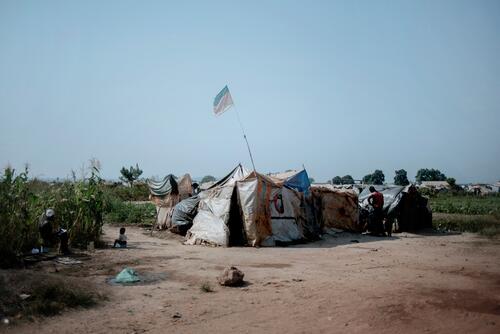
Before the most recent increase in fighting in Azaz, Bab Al Noor camp, near Syria’s border with Turkey, was home to around 14,000 people. Another 1,300 people have arrived in the camp in the in the second week of February. MSF has donated around 50 large family tents for the recently arrived people in the camps and is looking at how to improve water and sanitation.
Syria

Health system close to collapse in war-torn Azaz district

“Azaz district has seen some of the heaviest tolls of this brutal war, and yet again we are seeing healthcare under siege,” said Muskilda Zancada, MSF head of mission, Syria. “We are extremely concerned about the situation in the south of the district, where medical staff, fearing for their lives, have been forced to flee and hospitals have either been completely closed, or can only offer limited emergency services.” Press Release - 10 Feb 2016
 
Bab Al Noor camp, northern Syria –
Before the most recent increase in fighting in Azaz, Bab Al Noor camp, near Syria’s border with Turkey, was home to around 14,000 people. Another 1,300 people have arrived in the camp in the in the second week of February. MSF has donated around 50 large family tents for the recently arrived people in the camps and is looking at how to improve water and sanitation.
Syria

So close to front lines, these people – families with children and elderly people – might be in danger

"We can confirm, however, that the hospitals were hit by bombs," says Muskilda Zancada, MSF head of mission in Syria. "We also know that in Syria, hospitals and healthcare structures are regularly targeted: a disturbing trend that escalated in 2015." Voices from the Field - 10 Feb 2016
 
syria_msf-supported_hospital
Syria

MSF-supported hospital hit by airstrikes

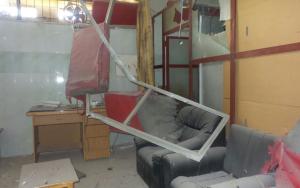
On the night of 5 February 2016, airstrikes have hit an MSF-supported hospital in Dara’a governorate, southern Syria, killing three people and wounding at least six. “I was on my way to the hospital to help admit people who had been injured by the airstrikes,” says one staff member. “But as soon as I reached the hospital, I myself got injured. It all happened very quickly." Crisis Update - 9 Feb 2016
 
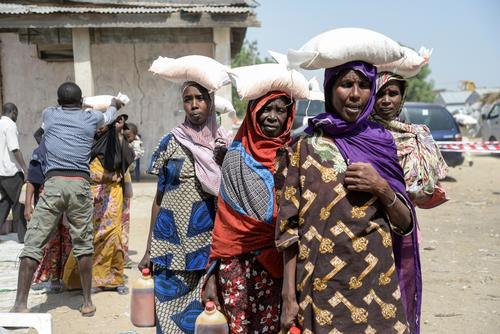
Between 600 and 620 families are living in the Fariya camp. (=3600 people).
1070 children under 5. Unofficial camp. Until our intervention, they had very little support. Latrines ACF, shleter by IOM. Most people are shuwa arab (ethnic group) coming from Marte. 
ACF just open an OPD on Monday. 
This was our second distribution there. 
300 living in 150 IOM shelters (2 families in 1 shelter). Others live in makeshift tents. 
People have been here for 10 months more or less. 
3 boreholes but only 1 working solar
Nigeria

After two years of crisis, what does the future hold for the displaced in Borno?

Interview with Isabelle Mouniaman-Nara, MSF programme manager in Nigeria Voices from the Field - 3 Feb 2016
 
General view of the a displaced persons camp in M'Poko, Bangui.
Central African Republic

No hope of returning home anytime soon

Over 30,000 people have taken refuge in churches and schools and overcrowded, unsanitary makeshift camps across the capital Bangui. Renewed outbreaks of inter-communal violence is keeping the population on edge, and has crushed any hope of returning home any time soon. To enable access to free quality health care for this vulnerable population, MSF is providing healthcare and running mobile clinics in five camps. Photo Story - 2 Feb 2016
 
msf-placeholder
Syria

Starvation continues in Madaya - MSF denounces continued blockage of essential aid and medical evacuations

“It is totally unacceptable that people continue to die from starvation, and that critical medical cases remain in the town when they should have been evacuated weeks ago,” said Brice de le Vingne, MSF’s director of operations. Press Release - 29 Jan 2016
 
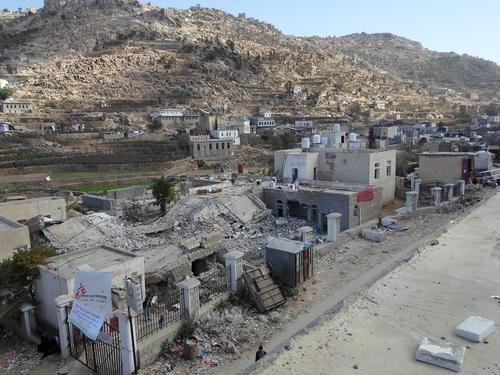
The Shiara hospital, an MSF-supported facility in Razeh district (Northern Yemen), was hit by a projectile in northern Yemen on January 10thm resulting in five deaths, eight injured and the collapse of several buildings of the medical facility. One of the critical injured victim, passed away on Sunday 17th after being transferred to the ICU at the MSF hospital in Saada. More than 130 health centres and hospitals have been affected by the conflict ravaging the country in the last ten months.
Yemen

“I’d never before seen the level of casualties I saw in Saada. The scale of wounded was extreme.”

“I’d never before seen the level of casualties I saw in Saada. The scale of wounded was extreme,” says Michael Seawright, former MSF Project Coordinator in Yemen. Voices from the Field - 27 Jan 2016
 
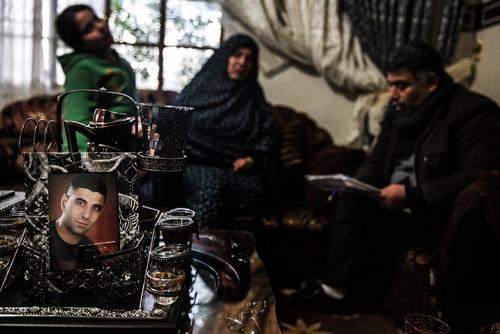
The house of the Al Atrash family is full of pictures of their son. “The photos make us comfortable, you know, you feel that he is with you,” explains Foad Irfae Aref Al Atrash, the father of Annas Al Atrash.

Annas was 23 years old and the fourth in a family of eight siblings living in Hebron city in the West Bank. He was the manager of the family’s shoe business and responsible for looking after their income. He also worked selling trainers in the family’s shop in Jericho to tourists. On November 7th 2013 he was killed by an Israeli soldier while crossing a checkpoint by car.
Palestine

“You shot an innocent person and destroyed a whole family’s life.”

This month, Occupied Minds looks at how checkpoints, restriction of movements, are affecting the life of the Palestinian population. Annas was 23 years old and the fourth in a family of eight siblings living in Hebron city in the West Bank. He was the manager of the family's shoe business and responsible for looking after their income. On 7 November 2013 he was killed by an Israeli soldier while crossing a checkpoint by car. Voices from the Field - 26 Jan 2016
 
The Shiara hospital, an MSF-supported facility in Razeh district (Northern Yemen), was hit by a projectile in northern Yemen on January 10thm resulting in five deaths, eight injured and the collapse of several buildings of the medical facility. One of the critical injured victim, passed away on Sunday 17th after being transferred to the ICU at the MSF hospital in Saada. More than 130 health centres and hospitals have been affected by the conflict ravaging the country in the last ten months.
Yemen

"They didn’t realise that the missile had hit the hospital itself."

"The border with Saudi Arabia is only half an hour away so everyone here is used to the sound of bombs and rockets," says Teresa Sancristoval, Head of MSF’s emergency desk, about the 10 January attack on Shiara hospital. "Knowing it had hit somewhere nearby, they set about preparing for mass casualties. What they didn’t realise was that the missile had hit the hospital itself, and soon they would be treating their own colleagues and patients.” Voices from the Field - 25 Jan 2016
Four mothers posing in a corridor of the Hospital in Bili. All four of them are staying in the hospital with their child, that's suffering from a severe case of malaria. Since the beginning of the project in 2016, the pediatric ward already treated more than 4.000 cases of complicated/severe form of malaria.
Médecins Sans Frontières (MSF)

Independent medical humanitarian assistance

We provide medical assistance to people affected by conflict, epidemics, disasters, or exclusion from healthcare. Our teams are made up of tens of thousands of health professionals, logistic and administrative staff - most of them hired locally. Our actions are guided by medical ethics and the principles of independence and impartiality. We are a non-profit, self-governed, member-based organisation.

Learn more