



3451 Results
 
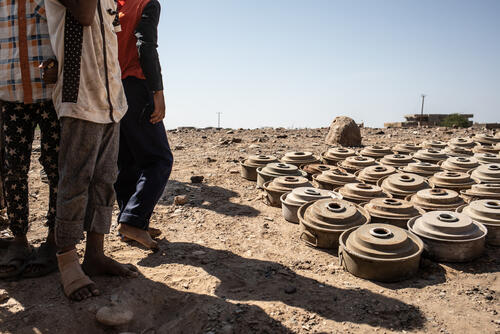
Yemen, Mawza, 13 December 2018 – Defused landmines. Mawza is located in Taiz governorate, a 45 minutes-drive to the east of Mocha city. This is a very poor and rural area, people are depending on their land to eat and to earn money. The area was taken over from Ansar Allah’s control by forces loyal to President Hadi, supported by the Saudi and Emirati-led coalition, in the beginning of 2018. Fighting damaged the fields and thus, the livelihood of the 13,000 inhabitants of Mawza. While military troops were withdrawing, thousands of landmines and improvised explosive devices (IED) were planted in the area. Between August and December, MSF teams in Mocha received around 150 people injured by landmines or IED, mainly children playing in the fields. Landmines and IEDs are defused by military forces. Local NGOs are in charge of locating these devices.
Yemen

Trapped by landmines

Landmines and explosive devices urgently need clearing from civilian areas in southwest Yemen – not only places where people live, but also agricultural land. Project Update - 10 Jan 2019
 
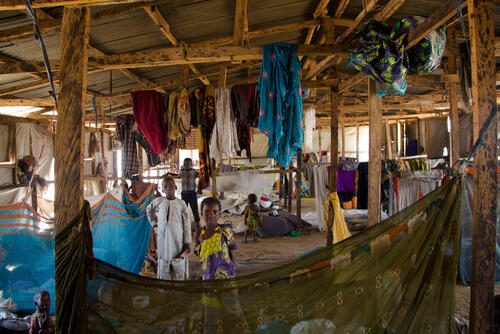
Constant influx of newly arrived people have left IDPs living in overcrowded communal shelters (60 to 70 people) or camping in the open under trees. They can stay there for several months before being allocated a personal shelter for their family.
Nigeria

“All I have in this world are the clothes on my back”

People continue to be displaced by violence in northeast Nigeria, where MSF has been providing lifesaving medical care since 2014. Many are dependent on aid to survive, and there is often not enough to go around. Project Update - 8 Jan 2019
 
Amana is a village of around 6,000 people, close to the Cameroonian border. Since the conflict in the North West and South West regions of Cameroon began in November 2017, more than 4,000 refugees have arrived in the village and have been hosted by the local community.
Nigeria

Tens of thousands of Cameroonians seek refuge in southern Nigeria

MSF has launched an emergency response to provide aid to people fleeing the English-speaking regions of Cameroon to seek refuge in southern Nigeria’s Cross River State, and to support the communities hosting them. Project Update - 21 Dec 2018
 
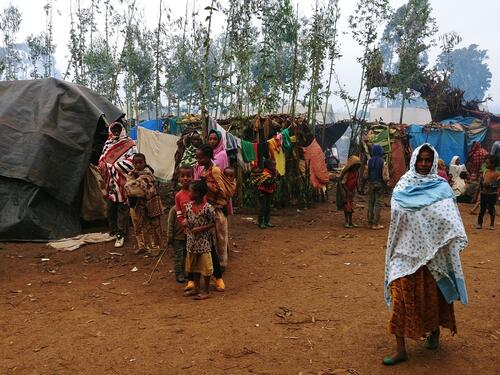
Temporary shelters in a camp for internally displaced people in Gedeb, Gedeo zone, in Ethiopia’s SNNP region.
Ethiopia

More aid needed for people caught in multiple displacement crises

MSF is ending one emergency response in the south of the country while preparing to respond wherever the next crisis arises. Project Update - 21 Dec 2018
 
National TB Centre, Abovian, Armenia ¿ February 2010. TB samples are tested for drugs sensitivity in the national laboratory. Results usually take around three weeks.
Armenia

Drug-resistant tuberculosis: 30 years of MSF in Armenia

The last in a three-part series commemorating 30 years of MSF activities in Armenia and the huge progress made in the country's treatment of drug-resistant tuberculosis. Project Update - 21 Dec 2018
 
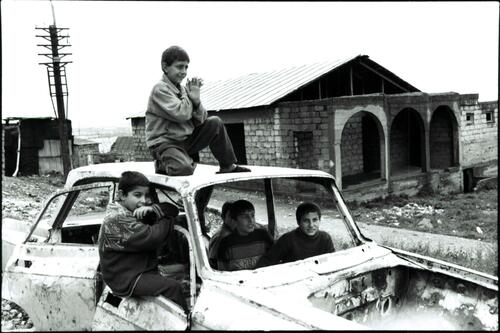
Erevan. Quartier Noragiugh. Enfants des rues. Depuis 1997, MSF travaille a Erevan, capitale de l'Armenie, dans l’institution de Vardashen, ou presque cent enfants sont accueillis et pris en charge. Depuis fevrier 2000, a la prise en charge des enfants dans l’institution, s’ajoute, en amont, le suivi des enfants dans les rues de la capitale. Quatre a cinq fois par semaine, des equipes de deux travailleurs sociaux vont a la rencontre des enfants travailleurs, mendiants ou vagabonds. Un local, ouvert trois apres-midi par semaine dans un des quartiers de la ville, permet d’accueillir ces enfants et leur famille: il leur est offert une aide sociale, psychologique, juridique et medicale. Les equipes interviennent egalement souvent au domicile des enfants.
Armenia

Children in difficult situations: 30 years of MSF in Armenia

The second in a three-part series commemorating 30 years of MSF activities in Armenia, which included ground-breaking work with children living on the streets or in institutions, changing the way the country and its authorities viewed and dealt with children in difficult situations. Project Update - 20 Dec 2018
 
MSF has presence again in El Salvador with projects in San Salvador and Soyapango. Teams work in basic health care and mental health in areas of the cities affected by high levels of violence. Invisible borders erected by the different gangs and constant clashes with security forces limit people’s mobility and prevent them to reach health centres or hospitals.
El Salvador

“They ripped my soul out”

MSF has recently started working with returned migrants and forcibly displaced people in San Salvador, where the team provides medical assistance and psychological support to people like Lucila, whose youngest son was murdered by a gang. Project Update - 19 Dec 2018
 
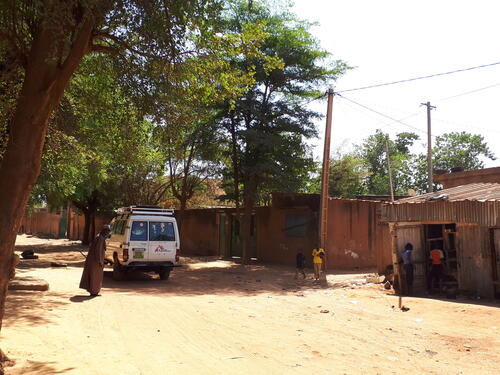
MSF medical team also conducts regular mobile clinics in Niamey and provide on-the-spot consultations. Here on its way to one of the migrant sites.
Niger

Medical care for people on the move in Niamey

Between May and November 2018, MSF staff carried out about 4,500 consultations for people on the move in the capital of Niger, a hub of migration in Africa. Project Update - 19 Dec 2018
 
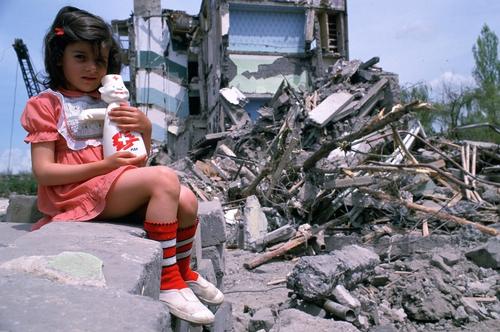
Gyumri, Armenie. Tremblement de terre : petite fille devant des décombres. Little girl in front of ruins caused by an earthquake.
On December 7, 1988, a catastrophic earthquake struck Armenia. A tragedy of enormous proportions, the earthquake claimed the lives of at least 60.000 people. Three days after the earthquake, on December 10, MSF was one of the first international non-government organizations to arrive in Leninakan (Gyumri) to help.
Armenia

Earthquake response: 30 years of MSF in Armenia

The first in a three-part series commemorating 30 years of MSF activities in Armenia, which began when MSF was the first international organisation to respond to the 1988 Spitak earthquake. Project Update - 19 Dec 2018
 
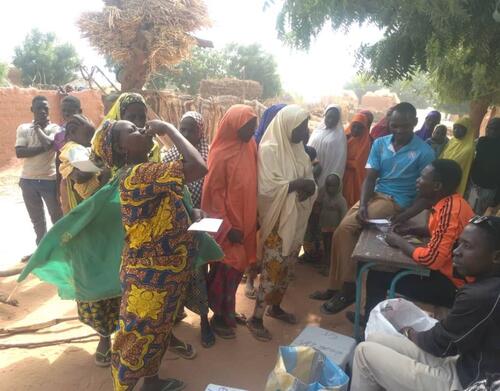
Since early July, Niger has been battling the worst cholera outbreak in years, which affected over 3,800 people and caused 78 deaths. As the disease ebbs, Médecins Sans Frontières and local health authorities shift focus to preventing future outbreaks in the southern region of Maradi, most affected by the current epidemic and known as a hotspot for cholera along the border of Niger and Nigeria. These efforts include vaccination of over 145,000 people with an easy-to-administer oral vaccine in three of Maradi’s health zones: Tchadoua, Aguié and Gazaoua. MSF has provided local health authorities with logistic and technical support. Epicentre is supporting the intervention with a post-vaccination survey.
Niger

Preventing future outbreaks in a cholera hotspot

Since early July, Niger has been battling the worst cholera outbreak in years. As the disease ebbs, MSF and local health authorities shift their focus to preventing future outbreaks in the southern region of Maradi, most affected by the current epidemic and known as a hotspot for cholera along the border of Niger and Nigeria. Project Update - 17 Dec 2018
Four mothers posing in a corridor of the Hospital in Bili. All four of them are staying in the hospital with their child, that's suffering from a severe case of malaria. Since the beginning of the project in 2016, the pediatric ward already treated more than 4.000 cases of complicated/severe form of malaria.
Médecins Sans Frontières (MSF)

Independent medical humanitarian assistance

We provide medical assistance to people affected by conflict, epidemics, disasters, or exclusion from healthcare. Our teams are made up of tens of thousands of health professionals, logistic and administrative staff - most of them hired locally. Our actions are guided by medical ethics and the principles of independence and impartiality. We are a non-profit, self-governed, member-based organisation.

Learn more