62 Results
 
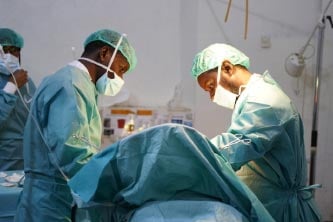
The MSF hospital in Agok is the only facility providing secondary care in the entire Abyei region of South Sudan. This structure deals with emergencies, surgeries, treatments of HIV, tuberculosis, chronic diseases as well as neglected diseases, such as snake bites, a real scourge in the region. In 2019, in order to improve the quality of care, a radiology room was set up and the pharmacy was extended. A lack of specialized structures in the surrounding states forces some patients to travel very long distances to get to Agok hospital, some have to walk for up to 10 hours. This phenomenon illustrates the need for a comprehensive hospital in a country where health care is almost non-existent
Iran

Iran: Despite ceasefire, access to essential medical care remains fragile

MSF teams are working in South Tehran, Mashhad, and Kerman province in Iran, responding to people's growing medical needs. Project Update - 23 Apr 2026
 
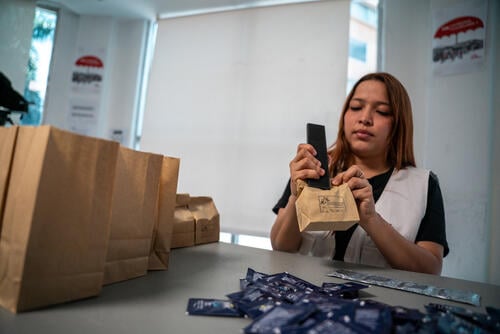
MSF health promoter Kenia Donaire prepares sexual and reproductive health kits to be distributed during the team’s weekly outreach activities in marginalized communities, including LGBTQI+ people and sex workers.
Honduras

A safe space for LGBTQI+ patients in San Pedro Sula

In San Pedro Sula, Honduras, MSF teams provide medical and mental health care tailored to the needs of LGBTQI+ people and people who engage in sex work. Project Update - 22 Apr 2026
 
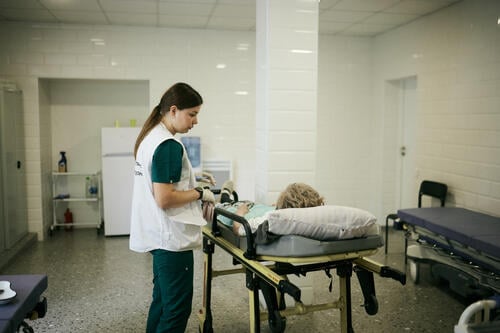
Hanna Dudnyk, MSF emergency doctor, examines, Svitlana, 67, who was brought to the emergency room by ambulance with complaints of loss of consciousness, and severe pain. 

"Svitlana was already treated at this hospital with the same symptoms, but she needs more extensive diagnostics than this hospital can provide. We can see that the patient has lost a significant amount of weight in four months, which is alarming. But, of course, the hospital will provide all the necessary medical care here and now to stabilise the woman's condition," said Hanna Dudnyk.   

This is far from an isolated case in Mykolaiv region, in the south of Ukraine. People are admitted to hospital with complex conditions, stabilised, and recommended for further examination, but they are often unable to travel to hospital in nearest city like Mykolaiv due to financial difficulties, limited mobility, and fear of leaving their homes due to the possibility of shelling.
Ukraine

When chronic illness turns critical in Ukraine

In Ukraine, war-related insecurity and extreme stress are causing people to delay seeking medical care, leading them to develop preventable complications. Project Update - 21 Apr 2026
 
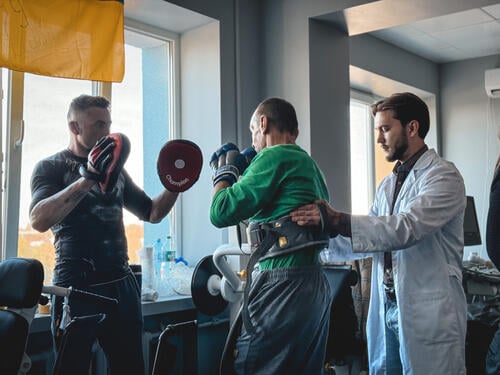
Mr Yurii has been in hospital for a month and a half, following a mine-blast injury that resulted in amputation. 

"I was in trauma for a month, trying to save my leg, but the infection was severe. Initially, I was very worried, but I accepted it. They showed me how to train and the types of prostheses available, and I realised I could walk again. Now I’m actively working with MSF psychologists and physical therapists. They listen, offer advice, and bring me interesting books. I enjoy historical and professional ones; the last ones were about Genghis Khan and the Cossacks. I still want to learn to drive, so I have work ahead of me." 

Mr Yurii is focusing on balance exercises to expedite his progress with the prosthesis.
Ukraine

Providing holistic care to Ukraine’s war injured

In Cherkasy hospital in central Ukraine, MSF is working with the Ministry of Health to provide war-wounded patients with physiotherapy and psychological support. Project Update - 18 Nov 2024
 
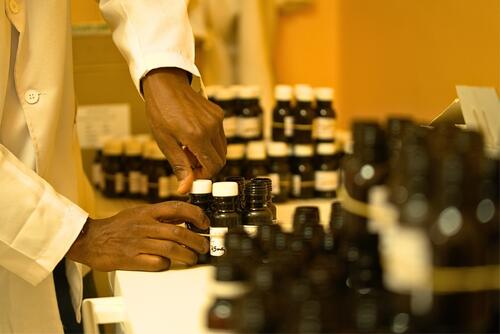
A pharmacy technician packages methadone doses to be delivered to patients in prisons and hospitals. Prison and hospital deliveries ensure continuity of care for them.
Kenya

MSF hands over opioid-subsitution therapy project in Kenya to local organisations

MSF has handed over our programme in Kenya which provided sustainable care for people who use drugs in the region. Project Update - 9 Jul 2024
 
R6M visit– Finda at the end of her six-monthly R6M consultation at the MSF-supported HIV outpatient department at Matam health centre, Conakry, Guinea 

Finda Oulare, 49 years has three children and lives nearby Matam health centre, where MSF provides HIV TB outpatient and ambulatory services. As a member of R6M, she comes to Matam health centre twice a year for a consultation and to collect her ARVs. 

Finda was diagnosed with HIV in 2010. She suspects she may have contracted HIV in Luanda, Angola, where she had surgery.

“Every time I take my meds on time, I feel better. R6M helps with this because I don’t have delays in coming to the hospital.”

R6M (Rendez-vous de Six Mois) is an MSF-developed model of care where stable patients come for appointments every six months (rather than the standard 1-2 months for a medical consultation) where they pick up six-months of ARV supplies. They also have a yearly VL screening. R6M members significantly reduce costs and time for stable HIV patients, while freeing up health centers for other patients who need more dedicated care.
Patients are eligible for R6M if they met the following criteria:  older than 15years, on first line ARVs, no opportunistic infections, VL
HIV/AIDS

MSF at AIDS 2018

Details of how to find info on MSF publications, materials, and sessions at the 22nd International AIDS Conference in Amsterdam, 23-27 July 2018. Follow on Twitter: @MSF_HIV Project Update - 16 Jul 2018
 
MAKHMOUR, IRAQ - OCTOBER 30:

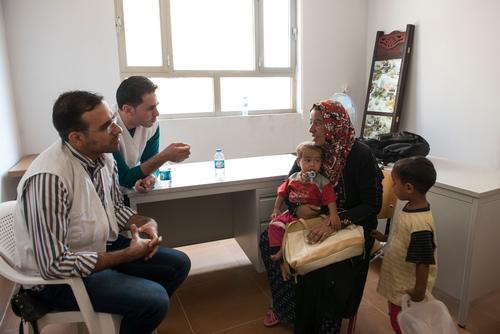
Dr Mahmoud Habeb, a psychologist speaks with his patient at a healthcare facility in Debaga 1 with Mental Health Activity Manager Bilal Budair. 

Scenes at MSF facilities at Debaga camp in Debaga outside of Erbil, Iraq. IDP's seek mental as well as primary healthcare from MŽdecins Sans Frontires (MSF) International.

(Photo by Monique Jaques/ For MSF)
Iraq

MSF assists traumatised people from Mosul

Some 30,000 people are living in camps in Hassansham and Khazer, 35 kilometres east of Mosul. MSF’s mental health teams see around 45 patients a day. Project Update - 10 Jan 2017
 
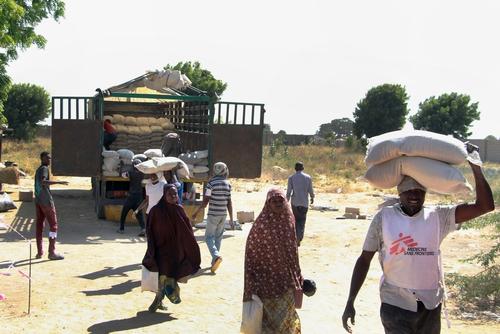
MSF distributed food to 500 families in Maiduguri on December 14, 2016. Each family receives enough food for two weeks; 25 kilograms of millet, five kilograms of beans and five litres of palm oil. The ration also includes eight bars of soap.
Nigeria

Food distribution in Maiduguri

Over the past three months, our teams have distributed 810 tonnes of food in Maiduguri, northeastern Nigeria, which is enough to feed 26,000 families for two weeks. Project Update - 5 Jan 2017
 
msf-placeholder
NATO

NATO handover of Brazda camp operations to MSF

Project Update - 13 Apr 1999
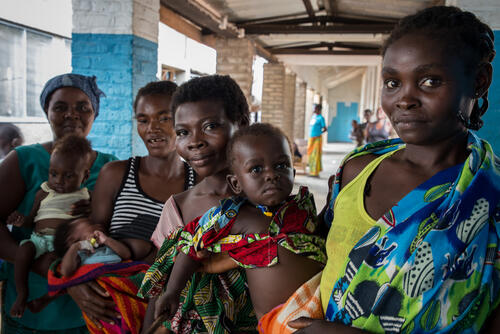
Four mothers posing in a corridor of the Hospital in Bili. All four of them are staying in the hospital with their child, that's suffering from a severe case of malaria. Since the beginning of the project in 2016, the pediatric ward already treated more than 4.000 cases of complicated/severe form of malaria.

Médecins Sans Frontières (MSF)

Independent medical humanitarian assistance

We provide medical assistance to people affected by conflict, epidemics, disasters, or exclusion from healthcare. Our teams are made up of tens of thousands of health professionals, logistic and administrative staff - most of them hired locally. Our actions are guided by medical ethics and the principles of independence and impartiality. We are a non-profit, self-governed, member-based organisation.

Learn more