



3451 Results
 
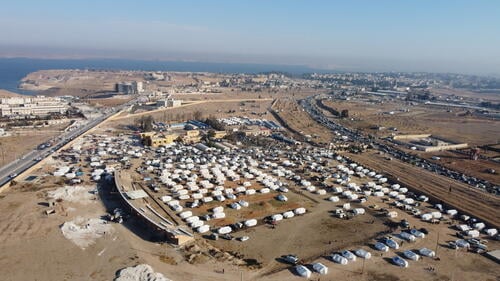
An aerial view of the temporary tents of displaced people who fled the fighting in northern Aleppo governorate to the city of Tabqa, in northeastern Syria, with the Tabqa Dam showing in the background.
Syria

Syrians share stories of violence and displacement from temporary shelters in the northeast

Hear from Syrians who have been displaced by violence and are staying in temporary shelters. Project Update - 11 Feb 2025
 
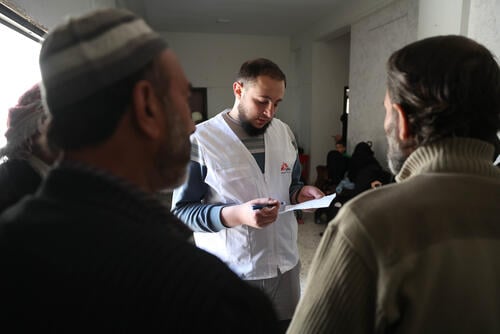
MSF health promotion officer Abdullatif Bokay provides patients at the waiting area of the mobile clinic in East Ghouta, Syria, with essential information on non-communicable diseases (NCDs). This awareness helps patients better manage their conditions, promotes early detection, and improves overall health outcomes.
Syria

MSF mobile clinics bring care to Syria’s neglected region of east Ghouta

For the first time in over a decade, MSF teams have returned to east Ghouta, Syria. Project Update - 6 Feb 2025
 
Overcrowded housing in the informal settlement of Machar Colony in Karachi, Pakistan.
Pakistan

Turning the tide of hepatitis C treatment in Machar Colony

While hepatitis C remains a challenge in Machar Colony, Pakistan, the alarming spread has been curtailed, thanks to widespread awareness and early detection. Project Update - 30 Jan 2025
 
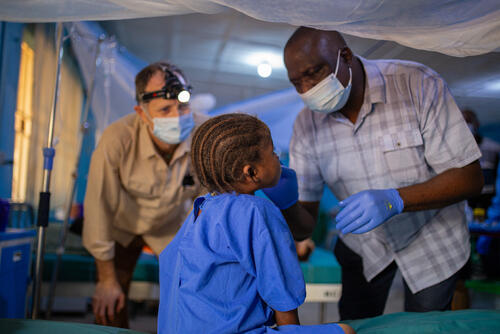
Dr. Kefas and Dr. Dave examine a young girl with noma who underwent life-changing reconstructive surgery.
Neglected diseases

Four diseases you’ve probably never heard of

These are four neglected tropical diseases that we see in communities we serve. Project Update - 30 Jan 2025
 
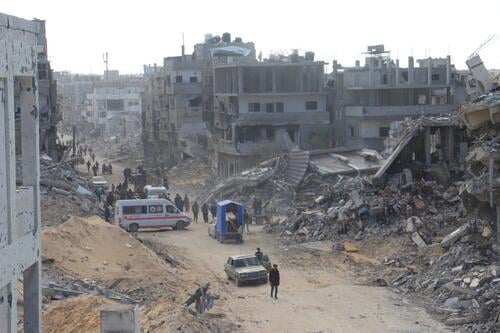
After 15 months Israel‘s war on Gaza, Palestine, and the implementation of the ceasefire on 19 January 2025, displaced Palestinians are attempting to return home to the southern city of Rafah. While people try to rebuild the ruins, Rafah is totally destroyed, with homes, shops, streets and healthcare facilities in ruins and electricity and water systems damaged – and unsafe due to scattered unexploded ordnance in the ruins of buildings. 

In May 2024, Rafah had the largest concentration of displaced Palestinians in the Strip with an estimated 1.5 million Palestinian living in tents and makeshift shelters. People were living in inhumane conditions, facing disease outbreaks, malnutrition, and the psychological impact of being forcibly displaced multiple times. Médecins Sans Frontières / Doctors Without Borders teams working in Rafah were providing primary health care, mental health support in the Shabboura clinic and supporting pediatric and maternity care in the Ministry of Health Emirati hospital in Rafah.   

Eventually, MSF teams were forced to close activities and evacuate the area after continuous bombings and evacuations orders by Israeli forces, as the looming threat of a ground invasion by Israeli forces, which began on May 6, 2024. The military operations by Israeli forces led to the emptying of Rafah, mass destruction of the city, and to the closure of the Rafah crossing, severely hindering the delivery of humanitarian aid into the Strip. Rafah was also the home to many of MSF colleagues, many who had fled other parts of the Gaza Strip.
Gaza-Israel war

Destruction of life and homes leaves people unable to return safely to Rafah

Nearly 70 per cent of all structures in Gaza have been destroyed or damaged. Now, people are attempting to return home in the southern city, Rafah. Project Update - 27 Jan 2025
 
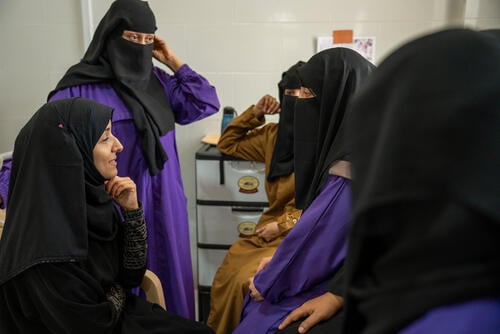
Doctor Azhar, gynaecologist talks with Altaf al Wahidi and Noria al Wahidi, midwives and sisters, about the patients they have cared for today.
Yemen

A lifeline for mothers-to-be on Yemen’s west coast

Around 250 women give birth every month at our maternity ward in Mocha General hospital. Project Update - 21 Jan 2025
 
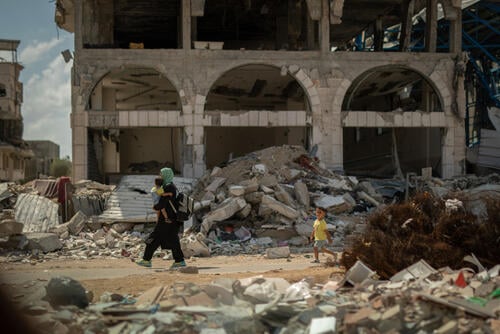
In the Shujaeyya neighborhood on Baghdad Street in Gaza City, a woman is carrying her child back home through the rubble.
Gaza-Israel war

North Gaza’s destruction is a “sight that cannot be described”

While a ceasefire in Gaza has been announced, north Gaza remains devastated and destroyed by Israeli forces' relentless bombardments. Project Update - 20 Jan 2025
 
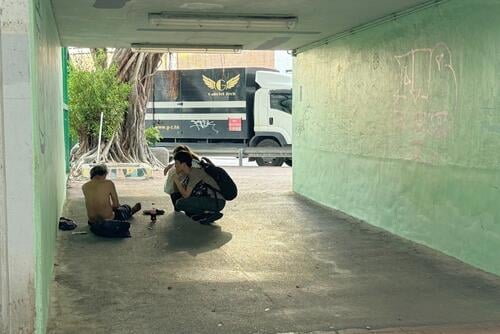
As a global financial hub, Hong Kong projects an image of prosperity and resource abundance. In its shadows however, consistently marginalised groups fall outside of the well-developed healthcare system’s reach. Doctors Without Borders/Médecins Sans Frontières (MSF) has provided free primary healthcare to the homeless communities in Hong Kong’s Yau Tsim Mong and Shum Shui Po districts, the majority of whom are aged 50 or above, since August 2023. People experiencing homelessness in Hong Kong do not receive adequate medical care most often due to their lack of health literacy and inability to prioritise their own health and well-being. 
 
Responding to these unmet needs, MSF initiated a model of social-medical partnerships with local NGOs to deliver holistic patient-centred care, which MSF teams provided by offering regular basic health screenings, health promotion sessions and psychosocial support for people experiencing homelessness, while collaboration partners offered ongoing case follow-up. These local partners also received support in capacity-building to ensure continuity of care for people in the programme as MSF’s project came to an end in December 2024.
Hong Kong

MSF completes healthcare project for people experiencing homelessness in Hong Kong

Médecins Sans Frontières (MSF) provided free basic healthcare to communities of people who are experiencing homelessness in Hong Kong’s Yau Tsim Mong and Shum Shui Po districts between August 2023 and December 2024. Project Update - 17 Jan 2025
 
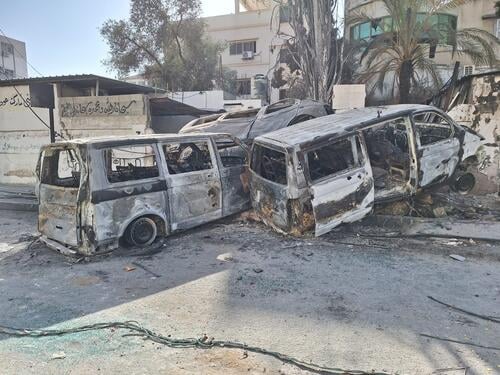
On 20 November, five MSF vehicles parked in front of our clinic in Gaza city were destroyed by the intervention of the Israeli forces. The clinic was also damaged as a result and part of the building was engulfed by fire for a few hours. The cars and the clinic were clearly identified with the MSF logo. This happened while 21 people, including an MSF staff and his family members, were sheltered in the clinic and more than 50 others were in the guesthouse across the street: luckily, they survived unscathed. The cars that were destroyed were the ones used in the aborted evacuation of our staff and their relatives on 18 November, resulting in the killing of two people. Some of the staff sheltering in the MSF premises that day were witnesses to the incident.
Gaza-Israel war

Strikes, raids and incursions: Over a year of relentless attacks on healthcare in Palestine

A timeline of attacks on MSF or MSF-supported medical facilities and medical practitioners in Palestine since 7 October 2023. Project Update - 7 Jan 2025
 
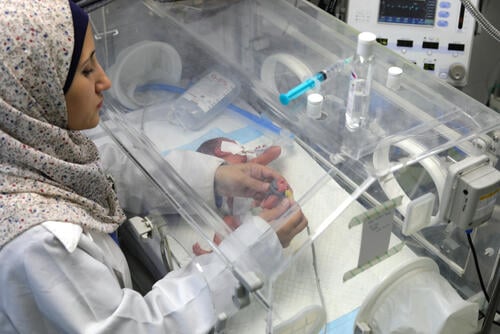
MSF nurse tending to newborn in neonatal intensive care unit of Nasser hospital, Khan Younis, Gaza. From October 2024 to December 2024, the MSF supported neonatal intensive care unit has had 325 admissions. For months, the hospital has struggled with supplies due to the ongoing blockade by Israeli forces of the strip – with medical teams often lacking enough basic medical supplies including soap.  

MSF teams in the neonatal intensive care unit (NICU) are treating children with respiratory infections, dehydration, and premature newborns with complications. The health needs of children are so high that the NICU has been operating beyond its bed capacity for over three months. Over a quarter of the patients in the department are admitted for respiratory distress syndrome, a condition that can present in premature infants, making them even more vulnerable in dire living conditions many face in Gaza.
Gaza-Israel war

Babies in Gaza at risk of disease and death as winter approaches

As temperatures drop and living conditions deteriorate in Gaza, Palestine, babies are at increased risk of disease and death. Project Update - 2 Jan 2025
Four mothers posing in a corridor of the Hospital in Bili. All four of them are staying in the hospital with their child, that's suffering from a severe case of malaria. Since the beginning of the project in 2016, the pediatric ward already treated more than 4.000 cases of complicated/severe form of malaria.
Médecins Sans Frontières (MSF)

Independent medical humanitarian assistance

We provide medical assistance to people affected by conflict, epidemics, disasters, or exclusion from healthcare. Our teams are made up of tens of thousands of health professionals, logistic and administrative staff - most of them hired locally. Our actions are guided by medical ethics and the principles of independence and impartiality. We are a non-profit, self-governed, member-based organisation.

Learn more