479 Results
 
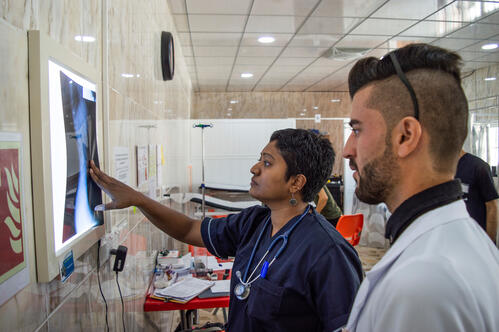
SF’s Dr Punidha examines X-ray results in the emergency room of Sinuni general hospital in Sinjar.
Iraq

Rehabilitated hospital improves access to healthcare in Sinjar district

MSF has started activities in Sinuni, the most densely populated town in Sinjar district, where access to healthcare has been drastically compromised by severe damage to medical infrastructure, the displacement of health professionals, and ongoing insecurity in parts of the governorate. Press Release - 8 Nov 2018
 
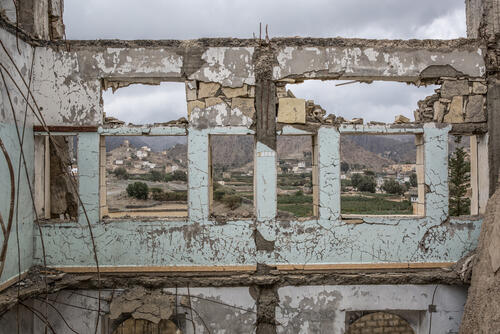
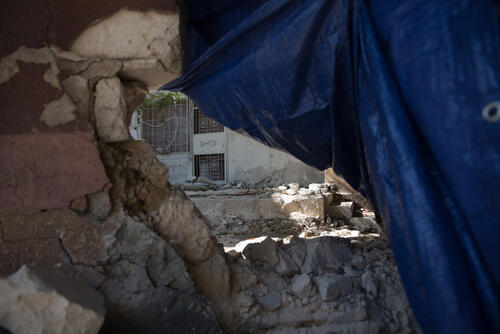
Yemen, gouvernorat de Saada, Haydan, mars 2018. A l'intérieur de l'école de Haydan, bombardée en 2016 par la coalition internationale dirigée par l'Arabie Saoudite.


Saada governorate in Yemen, Haydan, March 2018. Inside Haydan school, bombarded in 2016 by the international coalition led by Saudi Arabia.
Yemen

Influx of war wounded as fighting intensifies in Hodeidah, Hajjah, Saada and Taiz

As fighting intensifies in Hodeidah and other parts of the country, MSF is extremely concerned for patients and staff at its health facilities, as well as for the thousands of people who live near frontlines. Press Release - 7 Nov 2018
 
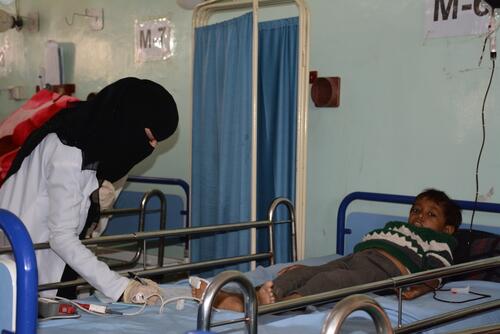
In Patients Department, at Alnasr General Hospital was supported by MSF in Ad Dhale.
Yemen

Projects in Ad Dhale close due to insecurity and threats

After multiple security incidents directly targeting patients, staff and MSF-supported medical facilities in the area, we are left with no choice but to close all medical and humanitarian activities in Ad Dhale governorate. Press Release - 7 Nov 2018
 
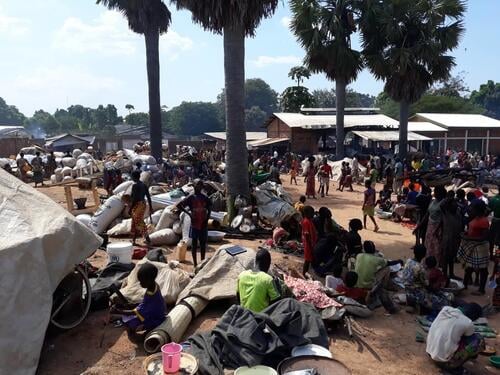
On Wednesday, 31 October 2018, violent clashes in Batangafo, in the northern Central African Republic, led to 10,000 people fleeing to seek shelter in an MSF-supported hospital. Violence also affected Bambari, in the centre of the country. In total 32 wounded people received treatment at MSF facilities.
Central African Republic

More than 10,000 seek refuge in Batangafo hospital

Following clashes between armed groups that took place on Wednesday, 31 October 2018 in the north and centre of the Central African Republic (CAR), more than 10,000 people fled to seek refuge in the compound of a hospital supported by Médecins Sans Frontières (MSF). Press Release - 2 Nov 2018
 
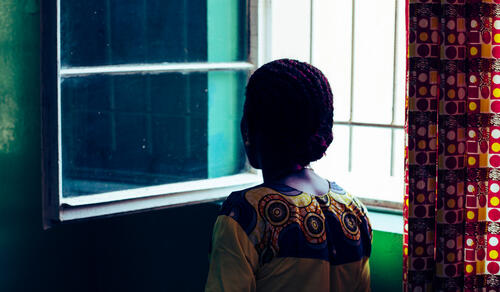
"I was at home with my husband that day. It was during the violence and fighting. We heard screams outside and neighbours crying. “I think they’ve killed someone,” my husband said. So we shut ourselves inside. We didn’t want to open the door. Armed men threw tear gas through the window to force us out. Eight people came into our home. They threatened to kill my husband and tried to force him to rape our daughter. She was 17. He refused and they murdered him. Then they raped our daughter, and me.

When they left, I hid in the forest next to the village with my children. I didn’t sleep or eat. For a year, before coming to the clinic, I was terrified by the thought that I could have HIV.

When I went back to Kananga – my father was very sick so I decided to return with my children – I went to see MSF at the hospital where they looked after victims of sexual violence. They examined me and told me that I didn’t have HIV."

//

"J’étais à la maison avec mon mari ce jour-là. C’était pendant le conflit et les affrontements. Nous avons entendu des cris de dehors et les voisins qui pleuraient. Mon mari m’a dit : « je crois qu’ils ont tué quelqu’un ». Nous nous sommes alors enfermés dans la maison et n’avons pas voulu ouvrir la porte. Des hommes armés ont lancé du gaz lacrymogène par la fenêtre pour nous obliger à ouvrir. Huit personnes sont entrées dans la maison. Ils ont menacé de mort mon mari et l’ont obligé à violer notre fille de 17 ans. Il a refusé et ils l’ont tué. Ensuite, ils ont violé notre fille, et moi aussi.

Quand ils sont partis, je suis partie dans la forêt, à côté du village, avec mes enfants. Je ne dormais pas et ne mangeais pas. Pendant un an, avant que je ne vienne à la clinique, j’étais très angoissée à la pensée d’avoir peut être contracté le VIH.

Mais quand j’ai dû rentrer à Kananga – mon père était très malade et j’ai donc décidé de m’y rendre avec mes enfants. Je me su
Democratic Republic of Congo

Sexual violence committed by armed men in Kasai

Between May 2017 and September 2018, MSF treated 2,600 victims of sexual violence in the town of Kananga in Kasai Central, Democratic Republic of Congo (DRC). Eighty per cent reported having been raped by armed men. Press Release - 1 Nov 2018
 
Damaged building in Bin Ashour area consequence of a rocket fired by unknown militia during the fighting that erupted in Tripoli on 26th of August.
Libya

Evacuation of refugees and migrants out of Libya is urgently needed

Thousands of refugees, migrants and asylum seekers arbitrarily held in Libyan detention centres must be immediately released and evacuated to safety out of the country. Press Release - 7 Sep 2018
 
Nashwan, 42, is prepared for surgery at the Médecins Sans Frontières / Doctors Without Borders (MSF) post-operative care facility in east Mosul. Nashwan is one of the many war-wounded patients still trying to recover a year after the conflict in Mosul officially ended. 

“On 11 March 2017, our neighbourhood was retaken [from the Islamic State group],” Nashwan recalls. “Two days later, we went out to buy food and we were happy. But fighting was continuing in the neighbourhoods around ours. There was a tall building nearby and there was a sniper on top. He started hunting us down. My neighbour was shot in the head and killed. My brother was shot in the leg. The sniper shot me in the back and in the leg.”

Nashwan went to several hospitals outside Mosul for treatment. He then returned to his home in west Mosul where the conflict was still raging. 

“I waited in my home for several months for the bombs to stop,” he says. “When I was at home during these seven months the pain started to grow in my leg and hip, and eventually it became unbearable. So in October 2017 I went to the general hospital in west Mosul. They did x-rays and tests and they said I needed a huge operation and they didn't have the capacity to do the operation.” 

Nashwan’s neighbours helped him pay for a private doctor to do the operation, but it was unsuccessful and Nashwan was soon in agonising pain again. He was forced to go back to the general hospital, which then referred him to MSF’s surgery and post-operative care facility in east Mosul.

“Life has been really hard. My injury has had a negative impact on my life - my family, the way I interact with my kids. I can’t play with them. I can't work and we haven’t had an income. I've been really depressed and I cannot talk to people. Even to go to the bathroom I need someone to come with me. And I need the crutches to go everywhere. It's been really hard for me. But thankfully the hardest part has passed now that I am here.” 

The MSF facility provides free surgeries, post-operative care, rehabilitation and mental healthcare, especially for war-wounded patients. MSF works closely with local health authorities to refer the most urgent patients for care.  

The facility is run by a team of 30 highly qualified international and Iraqi medical experts and has a 33-bed capacity.
Iraq

A year on from battle, Mosul’s healthcare system is still in ruins

National authorities and the international community need to urgently rebuild public health infrastructure, provide patients with access to affordable medication and ensure medial facilities are supplied with the necessary equipment. Press Release - 9 Jul 2018
 
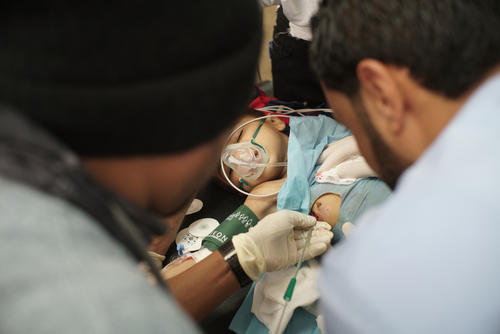
A young Syrian boy was hit by an astray bullet while being home.The bullet landed in his chest and went straight through his lungs. MSF medical teams in the ER of Tal Abyad hospital are trying to save his life.
Syria

Seeking to assist Syrians, wherever they are in need of help

After seven years of being denied access, Médecins Sans Frontières (MSF) once again requests the Syrian government to grant us access to all areas to provide medical treatment to Syrians in dire need, wherever they are. Press Release - 23 May 2018
 
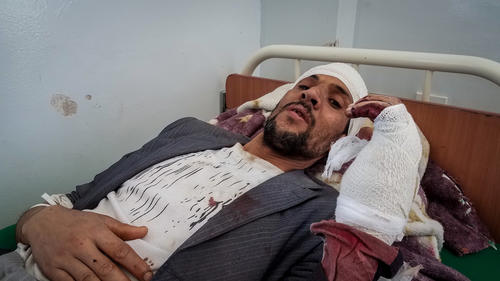
Hussein, a 30-year-old cafeteria worker, suffered shrapnel wounds to his head, hand and back. 
“I came to collect my transportation allowance from work. On my way, the airstrike hit and I got injured. I do not know what happened to the rest of my colleagues,” he said.
Yemen

MSF-supported hospitals treat mass casualties caused by airstrikes in Sana'a

A series of airstrikes on Monday morning by the Saudi and Emirati-led coalition struck near a busy street in the heart of Sana'a, Yemen. The airstrikes targeted the Yemeni presidential office, which is located near a hotel, pharmacies, a bank and shops, and resulted in a mass casualty influx of at least 72 injured and 6 dead at two hospitals supported by Médecins Sans Frontières (MSF). Press Release - 8 May 2018
 
msf-placeholder
Yemen

MSF condemns airstrikes on a wedding party in Hajjah

Médecins Sans Frontières (MSF) received 63 casualties in a hospital it supports in Hajjah, following a series of night-time airstrikes by the Saudi and Emirati-led coalition on a wedding party that took place in a remote, impoverished village in Bani Qays district in Yemen, on Sunday 22 April. Press Release - 25 Apr 2018
Four mothers posing in a corridor of the Hospital in Bili. All four of them are staying in the hospital with their child, that's suffering from a severe case of malaria. Since the beginning of the project in 2016, the pediatric ward already treated more than 4.000 cases of complicated/severe form of malaria.
Médecins Sans Frontières (MSF)

Independent medical humanitarian assistance

We provide medical assistance to people affected by conflict, epidemics, disasters, or exclusion from healthcare. Our teams are made up of tens of thousands of health professionals, logistic and administrative staff - most of them hired locally. Our actions are guided by medical ethics and the principles of independence and impartiality. We are a non-profit, self-governed, member-based organisation.

Learn more