



Ebola disease in DRC: find out how we're responding
Learn more
123 Results
 
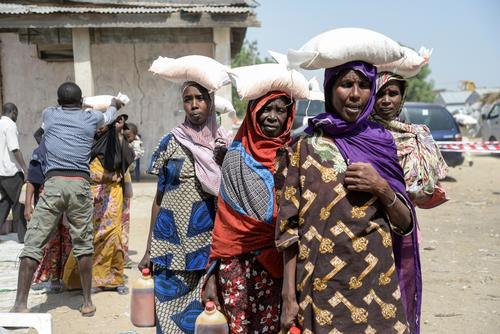
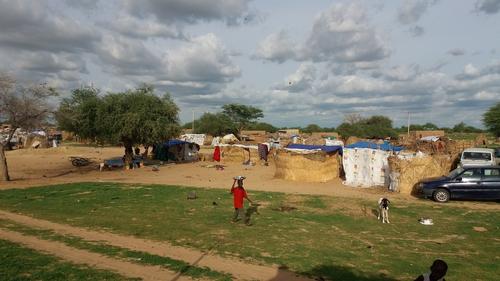
Between 600 and 620 families are living in the Fariya camp. (=3600 people).
1070 children under 5. Unofficial camp. Until our intervention, they had very little support. Latrines ACF, shleter by IOM. Most people are shuwa arab (ethnic group) coming from Marte. 
ACF just open an OPD on Monday. 
This was our second distribution there. 
300 living in 150 IOM shelters (2 families in 1 shelter). Others live in makeshift tents. 
People have been here for 10 months more or less. 
3 boreholes but only 1 working solar
Nigeria

After two years of crisis, what does the future hold for the displaced in Borno?

Interview with Isabelle Mouniaman-Nara, MSF programme manager in Nigeria Voices from the Field - 3 Feb 2016
 
msf-placeholder
Ebola and haemorrhagic fevers

Ebola crisis update - 14 January 2016

Today should be a day of celebration and relief, but the world also needs to learn its lessons from this epidemic. Crisis Update - 14 Jan 2016
 
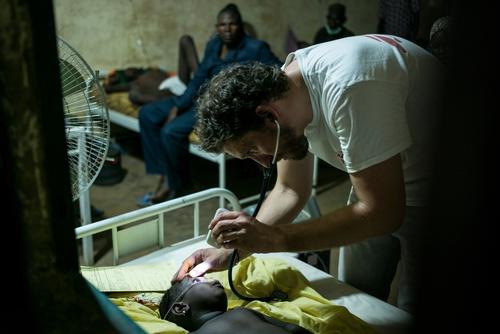
A patient affected by meningitis is cared by an MSF doctor Clement Van Galen.
Epidemics and pandemics

Epidemics: Neglected emergencies?

MSF draws attention to the challenges and choices that may impair effective response to emergencies, epidemics and outbreaks. Report - 25 Nov 2015
 
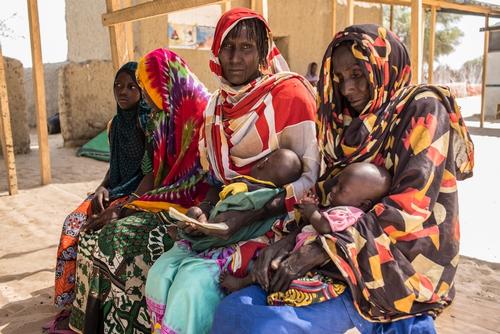
Situated in the Lake Chad region, the site of Koulkimé in Chad hosts approximately 1,800 displaced people according to OCHA. They have fled Islamic State's West Africa Province (ISWAP), also known as Boko Haram, as well as military operations carried out by the Chadian government.  MSF is working together with the Chadian Ministry of Health to support the primary health centre in Koulkimé.
Lake Chad Crisis

“The only certainty is that people will remain uprooted and continue to live in fear”

Interview with MSF Director of Operations in the Lake Chad region about the effect of continued attacks by the Islamic State’s West Africa Province (ISWAP) group, also known as Boko Haram. “In the Lake Chad area, we are seeing a regional crisis with large-scale humanitarian consequences. People continue to flee from violence, across borders and inside their own countries." Voices from the Field - 23 Nov 2015
 
msf-placeholder
Ebola and haemorrhagic fevers

Crisis update - 2 November 2015

The emergency is not over – the Ebola epidemic in West Africa continues in Guinea where three new cases were recorded last week. Crisis Update - 3 Nov 2015
 
msf-placeholder
Nigeria

MSF transforms faces and lives of patients suffering from noma

MSF has held its first surgical intervention in Nigeria for people with noma, a disfiguring and often deadly infection which mainly affects young children. In late August, 19 patients at the Noma Children's Hospital in Sokoto, northwestern Nigeria, underwent reconstructive surgery which will improve their health and their chances of re-entering society and living a normal life. Project Update - 22 Oct 2015
 
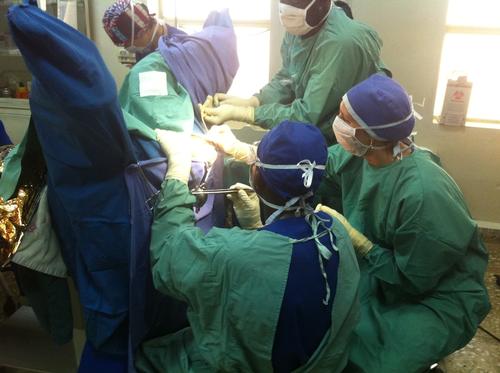
Senior VVF surgeon Dr. Said and VVF Nurse Manager Kate Norgang discuss a VVF repair. Dr. Said is an avid teacher; all staff involved with the VVF program learns from him on a regular basis.
Nigeria

“Providing a safe childbirth to Nigerian mothers”

Interview with Dr Sivapalan Namasivay, MSF anaesthesiologist, back from Jahun Hospital in the North of Nigeria, where MSF is responsible for maternity care. Voices from the Field - 30 Sep 2015
 
msf-placeholder
Nigeria

Cholera spreads in displaced persons camps in Borno State

The first cases of cholera appeared one month ago in the internally displaced persons (IDP) camps in Maiduguri, the capital of Borno State, which is sheltering more than 1.6 million displaced persons. Over a three-week period, the disease spread to the city’s two other IDP sites. The official count of 16 September recorded 172 cholera cases and 16 deaths. Press Release - 17 Sep 2015
 
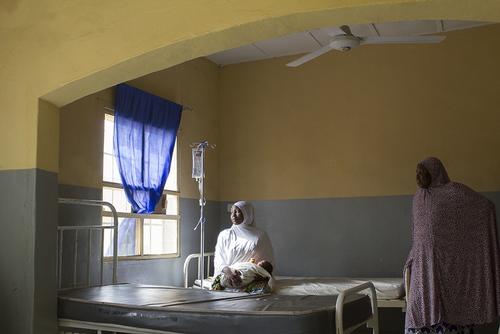
Hauwa Mohammed with her baby and mother at Maimusari maternityHospital.
Nigeria

Displaced by conflict in Nigeria

Since May 2013, a violent insurgency by Boko Haram has led to widespread displacement and an escalating humanitarian crisis in the Lake Chad region. According to UNHCR, nearly 1.4 million people have been internally displaced in northeast Nigeria alone, and approximately 170,000 people have fled to neighbouring Cameroon (56,000), Chad (14,000), and Niger (100,000). At least 1,300 people have died due to the violence so far this year. Photo Story - 27 Aug 2015
 
Between Chétimari and Gagamari, 17000 refugees from Nigeria have settled after fleeing their village Damasak, Northern Nigeria, from the threat of attacks from Boko Haram group.
Niger

Influx of Nigerian refugees in the Diffa region continues

"The families fled Nigeria in May, leaving everything behind while Boko Haram reduced their village to ashes. The refugees are now entirely dependent on humanitarian aid. While they have quickly built huts, and some have received plastic tarpaulins and other essential supplies, most do not have access to drinking water, and the hygiene conditions are appalling," says Ahmad Samro, MSF's Project Manager, about the situation in Diffa. Voices from the Field - 20 Aug 2015
Four mothers posing in a corridor of the Hospital in Bili. All four of them are staying in the hospital with their child, that's suffering from a severe case of malaria. Since the beginning of the project in 2016, the pediatric ward already treated more than 4.000 cases of complicated/severe form of malaria.
Médecins Sans Frontières (MSF)

Independent medical humanitarian assistance

We provide medical assistance to people affected by conflict, epidemics, disasters, or exclusion from healthcare. Our teams are made up of tens of thousands of health professionals, logistic and administrative staff - most of them hired locally. Our actions are guided by medical ethics and the principles of independence and impartiality. We are a non-profit, self-governed, member-based organisation.

Learn more