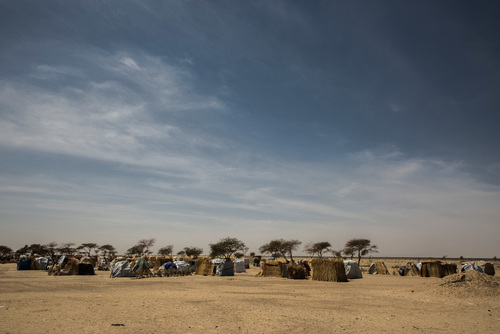
Site for displaced people and refugees in Garin Wazan.

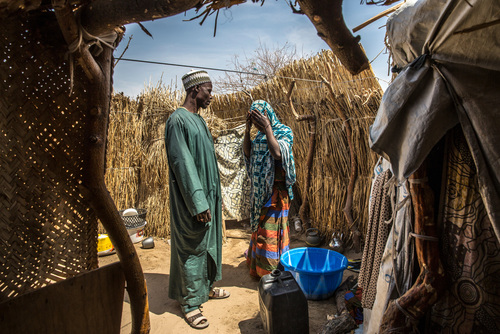
In Garin Wazan, there is currently a displaced community of more than 8,000 people from the islands of Lake Chad. “Boko Haram stole some of the cattle, and we lost the rest because we had to leave,” explains the community chief.
© Juan Carlos Tomasi/MSF

The burden of violence in the Diffa region

In Garin Wazan, there is currently a displaced community of more than 8,000 people from the islands of Lake Chad. “Boko Haram stole some of the cattle, and we lost the rest because we had to leave,” explains the community chief.
© Juan Carlos Tomasi/MSF
Ebola disease in DRC: find out how we're responding
Learn more

More than 240,000 displaced people and refugees are now living in the Diffa region, in southeastern Niger. Their lives have been interrupted by the conflict between Boko Haram and the armies in the area that has displaced more than 2.6 million people in the Lake Chad Basin.
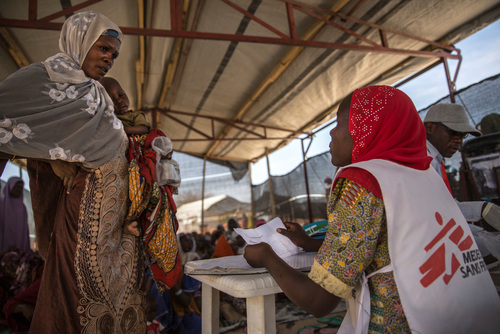
Access to healthcare is also a need that is not always covered in Diffa. Outside the locations where Médecins Sans Frontières is working, the population has to pay for health services, a huge constraint since they have hardly any money.
More than 240,000 displaced people and refugees are now living in the Diffa region, in southeastern Niger. Their lives have been interrupted by the conflict between Boko Haram and the armies in the area that has displaced more than 2.6 million people in the Lake Chad Basin.
Juan Carlos Tomasi/MSF
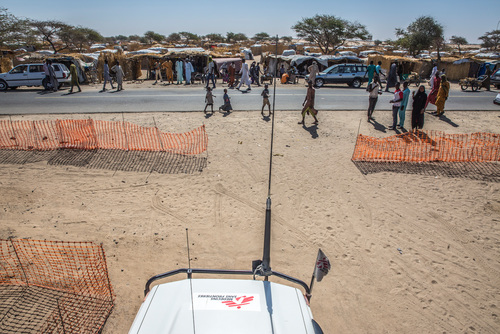
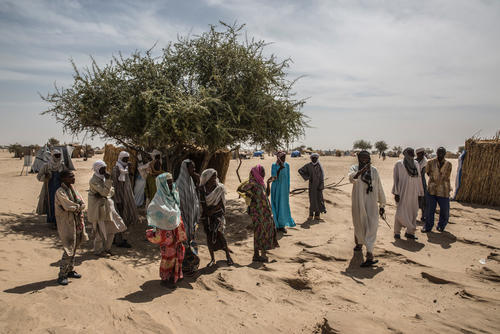
Site for displaced people and refugees in Kintchandi.
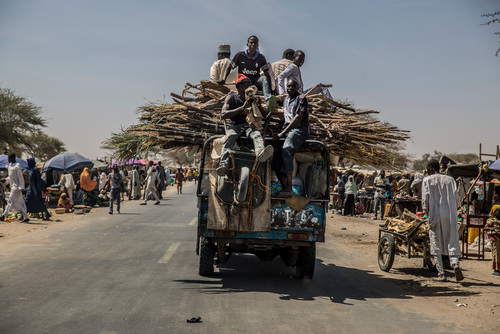
Thousands of families in search of refuge have settled around this village, near the main road that crosses the region.

One-third of the displaced people in Diffa have been forced to flee two or more times because of violence in the last few years, exacerbating their vulnerability.
Site for displaced people and refugees in Kintchandi.Thousands of families in search of refuge have settled around this village, near the main road that crosses the region.
Juan Carlos Tomasi/MSF
Site for displaced people and refugees in Garin Wazan.

In Garin Wazan, there is currently a displaced community of more than 8,000 people from the islands of Lake Chad. “Boko Haram stole some of the cattle, and we lost the rest because we had to leave,” explains the community chief.
Juan Carlos Tomasi/MSF
The sites in Garin Wazan and Kintchandi were created in June 2016, when tens of thousands of displaced people had to flee after the attack on the town of Bosso, very close to the border with Nigeria. Most of them were already displaced people and this was just the latest movement they were forced to make.
The sites in Garin Wazan and Kintchandi were created in June 2016, when tens of thousands of displaced people had to flee after the attack on the town of Bosso, very close to the border with Nigeria. Most of them were already displaced people and this was just the latest movement they were forced to make.
Juan Carlos Tomasi/MSF
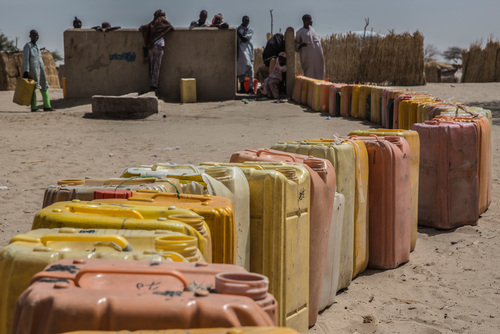
A water collection point for families in Garin Wazan. Despite the humanitarian aid, living conditions remain difficult in the camp and not all basic needs are met. A lack of water, latrines and food, in sufficient quantity and quality, are the main problems.
Juan Carlos Tomasi/MSF
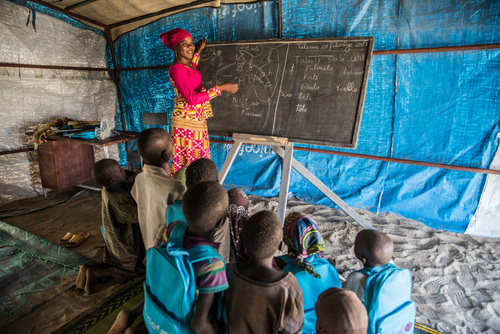
School in Garin Wazan. According to UN data, 30 schools are still closed in Diffa due to the conflict, and the few that remain open don’t have any basic equipment. Access to education has also been greatly limited in recent years in the region.
School in Garin Wazan. According to UN data, 30 schools are still closed in Diffa due to the conflict, and the few that remain open don’t have any basic equipment.
Juan Carlos Tomasi/MSF
The Diffa region has been facing this humanitarian crisis for over two years, and hundreds of thousands of people are totally dependent on humanitarian aid.
Juan Carlos Tomasi/MSF
This road that crosses the Diffa region is asphalted until a little after Kintchandi, and then it becomes a dirt track. Many people have sought safety alongside it. In addition to the larger camps in Kintchandi and Garin Wanzan, there are many smaller ones along the road.
This road that crosses the Diffa region has asphalt until a little after Kintchandi, and then it becomes a dirt track. Many people have sought safety alongside it.
Juan Carlos Tomasi/MSF