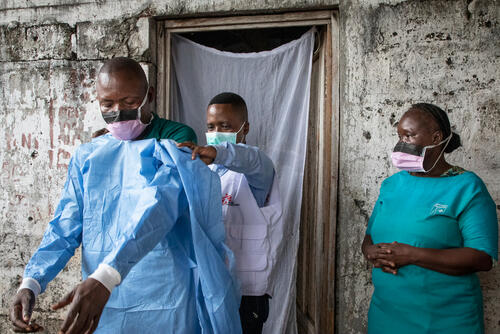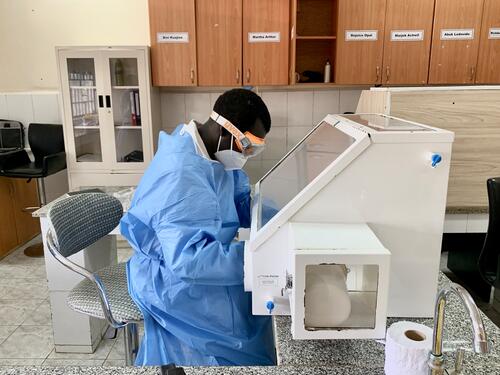
Most of the people admitted to Covid+ centres are homeless people sent from emergency shelters. When MSF mobile teams who intervene in these shelters diagnose someone as possibly having contracted the virus they try to test them——if they have the necessary kits.
From the medical perspective, we know the symptoms of the virus, so we can identify anyone suspected of having the disease. The Regional Health Authority then calls on the Red Cross, which handles transportation, to take them to Covid+ centres set up across Paris and the suburbs. 

In Chatenay-Malabry Covid+ centre (Paris suburbs), there are places for 50 people with confirmed or suspected Covid-19. We provide social support and paramedical/medical care in partnership with NGO Alteralia. This includes checking vital signs: blood pressure, temperature and oxygen saturation to see whether people are breathing properly. We also give advice on hygiene, wearing a mask and hand washing to prevent the infection spreading to other people. We also give medical examinations and, when necessary, take care of patients requiring long-term treatment for other conditions. We monitor them regularly, so if all of a sudden someone who’s really struggling to breathe—remember, this isn’t a hospital so we don't necessarily have the equipment to keep them on oxygen for any length of time—requires further tests, this is the kind of person we call the emergency services for so that they can take them to the hospital. 

MSF teams are on hand throughout the care chain: from the mobile teams, mobile clinic and care provided in the emergency centres through to the medical team who treat patients admitted to the Covid-19 treatment centres.
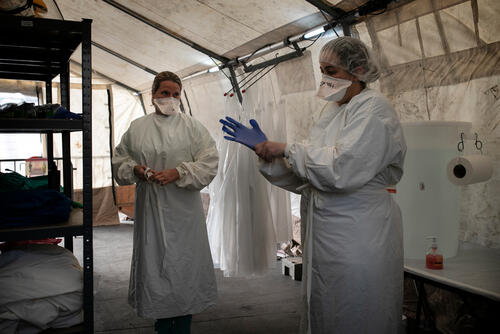
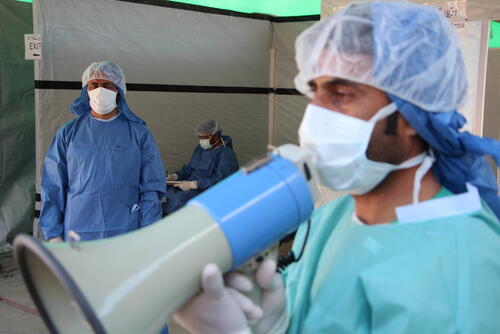
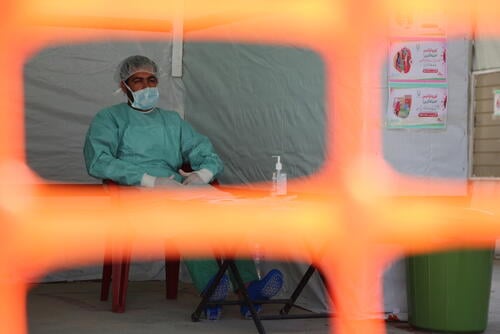
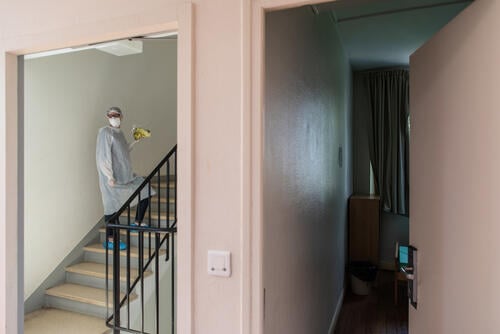
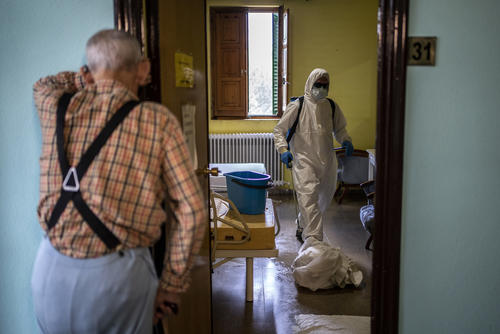
France - An MSF nurse waits to be called up to a patient's room in the COVID+ centre in Chatenay-Malabry, in the Parisian suburbs. The centre was set up for people - who are usually homeless or migrants living on the streets - who are suspected to be sick with COVID-19 and unable to self-isolate. April 2020. 
© Agnes Varraine-Leca/MSF

In pictures: MSF responds to COVID-19

France - An MSF nurse waits to be called up to a patient's room in the COVID+ centre in Chatenay-Malabry, in the Parisian suburbs. The centre was set up for people - who are usually homeless or migrants living on the streets - who are suspected to be sick with COVID-19 and unable to self-isolate. April 2020. 
© Agnes Varraine-Leca/MSF
Ebola disease in DRC: find out how we're responding
Learn more

MSF teams around the world are responding to the COVID-19 pandemic, in both countries where we've previously worked, and those we haven't had to work in before. Here are our teams at work in pictures.

Find out more on how we're responding to the pandemic.
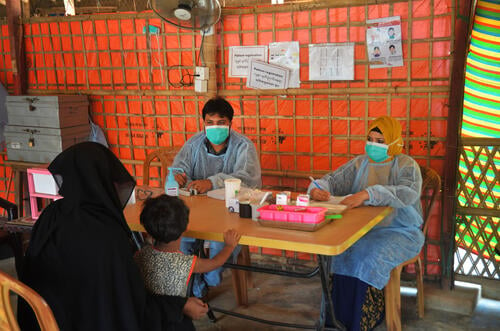
Nazrul Islam, medical assistant and Mahabuba Khatun, nurse aid, triage a patient at MSF’s Jamtoli primary healthcare clinic in the Cox’s Bazar refugee camps. As part of MSF’s preparations for COVID-19, all patients arriving at MSF clinics are screened and triaged, where they are asked if they have a cough, fever or sore throat. Patients with respiratory symptoms are sent to a separate waiting area, to minimise the chances of possible cross infection amongst patients.
Bangladesh - Nazrul Islam, medical assistant and Mahabuba Khatun, nurse aid, triage a patient at MSF’s Jamtoli primary healthcare clinic in the Cox’s Bazar refugee camps. April 2020.
MSF/Daniella Ritzau-Reid
Julie (left), a former MSF field nurse and now volunteering in the Covid-19 project in Tour and Taxis, and Houria (MSF health promoter), getting dressed with protective equipment before entering into the patients area.
Belgium - Julie (left), a former MSF field nurse and now volunteering with MSF, and Houria, an MSF health promoter, get dressed in protective equipment before entering into the patient area of the COVID-19 treatment facility for vulnerable people in the Tour & Taxis area of Brussels. May 2020.
Albert Masias/MSF
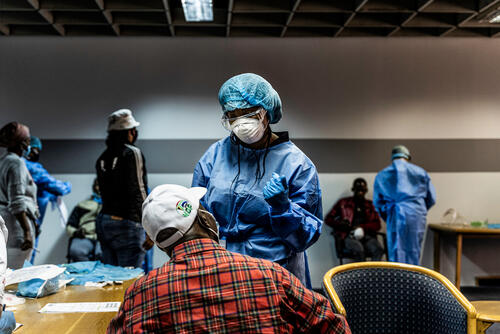
A health worker prepares to swab a patient during a mass COVID-19 screening and testing event held in Johannesburg, South Africa where MSF contact tracers assisted with training, monitoring and conducting tests.
South Africa - An MSF health worker prepares to swab a patient for a coronavirus test during a mass COVID-19 screening and testing event held in Johannesburg. May 2020.
Tadeu Andre/MSF
Switzerland, May 2, 2020. MSF helping the local association La Caravane de solidarité for a food distribution in Geneva. MSf volunteers meet the beneficiaries to complete an anonymous questionnaire about their needs. © Nora Teylouni / MSF
Switzerland - MSF staff meet beneficiaries of a local food distribution caravan for vulnerable people in Geneva, and survey them anonymously about their needs. May 2020.
© MSF/Nora Teylouni
Médecins Sans Frontières (MSF) started taking care of patients affected by the COVID-19 pandemic on April 28 at the Nongo Epidemic Treatment Center in Conakry. More than 80 patients are already hospitalised.

The Nongo Epidemic Treatment Center (CTEpi Nongo) is a well-known structure of MSF. The humanitarian organization had in fact set up this center with its own funds in 2015 during the Ebola epidemic which had severely affected Guinea.

"To face with the new COVID-19 pandemic which is affecting Guinea, we have rehabilitated a good part of the structure to bring it up to standard and welcome the first patients" explains KEÏTA Guéya Bonaventure, Technical and Logistics Coordinator of MSF in Guinea.

"The establishment of this care unit was urgent given the congestion at Donka hospital. First, we can provide care for patients with mild symptoms of the disease but who require hospitalisation. "

Initial support of three months is planned by MSF for the Nongo site.
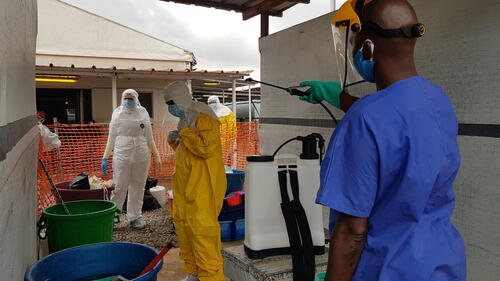
Guinea - MSF health workers carefully disinfect and remove personal protective equipment after taking care of patients affected by the COVID-19 pandemic at the Nongo Epidemic Treatment Centre. Conakry, April 2020.
/MSF
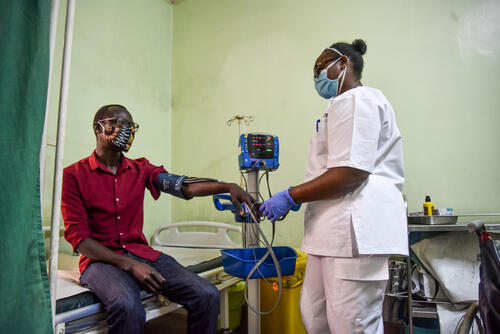
Faith Njeri Kariuki, an EMT at MSF's Lavender House - which also houses the Trauma Room - in Mathare, checking the vitals of a patient
Kenya - Faith Njeri Kariuki, an emergency medical technician at MSF's medical care and trauma room centre, Lavender House - checking the vitals of a patient. Nairobi, May 2020.
Paul Odongo/MSF
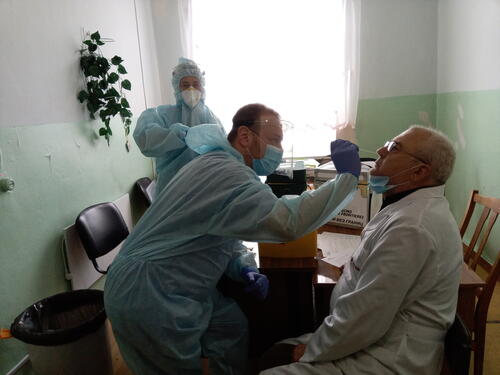
MSF mobile team collects samples of healthcare workers at Krasnohorivka hospital, in Eastern Ukraine, to test for COVID-19.
Ukraine - An MSF mobile team collects samples from healthcare workers to test for COVID-19, at Krasnohorivka hospital, in eastern Ukraine. May 2020.
© Katerina Stepanina/MSF
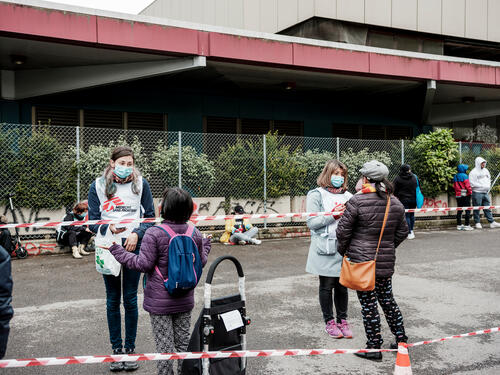
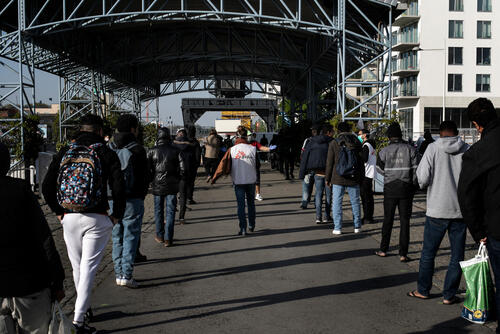
Around 300 hundred people from with social exclusion risk (including homeless population, migrants and asylum seekers) attending the food and hygiene kits distribution supported by MSF, Croix Rouge Belgique and Platerforme Citoyenne. Three times a day Croix Rouge Belgique and Plateforme Citoyenne distribut food for these population. MSF is supporting the distribution and participating with a health promotion team sensitizing about  water and sanitation measures.
Belgium - People who are at risk of social exclusion risk - those who are homeless, migrants and asylum seekers - line up to receive food and hygiene kits distributed by MSF, the Belgian Red Cross and local organisation Plateforme Citoyenne. MSF teams are supporting the distribution and a health promotion team raises awareness about hygiene and water and sanitation measures. April 2020.
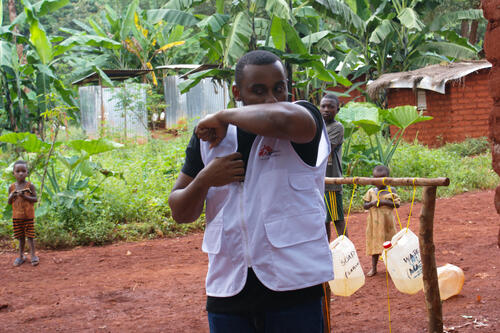
Tumaini Kombe is a Tanzanian health promoter with Medecins Sans Frontieres (MSF) in Nduta refugee camp, north-western Tanzania, where MSF is the sole healthcare provider for 75,000 Burundian refugees. As the focal point for health promotion, Tumaini is working on preventative measures for a COVID-19 outbreak in Nduta camp through community engagement.
Tanzania - Tumaini Kombe, an MSF health promoter in Nduta refugee camp in north-western Tanzania, shows Burundian refugee residents in the camp how to cough into the elbow crook, as a means of preventive measures against COVID-19. April 2020.
MSF
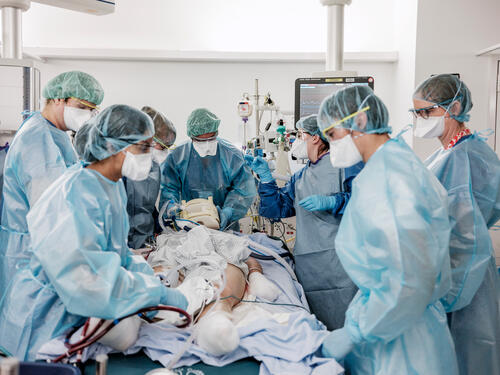
Switzerland, COVID-19 response in Intensive care unit of HUG. A group of nurses and doctors turn a patient on her stomach to clear the lungs so she can breathe better. April 14, 2020. ©Nora Teylouni / MSF
Switzerland - MSF nurse Kathrine Zimmerman (far right), who was seconded to the intensive care unit of the University hospital of Geneva, assists a group of nurses and doctors turn a patient with COVID-19 on her stomach to clear the lungs so she can breathe better. April 2020.
Nora Teylouni/MSF
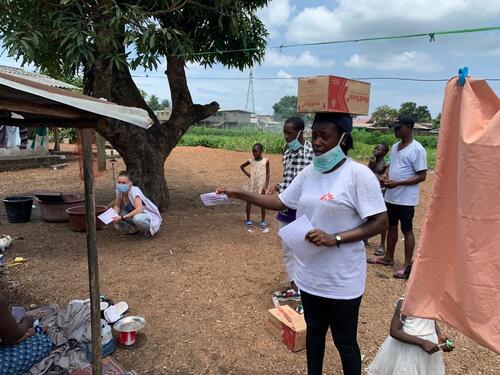
MSF staff and volunteers carry out a COVID-19 hygiene awareness campaign and distribute soap to households in Logan Town, near the capital city, Monrovia. MSF is urging people to stay at home and practice social distancing to prevent the spread of the coronavirus through the community.

Location: Logan Town, Monrovia, Liberia
Liberia - An MSF staff member hands out soap and information leaflets on how to prevent COVID-19 to households in Logan Town, near the capital city, Monrovia. April 2020.
Ruud van der Linden/MSF
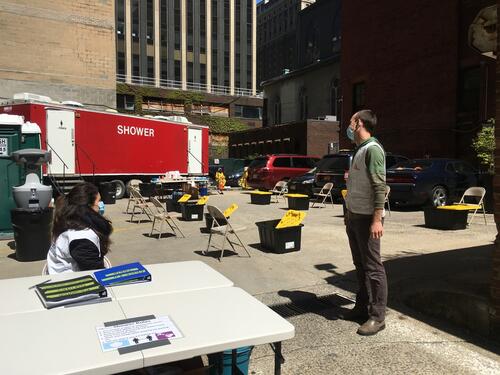
Staff members wait for the first visitors on opening day of MSF's shower trailer in Manhattan. MSF is offering free warm showers to the homeless and other people who currently lack access to hygiene facilities during the pandemic.
United States - Staff members wait for the first visitors on opening day of MSF's shower trailer in Manhattan. MSF is offering free warm showers to the homeless and other people who currently lack access to hygiene facilities during the COVID-19 pandemic. New York, April 2020.
Michelle Mays/MSF
MSF continue readapting its working to attend migrants and asylum seekers in Matamoros and Reynosa, where are vulnerable, without the possibility to take de main measures to prevent COVID-19, and, for that, are exposed to contract the virus.
Mexico - An MSF doctor provides a consultation in a mobile clinic to a woman living in an informal camp for  migrants and asylum seekers in Matamoros. April, 2020.
© MSF/Arlette Blanco
MSF provides support to two centres set up in north Marseille to test and refer people testing positive for coronavirus. People in north Marseille represent around 55% of the city’s population. 450,000 inhabitants, but regrettably who benefit from only 28% of Marseille’s medical services. 

These testing and referral centres are intended for local people living in or near districts in north Marseille, regardless of whether they’re entitled to state-funded medical care. The aim is to reduce as much as we can the obstacles for people suspected of having the virus so that they can be tested as quickly as possible, receive optimum treatment and subsequently be provided support.
 
People coming to these centres are first seen by a team of paramedics who check and assess the severity of their symptoms. Before being tested, they’re given a medical consultation to evaluate any potential risk factors and/or underlying health conditions.
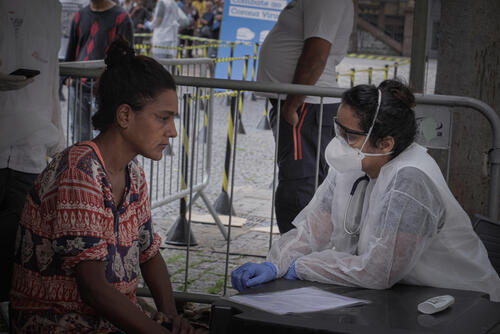
France - An MSF nurse assesses a local woman for a possible case of coronavirus at a support centre in north Marseille, where there is a lack of testing and referral centres. April 2020.
CLEMENT MAHOUDEAU/MSF
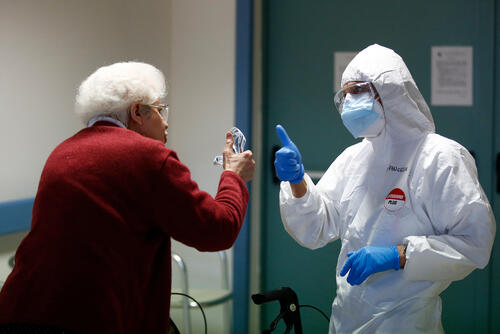
Covid-19 epidemic has drastically changed life inside nursing homes. For weeks, guests have not been able to receive visits from loved ones for safety reasons: the staff have also become their family.
Italy - An MSF staff member shares a thumbs up with the resident of a nursing home in the country's central eastern Marche region, where our staff are providing medical care and implementing infection prevention and control measures. April 2020.
MSF/Vincenzo Livieri
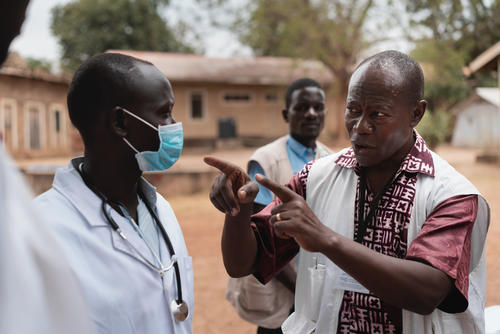
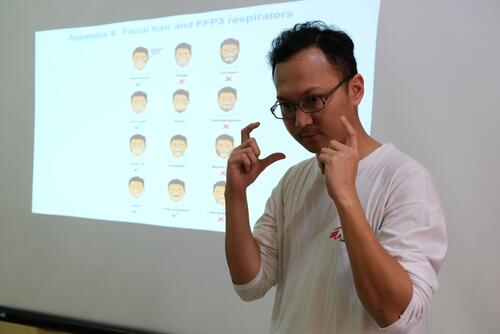
Adrien Mahama – watsan coordinator for MSF in South Sudan – illustrates the correct use of masks during an infection prevention and control training for the staff of the Al Sabah hospital in Juba. MSF is carrying on trainings to support the Ministry of Health in preparation for the arrival of eventual COVID-19 patients.
South Sudan - Water and sanitation coordinator Adrien Mahama illustrates the correct use of masks during an infection prevention and control training for the staff of the Al-Sabah hospital in Juba. MSF is conducting training to support the Ministry of Health in preparation for the arrival of COVID-19 patients. April 2020.
Gabriele François Casini/MSF
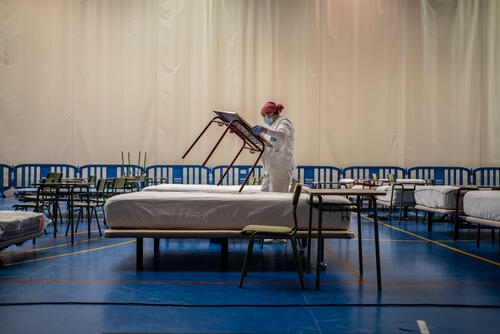
Hospital instalado por Medicos Sin Fronteras para tratar enfermos de coronavirus  en Leganes.
Foto: Olmo Calvo /MSF
Spain - A hospital orderly moves furniture in a temporary hospital to treat people with COVID-19 set up by MSF staff on the outskirts of Madrid. March 2020.
© Olmo Calvo
Gennaro is a specialist of water and sanitation. In the hospital, one of the key aims of his daily job is to protect hospital staff from being infected with the virus. Before going in a covid ward, he’s wearing a personal protective equipment for protecting himself and the colleagues of a risk of infection.
Italy - Gennaro, an MSF water and sanitation specialist, adjusts his goggles before entering into a ward treating people with COVID-19. His key job, at a hospital in Italy's northern Lodi province, is to protect hospital staff from being infected with the virus. April 2020.
Davide Arcuri
MSF acompaña a voluntarios de los bomberos para desinfección de espacios, establecimiento de circuitos y traslado de pacientes en función de las zonas designadas por su status sanitario en la Residencia Nuestra Señora de las Mercedes de El Royo (Soria).
Spain - Two MSF staff disinfect beds in a nursing home for elderly residents in the Nuestra Señora de las Mercedes Residence in El Royo. MSF is accompanying volunteers from the fire brigade to disinfect spaces, establish staff and resident flow, and transfer patients from nursing homes and residences for the elderly throughout the Castilla y León region. April 2020.
Olmo Calvo/MSF
Doctor Ana Letícia Nery,
Medical coordinator of MSF activities in São Paulo
Brazil - MSF doctor Ana Letícia Nery, coordinates MSF's COVID-19 response activities in São Paulo. MSF teams are working with homeless people, providing medical consultations for screening and detection of people with suspected cases of COVID-19, and referring patients in more serious conditions to hospitals. April 2020.
Stefano is an anaesthetist. When MSF starts its intervention in Lombardy, he works closely with local staff in Lodi hospital. First of all, he had to learn from his colleague involved since the beginning. Then he puts in practice his skills for the covid patients like the intubation. It’s quite challenging to operate in a ward which was not dedicated to these kinds of medical practices. Today as a doctor, he’s one of the rare human contact for the patients.
Italy - MSF anaesthetist Stefano (right) works to intubate a patient with COVID-19 in Lodi hospital. MSF has staff - including medical staff, logisticians and water and sanitation experts - working in three hospitals in the country's northern Lombardy region. April 2020.
Davide Arcuri
A health promoter advises people to keep a distance of at least 1.5m between each other and to wash their hands at the handwashing points as they enter Timergara DHQ hospital, Lower Dir. About 1,000 people pass through the screening set-up installed by MSF every day.
Pakistan - An MSF health promoter advises people to keep a distance of at least 1.5 metres between each other and to wash their hands at the handwashing points as they enter Timergara DHQ hospital, in Lower Dir district. MSF staff installed a COVID-19 screening point at the entrance to the hospital, in Pakistan's north, through which about 1,000 people pass every day. April 2020.
Nasir Ghafoor
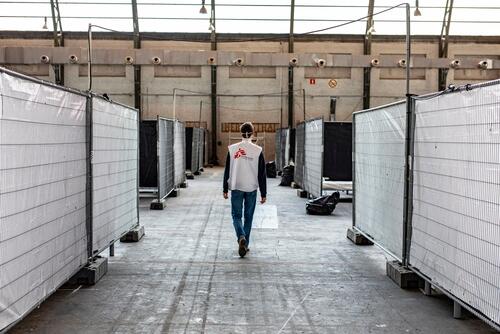
Monday 30 March 2020: MSF opens an accommodation structure with a capacity of 50 beds (which can be extended to 150 beds) for vulnerable people in Brussels.
Belgium - An MSF logistician walks down the centre of an accommodation structure MSF has built in Brussels. The centre, which can accommodate up to 150 vulnerable people - including homeless and undocumented migrants - is to allow people to isolate and receive medical care. March 2020.
© Pablo Garrigos/MSF
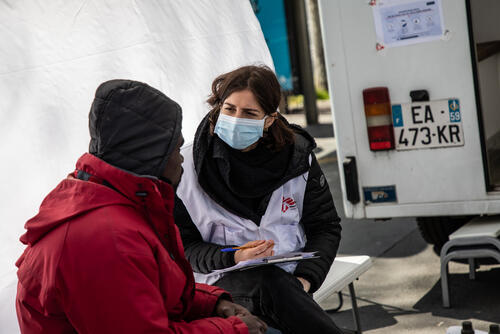
Charline Vincent, nurse, is examining a man in MSF's mobile clinic. People who live rough on the streets are particularly vulnerable to coronavirus. To ensure continued access to healthcare for them, MSF’s mobile clinic provides treatment (primary healthcare) in Paris and its suburbs. On March 31st, the mobile clinic was deployed at Porte de la Villette, near a food distribution site. A week before, a camp near Aubervilliers was evacuated and around 700 people were dispatched to various emergency shelters in the area. MSF teams are also working in some of these shelters to assess vulnerable people's health and identify suspected Covid-19 cases.
France - MSF nurse Charline Vincent examines a man in MSF's mobile clinic, set up to provide medical care for homeless people, who are particularly vulnerable to the new coronavirus. MSF is providing a series of mobile clinics across Paris and the surrounding suburbs to assess vulnerable people's health and identify people with suspected COVID-19 cases. March 2020.
Agnes Varraine-Leca/MSF
To support Iraqi Ministry of Health on facing COVID-19, MSF is providing MOH hospital staff with technical support on infection prevention and control and patient triage.
Iraq - An MSF staff member explains how to properly put on a surgical mask to medical staff from the Iraqi Ministry of Health. An MSF team is providing hospital staff from the Ibn Al-Khateeb hospital in Baghdad with technical support on infection prevention and control, and triage of COVID-19 patients. April 2020.
MSF
MSF acompaña a voluntarios de los bomberos para desinfección de espacios, establecimiento de circuitos y traslado de pacientes en función de las zonas designadas por su status sanitario en la Residencia Nuestra Señora de las Mercedes de El Royo (Soria).
An elderly man watches as an MSF staff member disinfect his room in the Nuestra Señora de las Mercedes nursing home residence in El Royo, Soria province. Spain, April 2020.
Olmo Calvo/MSF
Sajjad is one of the nurses working in the COVID-19 screening area set up by MSF at Timergara DHQ hospital in Lower Dir. Here he is taking a rest between patients. He asks every person some basic questions to assess the likelihood of them having COVID-19.
Pakistan - MSF nurse Sajjad takes a rest between testing people for the new coronavirus. MSF set up a COVID-19 screening area at Timergara DHQ hospital in Lower Dir district. April 2020.
Nasir Ghafoor
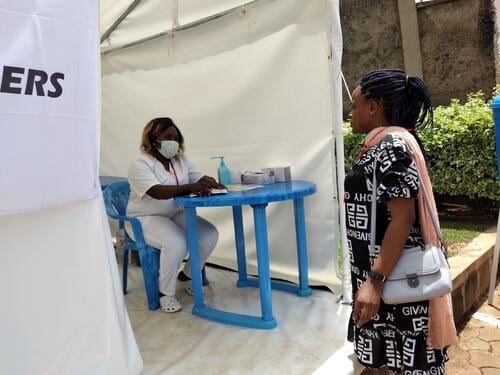
Visitors pass by the new COVID-19 pre-screening tent at the entrance of Bamenda's St Mary Soledad Hospital, North West Cameroon
Cameroon - A woman stops outside the COVID-19 pre-screening tent MSF teams have set up at the entrance of Bamenda's St Mary Soledad hospital in the country's North West region. MSF is screening people for the new coronavirus and providing information on infection prevention and control to hospital staff. April 2020.
Freida Nemkul/MSF
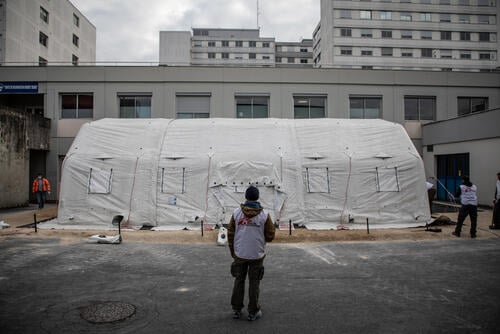
MSF set up a medical care tent at Reims University Hospital on April 4th (a team composed by 6 logisticians and 1 WATSAN expert). The aim of the operation is to temporarily increase the number of intensive care beds available at the hospital. Close to 85% of the intensive care beds used to treat patients with Covid-19 pneumonia are occupied. The reason for asking MSF to set up this tent was not to leave it until the hospital runs out of intensive care beds, but to try to constantly have beds available ready to be equipped for patients.
France - An MSF staff member stands outside a medical care tent MSF teams set up at Reims University hospital, to temporarily increase the number of intensive care beds available at the hospital to treat people with COVID-19. April 2020.
© AGNES VARRAINE LECA/MSF
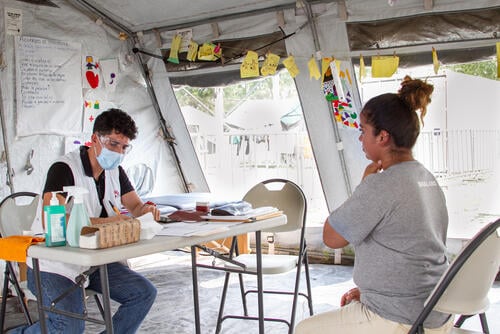
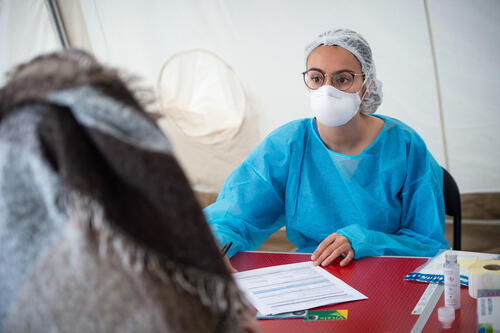
MSF evaluates and screens homeless people in shelters in downtown São Paulo. Activities also include health promotion.
Brazil - An MSF medical doctor evaluates a woman during a mobile clinic to screen homeless people in shelters in downtown São Paulo for the new coronavirus and to provide health promotion advice. MSF teams are working with homeless people, providing medical consultations for screening and detection of people with suspected cases of COVID-19, and referring patients in more serious conditions to hospitals. April 2020.