



In Madagascar, we support the national response to climate emergencies. And when extreme weather events happen, we provide care to children with malnutrition from the resulting agricultural damage.
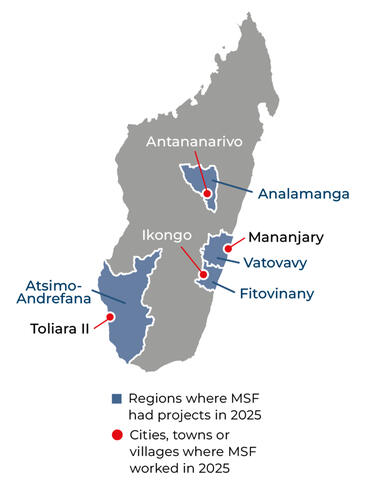
Our activities in 2025 in Madagascar
Data and information from the International Activity Report 2025.
142
142
€4.7 M
4.7M
1987
1987
MSF in Madagascar in 2025
Emergency response is a core activity for Médecins Sans Frontières (MSF) in Madagascar, a country vulnerable to extreme weather events, and the associated risks of malaria and malnutrition.

102,900
102,9
35,100
35,1
5,250
5,25
3,240
3,24
Madagascar
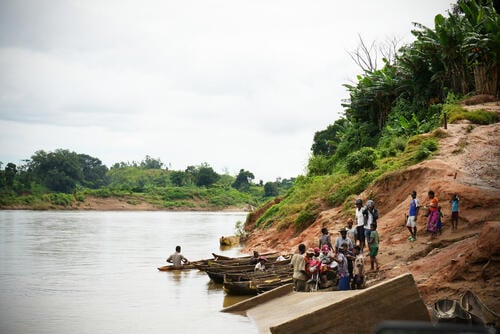
Malaria on the rise in Madagascar as climate change leaves healthcare out of reach
Project Update
25 Apr 2024
Madagascar
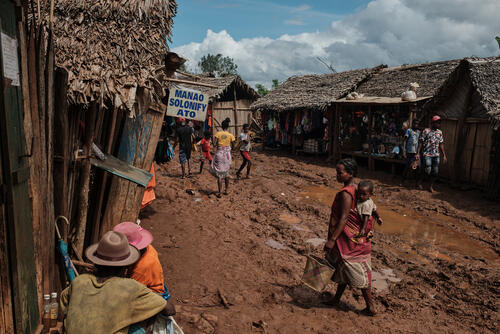
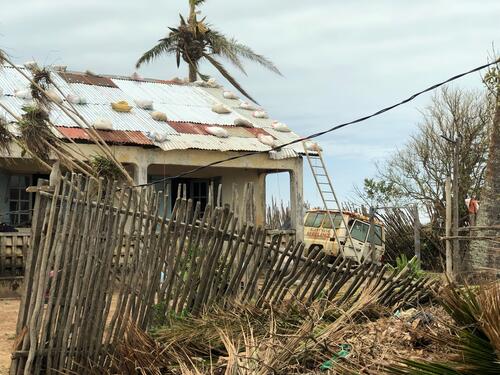
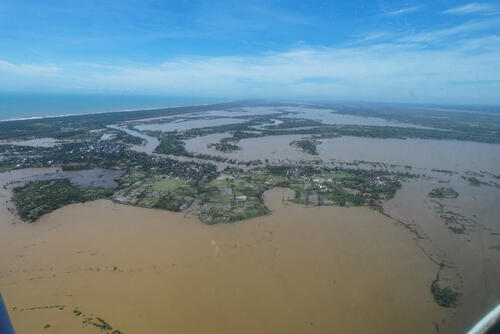
Cyclone Batsirai leaves people vulnerable to food shortages and malaria
Project Update
14 Feb 2022
Madagascar
Emergency aid in Madagascar prevented as medical staff are denied access
Press Release
12 Aug 2021
Madagascar
Food assistance urgently needed as nutrition crisis grips southern Madagascar
Project Update
9 Jul 2021