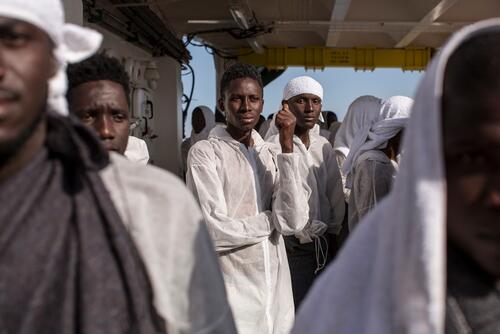
I tried to call my bureau chief, but everyone was saying, please don’t call us. We cannot help you. Even my dearest friends, they refused to help me. I contacted so many embassies, so many human right organizations, I sent so many emails to my journalist friends, my life was in danger and nobody was able to protect me. What can I say. I couldn’t get a visa. The only way was to contact that human smuggler. It has been the most dangerous and painful journey of my life. I never faced this hardship in my life before and I never lived in these conditions. Sometimes I felt people were not accepting me.  I’m 51 years old and I worked 25 years as a journalist. Like me, many journalists in Pakistan are suffering. Journalists have been killed in Pakistan as a result of their work. My wife obliged me to go away. Now my family is hidden at the border with India. I left there my two sons and three daughters. I miss them too much that if I think about them I start crying.”
Refugee from Pakistan: " I’m 51 years old and I worked 25 years as a journalist. Like me, many journalists in Pakistan are suffering. Journalists have been killed in Pakistan as a result of their work. Now my family is hidden at the border with India. I left there my two sons and three daughters. I miss them too much that if I think about them I start crying.”
© Alessandro Penso/MAPS

"My work is a real opportunity to help those in need, just like me."

Refugee from Pakistan: " I’m 51 years old and I worked 25 years as a journalist. Like me, many journalists in Pakistan are suffering. Journalists have been killed in Pakistan as a result of their work. Now my family is hidden at the border with India. I left there my two sons and three daughters. I miss them too much that if I think about them I start crying.”
© Alessandro Penso/MAPS
Ebola disease in DRC: find out how we're responding
Learn more
  • Interview with Jamal, cultural mediator & logistician
  • Jamal, a refugee from Afghanistan, is working as cultural mediator for Médecins Sans Frontières (MSF) in the reception centre of Gorizia, Italy, at the border with Slovenia

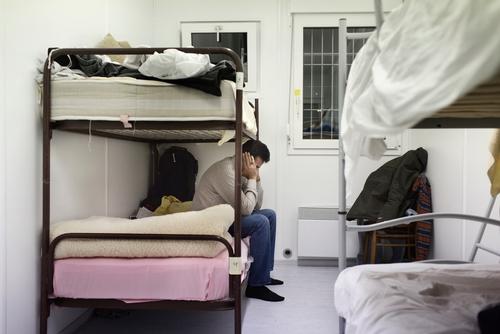
During the last years I have had to face many difficulties: I have lived in refugee camps in France, the United Kingdom and Greece. I was repatriated twice from Greece, and have had to live in a detention centre , so I understand the fears and problems of people like me, who find themselves in this situation of uncertain future.

The first time I arrived in Italy, in 2005, it was just to pass through before going on to the UK. Now, after facing death several times and experiencing hardships, I have been granted international protection. I am happy to work with MSF as a cultural mediator and to provide a warm welcome and adequate housing for asylum seekers arriving in search of shelter, food, medical care and protection.
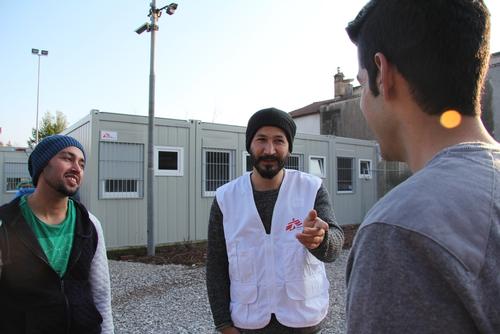
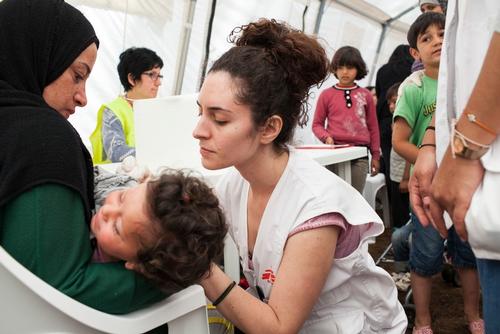
Jamal, a Medecins Sans Frontiers (MSF) cultural mediator is welcoming the new guests:

“My work is a real opportunity to help those in need. Being here is a new challenge for me. I can encourage and support these guys who come here. Me too, like them, despite the obstacles on my way, I’ve always tried to be strong and to reach my goals.”
Jamal, an MSF cultural mediator, welcoming new guests.
Sara Creta/MSF

When did you start working for MSF?

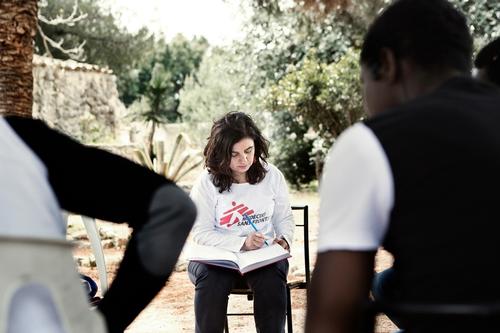
I started in Sicily, providing psychological first aid to new arrivals with a group composed of a psychologist and cultural mediators. I met the survivors of the sea crossing, people extremely traumatized by distressing moments during their journey.  In the beginning, it was not easy to absorb people’s pain, sometimes I could not hold back my tears.

I felt very strong emotions, but I was happy to be able to help people who needed support and information, just like me when I first arrived in Italy in 2005 and I was tired, fragile and confused as they are. Today, my work is a real opportunity to help those in need, just like me.

Can you tell us about an episode that particularly touched you during your work as cultural mediator?

In Palermo this summer I met and supported a Nigerian man who lost his wife during the trip; he was alive, but completely immobile. He could not eat or even walk alone. I have been very close to him, I knew that he was feeling an immense pain, but I told him to be strong and I advised him to share his pain with the others. He could not even recognise the body of his partner. His heart was broken.
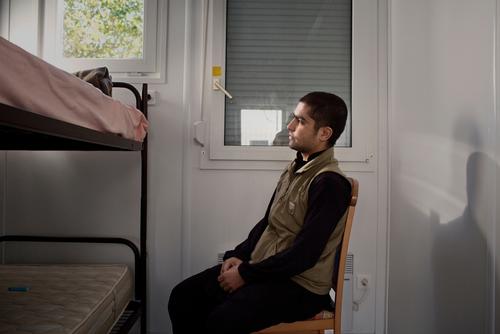
Portrait of 18 year old Ajabgul Khan from Afghanistan. 
 
“I’m from Nahrain, a small village outside Kunduz in Afghanistan. I have two brothers and a sister but I lost the trace of my big brother about a year ago, I do not know if he is still alive or if he's dead. About a year ago he was praying in the mosque of the village and a group of Taliban entered the mosque to meet the Imam. When the Taliban came out of the mosque the Afghan security forces were ready to arrest them, they also arrested the Imam of the village. Everyone started to think that my brother was a spy and the elders of the village warned him that soon he would have a lot of problems. His co-workers convinced him to change his routine, his job and his home. 

About four months ago, my family decided to leave Kunduz. My father took me to Kabul to a family friend and after a few weeks we left to Kandahar. I then went to Quetta and I started the journey to Europe. When I crossed the border with Iran, the police shot at me. I was very afraid and a friend of mine died. I thought about him for the whole trip. When I arrived in Iran they arrested us. We were about 83 people. With the help of our agent (smuggler) we left for Turkey. When we were crossing the border with Turkey, they shot at us again. We stayed in Turkey for a week and then I we got on the road again, this time to reach Bulgaria. We stayed 3 days and 2 nights in the forest and we walked a lot. Once in Bulgaria they arrested me. I stayed in a police station for 3 nights. When I realized where I was, I was terrified.  After few days, I was able to get out but I felt really tired and  dirty. 

I continued my journey across Serbia, Croatia, Austria, Germany and then I decided to come to Italy. Now I feel good here. I slept few days in the forest next to the river. It was very hard. I wanted to settle down but it was so hard at the beginning. I’m thinking a lot about my home, when I call my family they cry. I’m also thinking a lot about my brother, maybe he left the country or maybe he was killed? Now that I’m here and I’m safe, I hope to find peace. I miss my country, my place, I miss my family, my friends, I always think about them. In general in my region the situation is really difficult. Taliban come to my house in the night, they ask people money, they want you to join their group. What do I want? I want peace in Kunduz, so I can go back.”
Ajabgul Khan from Afghanistan: " I miss my country, my place, I miss my family, my friends, I always think about them. In general in my region the situation is really difficult. Taliban come to my house in the night, they ask people money, they want you to join their group. What do I want? I want peace in Kunduz, so I can go back.”
Alessandro Penso/MAPS

During your work as a cultural mediator with MSF, what do refugees ask you? What are their concerns?

Their biggest concern is about their future, they are confused, some of them have medical needs, others want to go to another destination to reunite with their family, they are asking for advice. You can see in their eyes that they are worried; they are confused because they do not know how the system works. They are afraid. Also during my trip, I was afraid to die. I was afraid of drowning when I was crossing the Aegean Sea, or when I was hidden under a truck between France and England for three hours. I struggled to survive with the snow on my face, holding with my hands the tube connecting the wheels. But finally I managed to arrive in UK.

What do you think Europe should do?

There is a European side that is able to host, but unfortunately there is also a EU that turns a blind eye to the abuses at its borders. Equal human treatment and dignity protection should be the priority and Europe must provide this. I have also experienced violence and abuses. In Turkey, the police humiliated me while I was very sick. In Istanbul, for 20 days I was locked in a smuggler’s house. When I tried to run away, they beat me and tortured me, putting whiskey into my nose. In Greece, I ran away because I didn’t want to be identified, I was beaten and forced to leave my fingerprints even if I didn’t want to. Then I was held in an identification and expulsion centre. They told me that I had to leave the country.

Why do you think your presence here is important?

People have in front of them a positive example of integration – this reassures them and makes them feel more comfortable. I’ve also passed through different countries and it was very difficult because I've never found someone that was willing to make the effort to help me understand the context. No one explained what was happening to me; I always had to find the way, alone, through my friends who were here.

It's crucial to have someone who speaks your language, understands your situation, who reassures you on the legal process. Being here is a new challenge for me. I can encourage and support these people who come here. Like them, despite the obstacles on my way, I’ve always tried to be strong and to reach my goals.