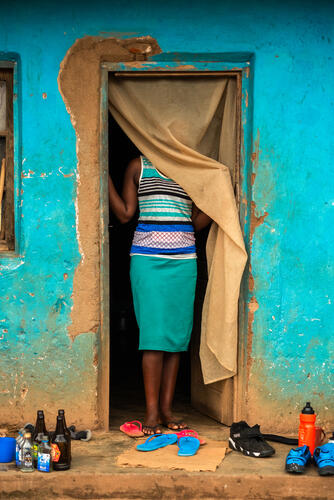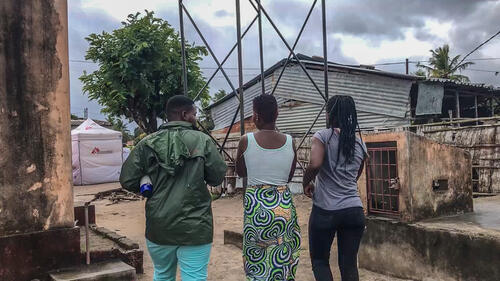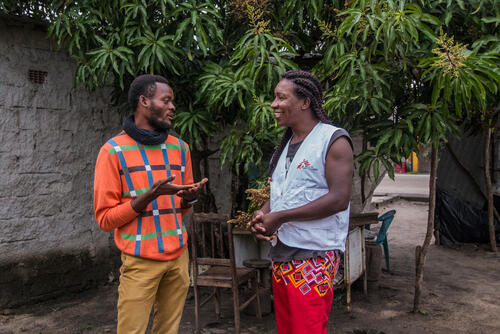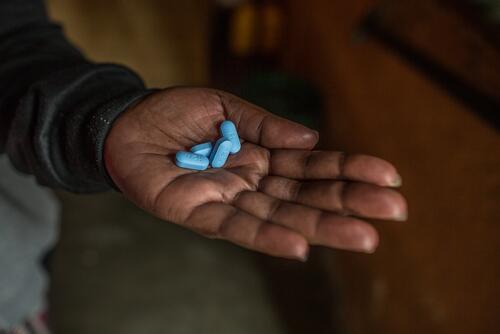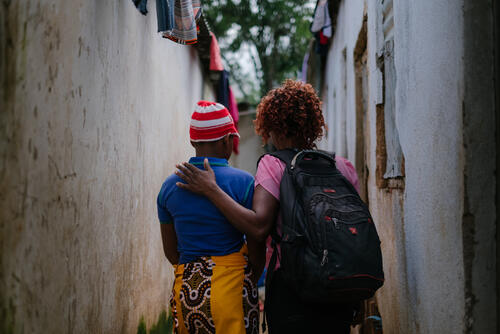
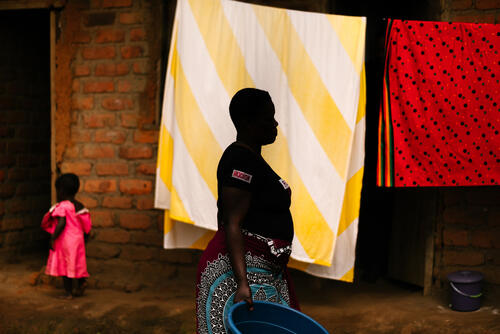
MSF community Health worker Rozi (not her real name) interacting with one of the sex workers behind a bar hotspot in the centre of Mwanza town. Sex workers live in the rented rooms in exchange for providing services for customers.

In Mwanza and Dedza districts, and Zalewa in Neno district, MSF uses the ‘one-stop’ clinic approach combined with outreach services targeted towards sex workers who offer their services openly and often work and live together in rented accommodation near transport hubs or at hotspots and bars. 
Community health workers – themselves sex workers who have been recruited from their local communities and trained - conduct weekly health promotion sessions at different sites where they provide condoms and lubricant, and facilitate door-to-door HIV testing services (HTS) with a trained counsellor. 
The MSF community health workers identify new sex workers or those in need of medical care and navigate them towards MSF’s ‘one-stop’ clinics in nearby Ministry of Health centres in the three sites. Here, MSF clinicians offer a comprehensive package of HIV care plus sexual and reproductive healthcare, all offered in a single visit. MSF has reached approximately 3851 sex workers across these three sites.

TESTIMONY: Rozi (not her real name) MSF community health worker, 36 years.

“I was once married. When I divorced in 2002 with two children to take care of, life was hard. I had no way to earn a living. I didn’t have any qualification or financial capital to go into business and  I couldn’t support my family with decent shelter, food and clothes.
In the end, I decided to go into sex work as a way of supporting my kids and myself. I had relatives whom I could go to seek assistance, but they were also struggling financially and they said they couldn’t help me. That’s how I ended up taking the route of being a sex worker.
I started working with MSF in 2016 as Community Health Worker. My role involves carrying out outreach activities in the community and hotspots targeting sex workers. The process starts with informing sex workers followed by mobilisation. Once they are mobilised I brief them about what MSF does, followed by a health talk. The next day, the health counsellor comes to have a talk with them individually as a way of assessing if anyone needs medical attention. 
Before MSF we couldn’t access health services the hospital. We were not looked at as individuals. When we went to the hospital with any ailment, we were told our illness was the result of the job that we chose. Even if a sex workers’ ARVs were finished, it was tough for them to go to the hospital for fear of insults from health workers, so they didn’t. This was putting lives of many sex workers at risk of death.
Now things have changed. With MSF we have the right to access any medical treatment from the hospital. Our relationship with health workers has improved. 
Everyone should be treated the same. Care of the patients should be at the centre of the Ministry of Health’s approach as well. If a sex worker is able to get health services, she is able to enjoy a healthy life free of diseases. With a healthy life she will be able to do her work and support her family.”
MSF community health worker Rozi (not her real name) interacting with a sex worker behind a bar in the centre of Mwanza town. Sex workers live in rented rooms in exchange for providing services for customers. MSF community health workers identify new sex workers or those in need of medical care and navigate them towards MSF’s ‘one-stop’ clinics in nearby Ministry of Health centres in Mwanza and Dedza districts, and Zalewa in Neno district. In each location, MSF clinicians offer a comprehensive package of HIV care plus sexual and reproductive healthcare, all in one visit.
© Isabel Corthier/MSF

The sex workers on the frontlines of the HIV response

MSF community health worker Rozi (not her real name) interacting with a sex worker behind a bar in the centre of Mwanza town. Sex workers live in rented rooms in exchange for providing services for customers. MSF community health workers identify new sex workers or those in need of medical care and navigate them towards MSF’s ‘one-stop’ clinics in nearby Ministry of Health centres in Mwanza and Dedza districts, and Zalewa in Neno district. In each location, MSF clinicians offer a comprehensive package of HIV care plus sexual and reproductive healthcare, all in one visit.
© Isabel Corthier/MSF
Ebola disease in DRC: find out how we're responding
Learn more

An MSF programme in four districts in southern Malawi is helping thousands of women who earn their living from sex work to overcome barriers to health services, in part by training and employing sex workers as health workers in their communities.

Names have been changed, unless otherwise indicated.
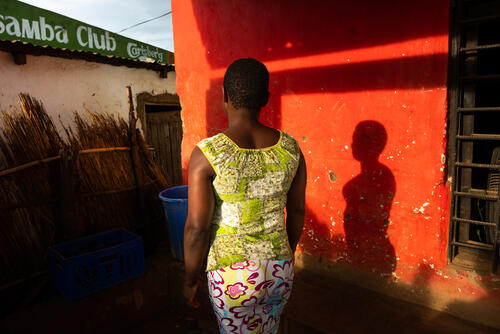
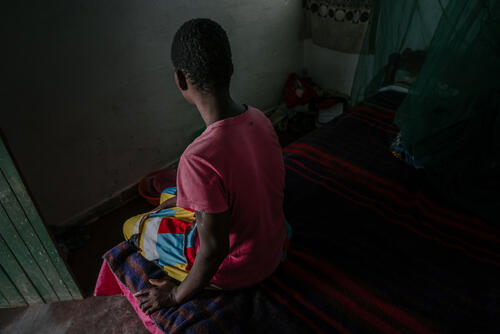
Bernadette (not her real name) a sex worker who works at a bar hotspot in Dedza, and lives in a rented room on the bar premises, along with other sex workers. Bernadette received MSF’s adapted services for sex workers as part of comprehensive care and health promotion activities conducted by an MSF team at the bar.

TESTIMONY: Bernadette (not her real name) sex worker, Dedza town hotspot
“I was born into a family of 11. We lost both parents when I was 7 years old and I was raised by my sister. I dropped out of school because I was pregnant. I was living with my grandparents, who couldn’t provide much for me. I would be at school the whole day without eating anything. So I started having sex in exchange for things, and this is how I got pregnant. At that time, I didn’t know anything about condoms or any other family planning methods. I’d heard of HIV but never thought about contracting it myself.
Today I have six children, four of them stay with my grandparents in Blantyre, the other two (twins) are staying with my sister and I send money for them. 
My last partner (the father of the twins) would make a lot of money and then disappear for weeks, leaving nothing at home to support us. When he returned, I would ask him where he had been and he would beat me up like an animal, with no feeling. Sometimes my whole head would be so swollen that I couldn’t see and my whole body would ache. After the babies were born, II left him and went to my home village. I was doing casual work in restaurants, guest houses and selling charcoal.
After a while my husband and I reconciled and started living together again. But then he was arrested and jailed for stealing a cow had to bail him out using all the capital from my small charcoal selling business (45,000 MK, $62). TheVmoment he got out of prison, he went off with another woman and I was destitute. My business and marriage had fallen apart. I had to accept this and move on. I tried everything to make money but wasn’t successful. Even my relatives wouldn’t help, they would say it was my fault. 
I was really fearful for my children. So I turned to sex work last October 2018 to make up the money. I looked at all the options, I wasn’t educated enough to get any job, and casual work was very tough with low pay and poor treatment. Sex work was the best option to support myself.
I’m working here at this bar (where she shares a room with another girl at the back in exchange for providing sexual services for paying clients/customers at the bar). We work at all hours, it’s mostly in the evenings but whenever there’s a client we’ll provide services. Over December I could have up to 7 or 8 clients a day. 
I heard of MSF’s services in November 2018 when their staff came to the bar to share information and screening about STIs and HIV. They gave us condoms and told us about the one-stop-shop at the hospital where we could go for check-ups. This was the very first time I was given information on issues like HIV testing, sexual health, before this I didn’t know anything. I saw it as an amazing opportunity that could help me to be healthy, no matter my circumstances. I felt liberated, happy, because I was hearing things I never knew about. When we would go to the hospital clinic (one-stop clinic) we are really helped to get quick and relevant treatment, without challenges. Before, it could take the whole day to get services.
With these services, I feel more empowered than before and I’m able to negotiate protection with clients. I know how to put a condom on properly and we now have lubricant which prevents accidents.”
Bernadette, a sex worker who works at a bar hotspot in Dedza and lives in a rented room on the premises, along with other sex workers.
© Isabel Corthier/MSF

Bernadette lost both her parents when she was seven years old and was taken in by her grandparents, who would send her to school without food.

“I started having sex in exchange for things as my grandparents were not able to provide for me. This is how I got pregnant and dropped out of school,” says Bernadette, who moved from her village to Dedza at the end of 2018. “When I became a sex worker I didn’t know anything about condoms, or any other family planning methods. I had heard of HIV but never thought about contracting it myself,” she says.

Bernadette I heard of MSF’s services in November when their staff came to the bar to share information and screening about STIs and HIV. They gave us condoms and told us about the one-stop shop at the hospital where we could go for check-ups.
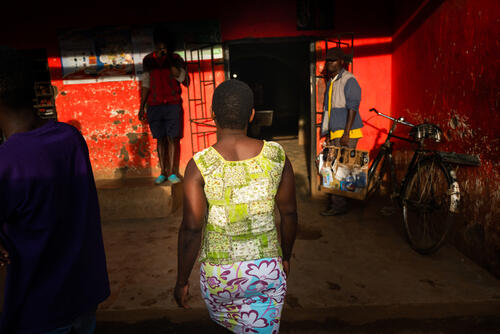
Bernadette (not her real name) a sex worker who works at a bar hotspot in Dedza, and lives in a rented room on the bar premises, along with other sex workers. Bernadette received MSF’s adapted services for sex workers as part of comprehensive care and health promotion activities conducted by an MSF team at the bar.

TESTIMONY: Bernadette (not her real name) sex worker, Dedza town hotspot
“I was born into a family of 11. We lost both parents when I was 7 years old and I was raised by my sister. I dropped out of school because I was pregnant. I was living with my grandparents, who couldn’t provide much for me. I would be at school the whole day without eating anything. So I started having sex in exchange for things, and this is how I got pregnant. At that time, I didn’t know anything about condoms or any other family planning methods. I’d heard of HIV but never thought about contracting it myself.
Today I have six children, four of them stay with my grandparents in Blantyre, the other two (twins) are staying with my sister and I send money for them. 
My last partner (the father of the twins) would make a lot of money and then disappear for weeks, leaving nothing at home to support us. When he returned, I would ask him where he had been and he would beat me up like an animal, with no feeling. Sometimes my whole head would be so swollen that I couldn’t see and my whole body would ache. After the babies were born, II left him and went to my home village. I was doing casual work in restaurants, guest houses and selling charcoal.
After a while my husband and I reconciled and started living together again. But then he was arrested and jailed for stealing a cow had to bail him out using all the capital from my small charcoal selling business (45,000 MK, $62). TheVmoment he got out of prison, he went off with another woman and I was destitute. My business and marriage had fallen apart. I had to accept this and move on. I tried everything to make money but wasn’t successful. Even my relatives wouldn’t help, they would say it was my fault. 
I was really fearful for my children. So I turned to sex work last October 2018 to make up the money. I looked at all the options, I wasn’t educated enough to get any job, and casual work was very tough with low pay and poor treatment. Sex work was the best option to support myself.
I’m working here at this bar (where she shares a room with another girl at the back in exchange for providing sexual services for paying clients/customers at the bar). We work at all hours, it’s mostly in the evenings but whenever there’s a client we’ll provide services. Over December I could have up to 7 or 8 clients a day. 
I heard of MSF’s services in November 2018 when their staff came to the bar to share information and screening about STIs and HIV. They gave us condoms and told us about the one-stop-shop at the hospital where we could go for check-ups. This was the very first time I was given information on issues like HIV testing, sexual health, before this I didn’t know anything. I saw it as an amazing opportunity that could help me to be healthy, no matter my circumstances. I felt liberated, happy, because I was hearing things I never knew about. When we would go to the hospital clinic (one-stop clinic) we are really helped to get quick and relevant treatment, without challenges. Before, it could take the whole day to get services.
With these services, I feel more empowered than before and I’m able to negotiate protection with clients. I know how to put a condom on properly and we now have lubricant which prevents accidents.”
Bernadette (not her real name) a sex worker who works at a bar hotspot in Dedza, and lives in a rented room on the bar premises, along with other sex workers. Bernadette received MSF’s adapted services for sex workers as part of comprehensive care and health promotion activities conducted by an MSF team at the bar. TESTIMONY: Bernadette (not her real name) sex worker, Dedza town hotspot “I was born into a family of 11. We lost both parents when I was 7 years old and I was raised by my sister. I dropped out of school because I was pregnant. I was living with my grandparents, who couldn’t provide much for me. I would be at school the whole day without eating anything. So I started having sex in exchange for things, and this is how I got pregnant. At that time, I didn’t know anything about condoms or any other family planning methods. I’d heard of HIV but never thought about contracting it myself. Today I have six children, four of them stay with my grandparents in Blantyre, the other two (twins) are staying with my sister and I send money for them. My last partner (the father of the twins) would make a lot of money and then disappear for weeks, leaving nothing at home to support us. When he returned, I would ask him where he had been and he would beat me up like an animal, with no feeling. Sometimes my whole head would be so swollen that I couldn’t see and my whole body would ache. After the babies were born, II left him and went to my home village. I was doing casual work in restaurants, guest houses and selling charcoal. After a while my husband and I reconciled and started living together again. But then he was arrested and jailed for stealing a cow had to bail him out using all the capital from my small charcoal selling business (45,000 MK, $62). TheVmoment he got out of prison, he went off with another woman and I was destitute. My business and marriage had fallen apart. I had to accept this and move on. I tried everything to make money but wasn’t successful. Even my relatives wouldn’t help, they would say it was my fault. I was really fearful for my children. So I turned to sex work last October 2018 to make up the money. I looked at all the options, I wasn’t educated enough to get any job, and casual work was very tough with low pay and poor treatment. Sex work was the best option to support myself. I’m working here at this bar (where she shares a room with another girl at the back in exchange for providing sexual services for paying clients/customers at the bar). We work at all hours, it’s mostly in the evenings but whenever there’s a client we’ll provide services. Over December I could have up to 7 or 8 clients a day. I heard of MSF’s services in November 2018 when their staff came to the bar to share information and screening about STIs and HIV. They gave us condoms and told us about the one-stop-shop at the hospital where we could go for check-ups. This was the very first time I was given information on issues like HIV testing, sexual health, before this I didn’t know anything. I saw it as an amazing opportunity that could help me to be healthy, no matter my circumstances. I felt liberated, happy, because I was hearing things I never knew about. When we would go to the hospital clinic (one-stop clinic) we are really helped to get quick and relevant treatment, without challenges. Before, it could take the whole day to get services. With these services, I feel more empowered than before and I’m able to negotiate protection with clients. I know how to put a condom on properly and we now have lubricant which prevents accidents.”
© Isabel Corthier/MSF

“This was the very first time I was given information on issues like HIV testing and sexual health,” says Bernadette after MSF community health worker Emily gave a health education session at the bar where she works and lives. “I saw it as an amazing opportunity that could help me to be healthy, no matter my circumstances.” Emily listened closely to what she had to say; because she too was a sex worker, she knew where Bernadette came from and what she was facing every day.
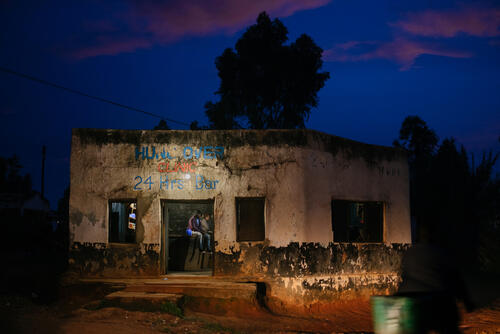
A bar in the centre of Dedza town, near the border of Mozambique.

In Malawi, where poverty and unemployment remain high, many women turn to sex work – offering sexual services in exchange for payment of some sort - to support themselves and their families. Sex workers find themselves in high demand throughout night spots and drinking venues in cities of trade and along the busy trade and transport hubs, where truck drivers pass through. 
In Mwanza, Zalewa and Dedza, three towns in western Malawi known as transport hubs, the presence of truck drivers, seasonal and industrial workers attracts a lot of sex workers who openly offer their services in hotspots and drinking venues, and often live in accommodation next to bars in exchange for providing services. In Nsanje, a more rural district in the south and one of the country’s poorest where men travel for seasonal jobs in sugar plantations, many women operate more secretly through informal networks and who often live with husbands and families.
Since 2014, MSF has been developing ways to reach sex workers and MSM (men who have sex with men) along main transport routes or busy centres of trade between Mozambique and Malawi through its ‘key populations’ projects. In Malawi, the project focuses only on female sex workers, and is located over four sites (across Mwanza, Dedza, Nsanje districts and Zalewa in Neno district ) and targeted towards female sex workers who each exist somewhere along the fluid continuum between ‘transactional’ and ‘commercial’ sex work.
By the end of 2018, of the 5171 sex workers ever enrolled in the Malawi program, 1797 female sex workers were actively attending sessions and clinic visits at the four sites combined.
Of the 5171 sex workers enrolled, out of 5021 tested, 2527 sex workers were HIV positive (50%) of which 1811 (72%) were enrolled onto the national ART program, while 863 (48%) were ‘active’ (seen within the last nine months) and 494/579 of the total were virally suppressed (85%).
A bar in the centre of Dedza town, near the border with Mozambique.In Mwanza, Zalewa and Dedza, three towns in western Malawi known as transport hubs, the presence of truck drivers and seasonal and industrial workers attracts a lot of sex workers who openly offer their services in hotspots and drinking venues. In Nsanje, a more rural district in the south and one of the country’s poorest, where men travel for seasonal jobs in sugar plantations, many women operate more secretly through informal networks and often live with husbands and families.
© Isabel Corthier/MSF

In Malawi, where poverty and unemployment remain high, many women like Bernadette turn to sex work – offering sexual services in exchange for payment of some sort – to support themselves and their families.

Malawi has one of the world’s highest rates of HIV, and while the country has made huge strides in fighting the epidemic, sex workers remain extremely exposed. With much lower access to health information and healthcare than others in the community, sex workers are over five times more likely to contract HIV, and face much higher risks of unwanted pregnancies and sexually transmitted infections (STIs).Sex workers are 5.4 times more at risk of HIV infection that their female counterparts in the general population. This estimate is based on the total prevalence among women aged 15-49 years in the general population in Malawi (National MDHS data, 2015-2016), compared with MSF project data (2018) on sex workers all ages.
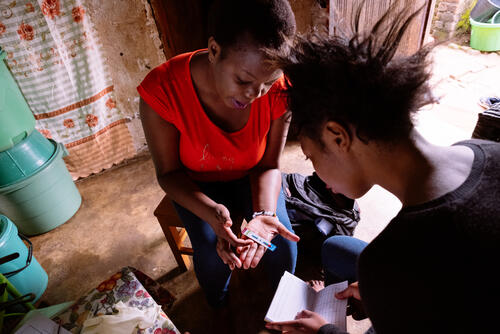
MSF counsellor educator Joan Chapema provides HIV testing services to a sex worker in her home in Dedza, as part of MSF’s outreach activities where an MSF community team comprising of a community health worker and counsellor provide discrete and confidential home visits.

-
 Door to door HIV testing service (HTS)
In Mwanza, Dedza, Nsanje districts and Zalewa in Neno district, MSF conducts discrete door-to-door HIV testing services (HTS) at sex workers’ roomsas part of the sex worker project’s focus on HIV detection and prevention. 
To start, MSF community health workers – themselves sex workers who have been recruited from their local communities and trained - visit hotspots to identify new and known sex workers, raise awareness around HIV and offer of HIV testing. For those sex workers who are willing and agree to be tested, an appointment is made and the community health worker and MSF counselor educator visit the sex worker at home. 
During the visit the counselor gives information, conducts the test, and gives counseling according to the result. If found HIV positive, the counselor provides a referral and the community health worker links the sex worker to the nearest ‘one-stop’ clinic for treatment and further support. If the test is negative, counseling is given on prevention and a follow up appointment is made in three months to test again. 
Sex workers living with HIV face huge difficulties of trust when keeping their status confidential. Building trust and discretion, including around confidentiality, is the community health worker’s biggest strength.
MSF counsellor and educator Joan provides HIV testing services to a sex worker in her home in Dedza. As part of MSF's outreach activities, a community team comprising of a health worker and a counsellor provide discrete and confidential home visits.
Isabel Corthier/MSF
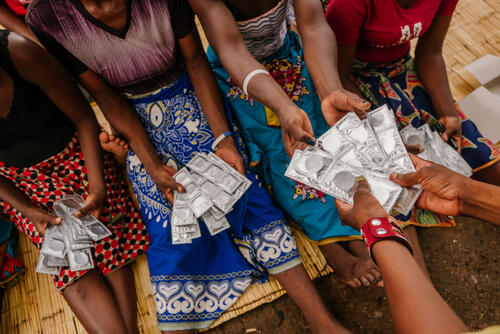
Sex workers receive condoms and lubricant during a health promotion session conducted discretely at a hotspot in Nsanje. During sessions, health workers distribute supplies of lubricant and male and female condoms, which become precious commodities for sex workers in protecting themselves from HIV and other STIs.

Comprehensive care in the community and health education

In all four project sites (IMwanza, Dedza, Nsanje districts and Zalewa in Neno district ), MSF community health workers (who are themselves sex workers) visit communities and hotspots with a backpack of health promotion tools, which they use to conduct health education sessions. Topics include safer sex, HIV and STI prevention, sexual and gender based violence, hygiene, family planning & contraception and TB and cervical cancer. They also provide sex workers with condoms, lubricant, initial doses of PEP (post-exposure prophylaxis), pregnancy testing and sexual violence screening, and emergency contraception methods. A lay counsellor supports HIV testing services, counselling, TB and STI screenings and referrals. From the community the community health workers help to identify and navigate sex workers in need of medical care to MSF-run ‘one-stop’ clinics which are located in public health facilities run by the Ministry of Health.
Sex workers receive condoms during a health promotion session conducted discretely at a hotspot in Nsanje. Health workers distribute supplies of lubricant and male and female condoms, which become precious commodities for sex workers in protecting themselves from HIV and other STIs.
Isabel Corthier/MSF

Sex workers report stigmatising attitudes and often violence in their daily lives – from police, clients, bar owners and even partners. While these risks are seen by many as part of the job, empowering sex workers with knowledge and prevention methods is key to protecting their health.

“In the past, most sex workers shied away from visiting health centres for fear of discrimination and stigma, especially if they were found to be HIV positive. If women needed post-exposure prophylaxis [treatment that prevents HIV if taken within 72 hours of exposure], they just didn’t go to the hospital because they knew they wouldn’t be helped,” said Alice Matambo (real name), an MSF community health worker in Dedza. "Sex workers need healthcare in their daily lives: if a condom bursts, if they have an STI, or need to be screened for cervical cancer.”
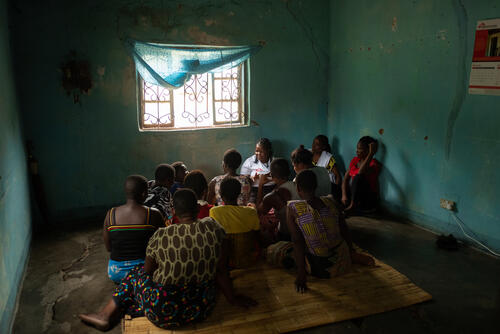
MSF nurse mentor Chrissie Nasiyo (middle) along with another MSF staff member engage with a group of sex workers during an outreach clinic in Nsanje.

Outreach ‘One-stop clinic’ 

Nsanje district is a largely rural area where access to health facilities is limited by long distances. MSF and health ministry staff therefore work together to provide regular ‘one-stop’ clinics conducted as outreach sessions on specific days at different sites, either in a rented room in the community, close to where sex workers live and work, or in health ministry facilities (hospitals, centers). 
The ‘one-stop’ clinics allow for discrete care and take full advantage of the single visit to offer a comprehensive package of health services during one consultation, including HIV testing and initiation, counselling, ART refills, TB screening and referral, STI testing and treatment, family planning, care for victims of sexual violence, and referral for viral load and cervical cancer screening.
During the ‘one-stop’ clinics in Nsanje, health education talks are given by the MSF community health worker, who uses interactive flip charts designed by sex workers or other teaching methods to promote knowledge of safer sex, HIV and STI prevention, sexual and gender based violence, hygiene, family planning & contraception and cervical cancer. 

TESTIMONY Chrissie Nasiyo, MSF nurse mentor, Nsanje

 “I’ve been working in this project for two years. I love working with the girls because they have stories to tell. Maybe you can judge them from the outside but if you hear their story, you might feel whatever they are doing is not wrong, they are doing that for a purpose.  
For someone to say ‘I’m a sex worker’ can be difficult because of the culture, the stigma, the discrimination that goes with it. That’s why someone who goes to a clinic can’t say ‘I’m a sex worker’, because she’s afraid of being discriminated against. Of course, sex workers can feel differently about disclosing, some don’t care at all. 
People usually mean ‘commercial’ sex workers when they talk about sex work, because it’s a job for her. She wakes up, gets dressed and goes to a hotspot to find a customer. But most ‘transactional’ sex workers don’t accept that what they are doing is sex work, because they don’t go to hotspots or places where ‘commercial’ sex workers work. She might be working class, going to her normal job, and having multiple partners in exchange for goods, but she won’t accept she’s a sex worker. 
Commercial sex workers approach it like a business, ‘I need to protect myself’, but transactional sex workers are less likely to know about and test for HIV and STIs. They are more at risk than commercial sex workers, because they don’t know what they are doing is sex work, they don’t know about prevention, they feel it’s just normal. Defining it for these women can help them get healthcare.
In MSF’s projects we offer the same services for ‘commercial’ and ‘transactional' sex workers, we just reach them in different ways. When we go for an outreach clinic, first the community health worker gives a health talk in the waiting area to the sex workers, depending on what she’s prepared, as there are a range of talks. Then the participants are offered more condoms and prevention methods, HIV and STI testing, family planning, refills of ART if they are HIV positive. The majority are HIV positive. 
One of the ways that MSF uses to identify sex workers in the community is through the community health workers. Despite them being MSF employees, they are also sex workers, and it’s easy for them to identify other sex workers.  They’re the ones that mobilise the women to attend the ‘one-stop’ clinics.
For younger women engaging in sex work, these young girls mostly don’t know how to protect themselves from getting HIV, STIs, or unintended pregnancies. Many of their issues are related to lack of health information, which results in a lot of HIV infection around this age.’
If someone has chosen to do sex work, you can’t change her mind. But if you provide services, how they can protect themselves, then you can help them protect themselves.”
MSF nurse mentor Chrissie Nasiyo (middle) engages with a group of sex workers during an outreach clinic in Nsanje. Malawi, January 2019.
MSF/Isabel Corthier

Recognising these gaps, MSF has been working with the Ministry of Health to provide services that meet the specific needs of sex workers. To connect with sex workers in the towns of Dedza, Mwanza, Zalewa and Nsanje, MSF has trained sex workers like Emily and Alice as community health workers, as they have themselves experienced the challenges and dangers associated with sex work. This shared experience enables them to discreetly link with other sex workers, understand their health situation and explain the medical services they need. Medical staff in the project have also been given sensitivity training to provide friendly services for sex workers.

“We approach sex workers gently and with respect, which makes them accept our approach, and look for medical help,” Emily says.

Margret, Community Health Worker My job includes going door to door and visiting bottle stores and brothels, where I meet sex workers and provide them with information related to HIV testing and how they can take care of their health.
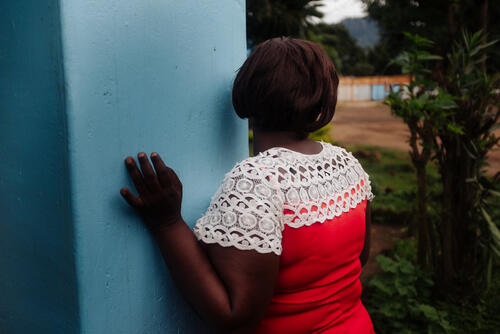
Margret (not her real name) MSF community health worker, sex worker project, Mwanza.

MSF Community health workers
Reaching hidden, vulnerable and stigmatised sex workers with packages of sexual and reproductive care means designing and delivering services to answer to the needs and lives of sex workers themselves. Central to this model are the community health workers, who as sex workers themselves have experienced the challenges and dangers faced by others, and are able to reach other sex workers through networks of trust and discretion. 
Sex workers living with HIV face huge difficulties of trust when keeping their status confidential. Building trust and discretion, including around confidentiality, is the community health worker’s biggest strength. 
Each of the four project sites is lead by two or more community health workers, who play a vital role of reaching and educating sex workers, providing materials such as condoms and lubricant, and navigating them towards healthcare in the ‘one-stop’ clinics. 

TESTIMONY: Margret (not her real name), MSF community health worker, Mwanza
“I am a Community Health Worker based in Mwanza. My job includes going door to door and visiting bottle stores and brothels where I meet sex workers and provide them with information related to HIV testing and how they can take care of their health. For now, most of the girls are healthy, and they know their HIV status. 
I went into sex work 20 years ago after losing both of my parents. My relatives who took care of me were also poor. I left school early, so I didn’t have a certificate of education which made finding decent employment difficult, so I started sex work. 
At first my relatives were so uncomfortable, I was a source of embarrassment. They suggested I change my name and move away from Blantyre. So I left and came here to Mwanza. 
We used to be arrested at night whenever the police felt like it. People used to look at us as animals, but things have changed.  With MSF coming (to Mwanza) and us learning about our rights, things got better. 
Things have improved between sex workers, police officers and health workers. Nowadays when we are arrested it means we have done something against the law, otherwise things are smooth.   Now when there is an incident of sexual violence, and it is reported, the police respond swiftly so that the victim gets the right support as quickly as possible. At the same time the perpetrator is summoned by the police.
My employment as a community health worker has also improved my relationship with my relatives. People know that we are like any other person who can contribute. And that HIV affects everyone.”
Margret (not her real name), an MSF community health worker who plays a vital role in reaching out to and educating sex workers, providing materials such as condoms and lubricant, and navigating them towards healthcare in the ‘one-stop’ clinics.
© Isabel Corthier/MSF

The community health workers also guide sex workers towards ‘one-stop’ clinics run by MSF in Ministry of Health facilities or in rented rooms in communities close to where sex workers live and work.

The ‘one-stop’ clinics are easy for sex workers to access discreetly and at convenient times. In a single visit, clinicians provide services like HIV testing, treatment and counselling; TB screening and referrals for care; and sexual and reproductive healthcare, including screening and treatment for STIs, access to contraception, cervical cancer screening, and treatment for sexual violence, which is either delivered on the spot or on referral.
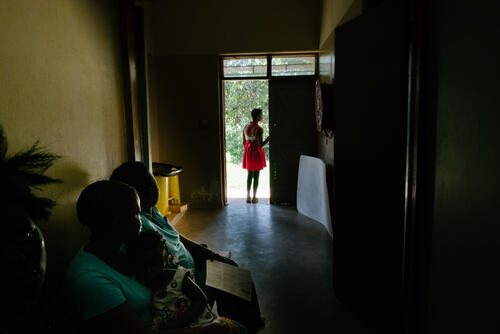
A sex worker walks out of the waiting area of the MSF-run ‘one-stop’ clinic at Mwanza district hospital.

‘One-stop’ clinics
In Mwanza, Dedza, Zalewa, MSF has a ‘one-stop’ clinic within a Ministry of Health facility with a trained MSF clinician, while in Nsanje, MSF and Ministry of Health staff work together to provide regular ‘one-stop’ clinics on specific days at different sites, either in a rented room in the community, close to where sex workers live and work, or in healthy ministry facilities (hospitals, clinics). 
The ‘one stop’ clinics allow for discrete care and take full advantage of the single visit to offer a comprehensive package of health services during one consultation, including HIV testing, counselling and initiation, ART refills and viral load monitoring, TB screening and referral, STI testing and treatment, family planning, cervical cancer screening and referrals, and care for victims of sexual or gender-based violence. In Nsanje, separate clinics for adults and adolescents are run during the week which enables a tailored approach according to age and need.
All MSF staff, both clinical and non-clinical are trained to understand the vulnerabilities and needs of sex workers and how best to connect and build trust ensuring confidentiality by providing sex worker ‘friendly’ services on a regular basis.
A sex worker walks out of the waiting area of the MSF-run ‘one-stop’ clinic at Mwanza district hospital.
© Isabel Corthier/MSF

“With these services, I feel more empowered than before and I am able to negotiate protection with the clients. I know how to put a condom on properly, and we now have lubricant which prevents accidents,” says Bernadette.Lubricants play an essential part in safer sex. Adequate lubrication is essential to prevent excessive friction, which could cause the condom to tear resulting in HIV infection or pregnancy.

Many of the community health workers employed by MSF say they resorted to sex work after having children at a young age and being abandoned by their families or losing the support of their husbands to take care of their children. They are often shunned by their families and communities, facing abuse and hostility because of what they do.
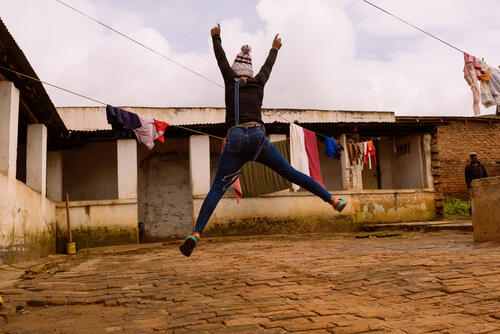
A sex worker celebrates a negative HIV results after a discrete visit by MSF’s counsellor and community health worker where she was offered HIV testing services (HTS) in the privacy of her home. 

Door to door HIV testing service (HTS)
In Mwanza, Dedza, Nsanje districts and Zalewa in Neno district, MSF conducts discrete door-to-door HIV testing services (HTS) at sex workers’ roomsas part of the sex worker project’s focus on HIV detection and prevention. 
To start, MSF community health workers – themselves sex workers who have been recruited from their local communities and trained - visit hotspots to identify new and known sex workers, raise awareness around HIV and offer of HIV testing. For those sex workers who are willing and agree to be tested, an appointment is made and the community health worker and MSF counselor educator visit the sex worker at home. 
During the visit the counselor gives information, conducts the test, and gives counseling according to the result. If found HIV positive, the counselor provides a referral and the community health worker links the sex worker to the nearest ‘one-stop’ clinic for treatment and further support. If the test is negative, counseling is given on prevention and a follow up appointment is made in three months to test again. 
Sex workers living with HIV face huge difficulties of trust when keeping their status confidential. Building trust and discretion, including around confidentiality, is the community health worker’s biggest strength.
A sex worker celebrates a negative HIV test result after a discrete visit by an MSF counsellor and community health worker, offering HIV testing services in the privacy of her home.
Isabel Corthier/MSF

The programme has seen reduced levels of stigma against sex workers in their areas, as well as having a positive impact on their access to HIV testing and sexual healthcare.

“While some people used to look at us as animals, things have changed,” says Margret. “Today, the perception that people have towards sex workers is improved. Today, people understand that HIV affects everyone. And if we are to deal with HIV once and for all, the first step is to accept and recognise that, despite being different, we are all human beings.”
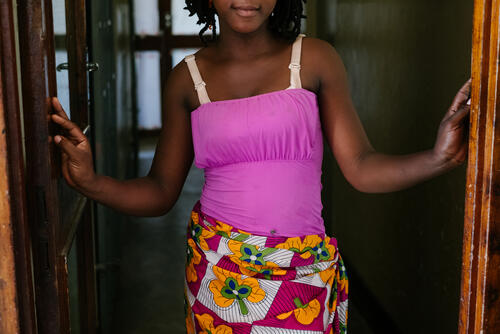
About MSF’s sex worker project in Malawi

Since 2014, MSF has been working with national health ministries and partners to increase healthcare for sex workers and men who have sex with men - people who often have a difficult time accessing healthcare - along main transport routes or busy centres of trade between Mozambique and Malawi through its ‘key populations’ project. In Malawi, the project focuses on reaching female sex workers in Mwanza, Dedza, Nsanje districts and in Zalewa in Neno district. All project sites combine outreach activities with a ‘one-stop’ clinic, located at Ministry of Health facilities or in the community, that address the specific needs of the sex workers like access to condoms and post-exposure prophylaxis, a drug which reduces the risk of HIV transmission. In all sites, MSF employs sex workers as trained community health workers to reach their peers through discreet networks and community engagement.

By the end of 2018, 5,171 sex workers were enrolled in MSF’s project in Malawi and 1,797 were actively seeking regular care. About half of the enrolled patients are HIV-positive, of which 85 per cent are virally suppressed, meaning that the women are able to take their treatment well, they are more likely to stay healthy and less likely to transmit the HIV virus in the event of unprotected sex.

Health services offered by MSF’s sex worker project

Community services: Community health workers conduct regular health education sessions in the community or in sex worker’s homes, on topics including safer sex, HIV and STI prevention, sexual and gender-based violence, hygiene, family planning and contraception, and TB and cervical cancer. They also provide sex workers with condoms, lubricant, emergency contraception methods, initial doses of post-exposure prophylaxis, pregnancy testing and screening for sexual violence. On appointment, trained counsellors visit sex workers at home to provide HIV testing services, counselling, TB and STI screenings and referrals.

‘One-stop’ clinics: Trained clinicians offer a comprehensive package of HIV and sexual and reproductive care using a sex worker-friendly approach: HIV testing and initiation, counselling, refills of antiretrovirals, HIV care and viral load monitoring, TB screening and referrals, STI testing and treatment, family planning, care for victims of sexual violence, viral load and cervical cancer screening and treatment. The ‘one-stop’ clinics aim to address each sex worker’s health needs in a single visit, using the opportunity to address all of her health needs in one go.