



Ebola disease in DRC: find out how we're responding
Learn more
2094 Results
 
The Topal family,they are  Kurdish and from Aleppo, Syria, inside the Idomeni refugee camp, in Greece, on the border with Macedonia (FYROM), where about 11,000 people live. Medecins Sans Frontieres (MSF) has a distribution point and a medical facility open 24 hours a day.
United States of America

Suspension of US refugee resettlement endangers people fleeing war zones

President Donald J. Trump’s executive order suspending refugee resettlement to the United States is an inhumane act against people fleeing war zones. Statement - 29 Jan 2017
 
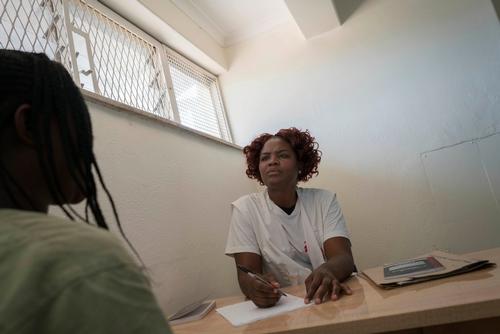
During 2016, MSF expanded its activities in the Honduran capital, Tegucigalpa, and its sister city Comayagüela, where it provides mental healthcare for victims of various types of violence, including kidnapping, extortion, assault, threats and other high-impact violent events. MSF’s mental health teams provide individual sessions, group sessions and activities such as psychosocial workshops. “We try to work on the emotions, feelings and thoughts that people experience as a result of what happened to them,” says MSF mental health supervisor Edgard Boquín
Honduras

Mental healthcare for victims of violence

During 2016, MSF expanded its activities in Tegucigalpa and Comayagüela, where it provides mental healthcare for victims of violence. Project Update - 26 Jan 2017
 
Since the beginning of 2016, more than 400,000 South Sudanese new refugees have arrived in Uganda, usually entering through informal border points or arriving through DRC. The vast majority come from the Central Equatoria State between Juba and the DRC border. The first waves of refugees were fleeing following the clash that erupted in Juba last July between SPLA and SPLA-IO, while the most recent ran away from widespread insecurity around the town of Yei.

Most of the new arrivals have been hosted in the main Bidibidi Refugee Complex, which is approximately 32 km long from north (zone 2) to south (zone 4 Annex) and 20 km long from east (zone 5) to west (zone 4). MSF provides medical care and water supply.
Refugees, IDPs and people on the move

South Sudanese refugees in Northern Uganda

MSF provides medical care inside the refugee complex. Most common pathologies are malaria and diarrhoeas but chronic diseases and mental health are also an issue.
Photo Story - 26 Jan 2017
 
Centraal Afrikaanse Republiek, CAR, Bangui, Februari 2014. 

Many people displaced by the conflict have found refuge in Mboko airport, Bangui, CAR.

Foto: Sven Torfinn
Central African Republic

Five reasons to care about the closure of Mpoko camp

Mpoko has now closed. What became a symbol of the huge needs of the Central African people has disappeared, but the country's problems persist. Project Update - 24 Jan 2017
 
Manono General Hospital.
Democratic Republic of Congo

More than 200 people treated for injuries at Manono hospital, Tanganyika

"In December, the hospital's surgical department was overwhelmed. There were people everywhere, lying on the floor waiting to be treated," says Gaudia Sironi, MSF Field Coordinator. Voices from the Field - 23 Jan 2017
 
Mohammed, Medco is evacuating wounded people after the bombing of one IDP camp in Rann.

“There are no health facilities in Rann. Nothing. The first health facilities are 2 hours away from Rann. Most of the victims that we saw where children”.
Mohammed Musoke, medical coordinator for OCP based in Maiduguri.
Nigeria

"Most of the dead and injured were women and children"

My colleague and I personally evacuated a number of severely injured patients, taking them to various hospitals in Maiduguri. Voices from the Field - 20 Jan 2017
 
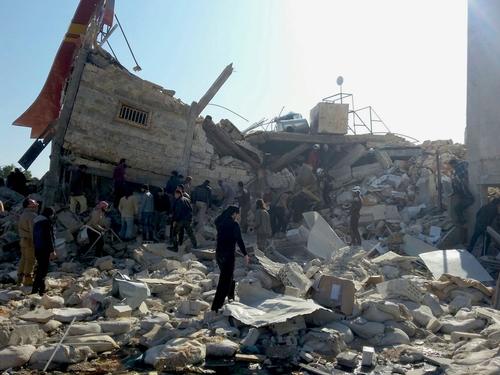
Rann IDP camp after the bombing.
Nigeria

Death toll rising in Rann attack

“The people of Borno should be entitled to guarantees of protection and assistance. All parties to the conflict must ensure the safety of civilians, and we urge the Government of Nigeria to ensure the protection of its people,” says Bruno Jochum, MSF General Director. Statement - 19 Jan 2017
 
A bombing by the Nigerian Army has occurred in an internally displaced person camps in Rann, Nigeria. MSF teams have seen 120 wounded and at least 50 dead following the bombing. Teams are trying to provide emergency first aid in its facility and are stabilizing patients to evacuate wounded. We are asking the authorities to put all measures in place in order to facilitate the emergency evacuation of wounded (by air and land). Our medical and surgical teams in Cameroon and Chad are ready to treat wounded patients.
Nigeria

“I can’t find the words to describe what I saw in Rann”

What the survivors of the bombing have lived through is so hard, so violent. Rann was their safe haven. The army that was meant to protect them bombed them instead. We have to remain at their side. Voices from the Field - 19 Jan 2017
 
A bombing by the Nigerian Army has occurred in an internally displaced person camps in Rann, Nigeria. MSF teams have seen 120 wounded and at least 50 dead following the bombing. Teams are trying to provide emergency first aid in its facility and are stabilizing patients to evacuate wounded. We are asking the authorities to put all measures in place in order to facilitate the emergency evacuation of wounded (by air and land). Our medical and surgical teams in Cameroon and Chad are ready to treat wounded patients.
Nigeria

MSF strongly condemns the aerial bombing of a camp for displaced people in Rann

At least 120 people were wounded and 52 killed today in a bombing by the Nigerian Army on a camp for internally displaced people in Rann. Statement - 17 Jan 2017
 
People fetch water in the Funu district of Bukavu early on a Sunday morning. 
In Bukavu most people still don´t have access to running water. Many rely on wa-ter from lake Kivu or surrounding rivers and streams.
Democratic Republic of Congo

Violence and its humanitarian impact: the case of Kivu

Research carried out by Duncan Maclean looking at the impact of violence on medical and humanitarian services in North Kivu, carried out for the MSF Analysis department of the operational centre in Brussels, MSF-Analysis - 16 Jan 2017
Four mothers posing in a corridor of the Hospital in Bili. All four of them are staying in the hospital with their child, that's suffering from a severe case of malaria. Since the beginning of the project in 2016, the pediatric ward already treated more than 4.000 cases of complicated/severe form of malaria.
Médecins Sans Frontières (MSF)

Independent medical humanitarian assistance

We provide medical assistance to people affected by conflict, epidemics, disasters, or exclusion from healthcare. Our teams are made up of tens of thousands of health professionals, logistic and administrative staff - most of them hired locally. Our actions are guided by medical ethics and the principles of independence and impartiality. We are a non-profit, self-governed, member-based organisation.

Learn more