



2109 Results
 
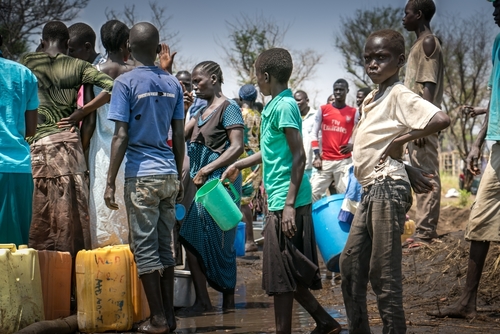
A water truck is stuck in the mud in Palorinya refugee camp, Uganda.

People take the opportunity to get much needed water when a water truck gets stuck in the mud after heavy rain. The impending rainy season will only make the situation worse as vehicles struggle to get around the camp.
Uganda

Over 900,000 South Sudanese refugees are in need of humanitarian aid

Over 630,000 refugees have since arrived in Uganda and thousands continue to arrive every week, bringing the total number of South Sudanese refugees and asylum-seekers to over 900,000. Project Update - 18 May 2017
 
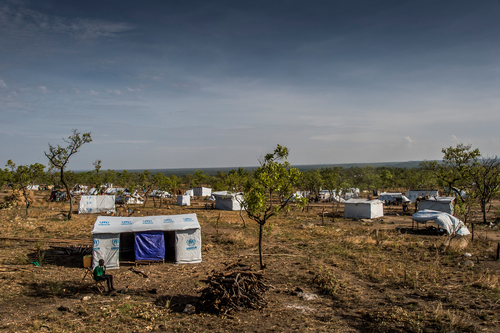
Families newly settled, in the woods of Imvepi.

Des familles nouvellement installées, dans les sous bois de Imvepi.
Uganda

Crisis Update - May 2017

Hundreds of thousands of South Sudanese refugees have fled to northern Uganda since July 2016, making Uganda the largest refugee hosting country in Africa. Crisis Update - 17 May 2017
 
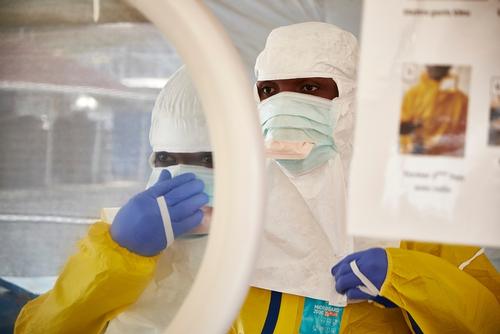
Medical workers put on PPE gear in the changing station at the Nongo Ebola Treatment Clinic in Conakry, Guinea on November 27, 2015. 

The clinic is treating the last known Ebola patient in Guinea. A month old baby named Nubia, whose mother died after giving birth on October 27th.
G20 Health Ministers’ Meeting

Open letter from MSF to the Meeting of the G20 Health Ministers

We call on G20 states to put the welfare of sick and wounded people wherever they live at the core of their concerns. Open Letter - 17 May 2017
 
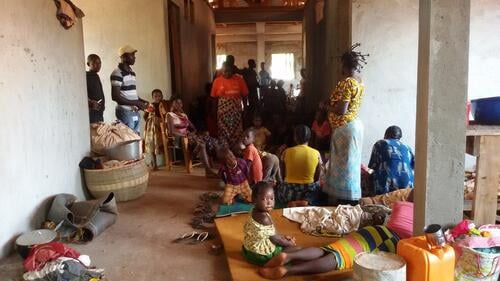
About 500 residents of Bangassou came to the hospital compound hoping that the fighters would not attack a medical structure. They were regrouped with the displaced people of the mosque and those of the church, Monday evening on the ground of the church of Bangassou.

Environ 500 habitants de Bangassou sont venus se réfugiés dans l’enceinte de l’hôpital espérant que les combattants ne se s’attaqueraient pas à une structure médicale. Ils ont été regroupés avec les déplacés de la mosquée et ceux de l’église lundi soir sur le terrain de l’église de Bangassou.
Central African Republic

"The city of Bangassou has turned into a battlefield; we fear the worst for the civilian population"

"When gunshots started in the Tokoyo neighbourhood... people scattered in all directions, running into the night to find shelter where they could." Voices from the Field - 16 May 2017
 
msf-placeholder
Central African Republic

MSF treats 70 wounded in fighting in Bangassou

MSF is extremely worried about the civilian population of Bangassou. Project Update - 16 May 2017
 
msf-placeholder
Central African Republic

MSF calls for a ceasefire in Bangassou to allow for the deployment of urgent medical aid

Following intense fighting that broke out this morning in Bangassou (Mbomou Province), Médecins Sans Frontières (MSF)/Doctors Without Borders is calling on all parties to agree to a ceasefire in order to access wounded people in urgent need of life-saving medical care. Press Release - 13 May 2017
 
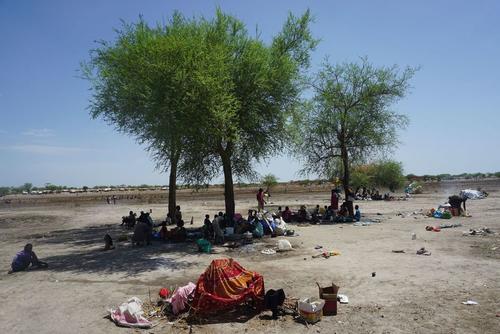
IDPs based in Aburoc take shelter under a tree. When people arrived from Kodok few had shelter.
In may 2017, South Sudanese from Aburoc’s internally displaced persons camp (IDP) started flooding across the border to Sudan.
South Sudan

Fighting and deplorable conditions in Aburoc force 20,000 people to flee

"The reasons why we are leaving are mainly the lack of security and the lack of food and water." Project Update - 11 May 2017
 
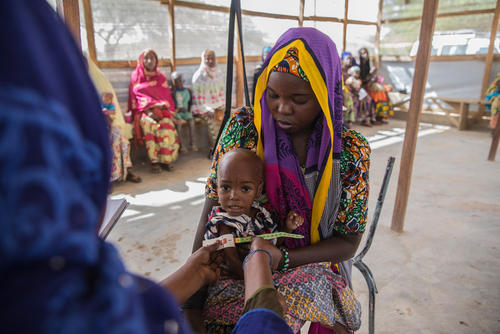
Diffa region. Chetimari IHC, supported by MSF. Screening for cases of malnutrition by the medical staff at the IHC.
Niger

Diffa - the burden of violence

"I had to leave one place after the other due to repeated attacks." Project Update - 10 May 2017
 
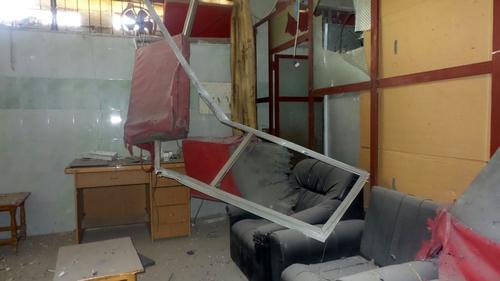
The strike on Tafas field hospital, some 12 km from the Jordanian border, took place on the night of 5 February. It caused partial damage to the hospital building, and put its heavily-used ambulance service out of action. In fear for their lives, more than 20,000 people from Tafas town fled to the surrounding countryside. The hospital is the latest medical facility to be hit in a series of airstrikes in southern Syria, which have been escalating over the past two months.
Syria

"MSF adapts to respond to the needs of a war-afflicted population"

Omar Obeid has been working as Project Coordinator for an MSF South Syria project, managing it remotely for the last 14 months. Over the past few weeks, fighting has intensified in southern Syria, as opposing forces contest to retake the city of Dara’a. As bombings and aerial attacks in Eastern Dara’a increased, hospitals and medical structures in the area have been forced to announce their closure to avoid being targeted Voices from the Field - 8 May 2017
 
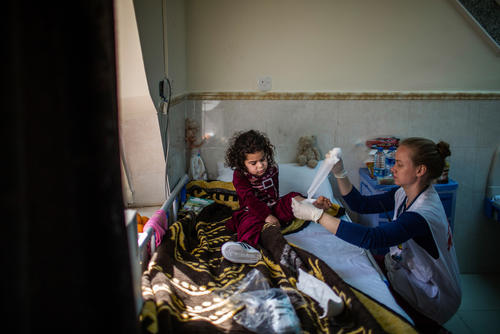
MSF staff member Patricia, changes 5 year old Faten's bandages. She was injured when she was playing in a garden. At the Medecins Sans Frontieres (MSF) Post Op Hospital South of Mosul, Iraq. 

Told by her father:

“When our neighbourhood in West Mosul was retaken by the Iraqi army we went back to our house. Faten was playing in the garden when a mortar bomb fell in the garden and exploded. Faten was injured in the leg by shrapnel from the bomb. First we took her to MSF in Hammam Al Alil where she received the first aid. From there she was referred to another field hospital in Bartella for further treatment. Now she is here in the post-operative ward in Hamdanyia hospital. Every day the staff here clean her wounds and puts new bandages on. Faten is a brave girl, she likes to play and laugh butt she misses her brothers and sisters at home and at night she cries. All her 7 siblings are doing well, praise to God”.
Iraq

Crisis update Mosul - May 2017

“Most hospitals in Mosul have been damaged or destroyed.” Crisis Update - 8 May 2017
Four mothers posing in a corridor of the Hospital in Bili. All four of them are staying in the hospital with their child, that's suffering from a severe case of malaria. Since the beginning of the project in 2016, the pediatric ward already treated more than 4.000 cases of complicated/severe form of malaria.
Médecins Sans Frontières (MSF)

Independent medical humanitarian assistance

We provide medical assistance to people affected by conflict, epidemics, disasters, or exclusion from healthcare. Our teams are made up of tens of thousands of health professionals, logistic and administrative staff - most of them hired locally. Our actions are guided by medical ethics and the principles of independence and impartiality. We are a non-profit, self-governed, member-based organisation.

Learn more