



Ebola disease in DRC: find out how we're responding
Learn more
2094 Results
 
msf-placeholder
Rwanda

Remembering the genocide more than 20 years on

More than two decades since the 1994 genocide, Rwandan fieldworkers tell us about the experiences that motivated them to join MSF. Project Update - 6 Apr 2018
 
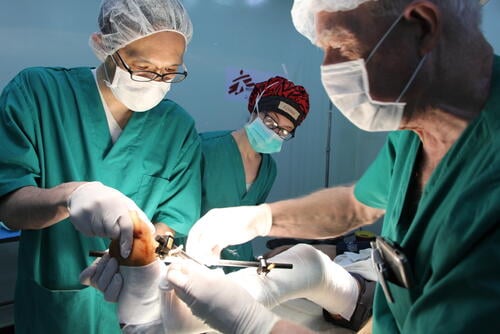
Reconstructive plastic surgery program, Gaza, Dar Al Salam hospital.
Palestine

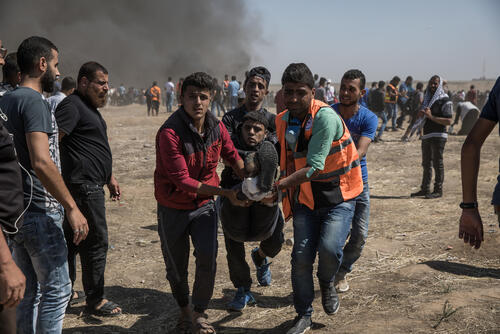
MSF increases medical efforts for wounded in Gaza strip

The number of patients with trauma injuries had risen to 20 per week while it was 20 per month before November 2017. Press Release - 5 Apr 2018
 
Areti, 37-years-old from a village called Joo (Mahagoi) in Ituri province  
Areiti and six of her children have been in Mara Tatu camp in Uganda since February 2018. They are among the 57,000 people who have fled massacres in Ituri since mid-December 2017 for Uganda, crossing Lake Albert by boat. 

For her, the pain of exile is exacerbated by the fact that the violence separated her from her husband and one of her children. They hope to be reunited, though as the killings rage on in DRC, it is hard for her loved ones to find an escape route.

For now, she and her six children live in hope that their family will be whole again, as they try to forget the horrific scenes they witnessed.
Democratic Republic of Congo

The daily struggles of Ituri’s refugees

The attackers wore masks and used axes, machetes and guns to slaughter civilians in the Democratic Republic of Congo’s strife-torn Ituri province. Voices from the Field - 5 Apr 2018
 
The female inpatient department at MSF cholera treatment center in Khamer. MSF is receiving an increased number of cholera patients in Yemen since the beginning of May 2017. This cholera treatment center alone, treated more than 1200 patients in less than two weeks. The center is still receiving patients.
Yemen

Yemen: A timeline of more than three years of war

A timeline of more than three years of war Project Update - 4 Apr 2018
 
Raqqa, the west side of the city. A woman looks at what was her home once and now turned into rubble due to the Raqqa offensives.
Syria

Raqqa - The hidden deadly threat

"Raqqa is devastated and many homes and public places were, and still are, littered with improvised explosive devices and unexploded munitions." Photo Story - 4 Apr 2018
 
Humaid, 45 years old, is from Dhiban, in Deir ez-Zor. Five of his daughters (Sedar (4 years old), Dumua (5), Butul (6), Arimas (9) and Lamis (13)) were on the rooftop of the house when they were severely injured by a booby-trap. Sedar, the youngest, has been partially amputated of both legs, and Lamis, the eldest, of one leg.

“We fled Dhiban because of the clashes. Once the situation calmed down I went back by myself to check the house and did not see any suspicious device, so I brought my family as well.” The accident that almost killed the girls happened two month later. “The girls had never seen a mine before, how could a child know about a mine? They put the mines in the fridge, in the door handle, under the carpet, inside the Quran. The hospital is full of people who have amputated legs. What was the fault of the children? They are not part of the conflict. This is not a war, it’s a war against human.”
Syria

Patient numbers double in northeast as more people return home to landmines

“These explosive devices do not choose their targets. They do not respect peace treaties or ceasefires and can stay concealed for months or years after a conflict ends.” Project Update - 3 Apr 2018
 
Yemen, gouvernorat de Saada, Haydan, mars 2018. L'école de Haydan, bombardée en 2016 par la coalition internationale dirigée par l'Arabie Saoudite.

Saada governorate in Yemen, Haydan, March 2018.Haydan school, bombarded in 2016 by the international coalition led by South Arabia.
Yemen

Pledging conference – money alone is not enough

"The pledges made today by donor countries are obviously essential, however they must be complemented by much more robust action on the ground." Statement - 3 Apr 2018
 
msf-placeholder
Syria

Letter to the doctors of East Ghouta

"At this very moment, our ability to assist in providing healthcare in East Ghouta is almost non-existent." Voices from the Field - 28 Mar 2018
 
msf-placeholder
Syria

Two airstrikes cause a mass-casualty influx in a MSF supported hospital

"It is painful to live in days when children are killed and wounded by the bombing of a busy public market. Our only relief is to keep supporting the Syrian medics to save as many lives, limbs and futures as possible." Press Release - 23 Mar 2018
 
Mace-Grace (11) recovers in a hospital room on 2 March 2018 in Bunia. She lost her mother, three siblings and her left hand after an attack on her village. Fighting in Ituri province has left thousands of Congolese displaced and some 100 have lost their lives.  PHOTO/JOHN WESSELS
Democratic Republic of Congo

Stories of flight across Lake Albert

“It’s different this time. In the 2000s our homes were torched too, but we were able to go back to our villages. Now people are being hunted down and killed." Project Update - 23 Mar 2018
Four mothers posing in a corridor of the Hospital in Bili. All four of them are staying in the hospital with their child, that's suffering from a severe case of malaria. Since the beginning of the project in 2016, the pediatric ward already treated more than 4.000 cases of complicated/severe form of malaria.
Médecins Sans Frontières (MSF)

Independent medical humanitarian assistance

We provide medical assistance to people affected by conflict, epidemics, disasters, or exclusion from healthcare. Our teams are made up of tens of thousands of health professionals, logistic and administrative staff - most of them hired locally. Our actions are guided by medical ethics and the principles of independence and impartiality. We are a non-profit, self-governed, member-based organisation.

Learn more