



2109 Results
 
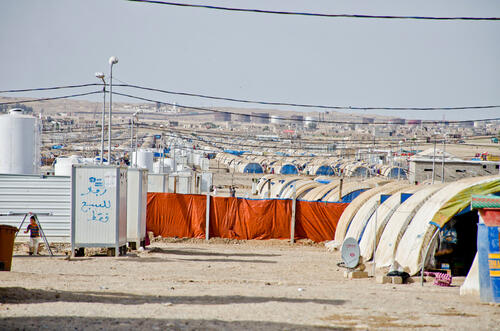
Doctors Without Borders/ Médecins Sans Frontières (MSF) started working in Qayyarah in 2016. We built a field trauma hospital with an operating theatre, emergency room, pediatric, nutrition and in-patient departments along with mental health services. MSF also set up a nutrition and mental health program in the Jeda´ah Camps 5 and 6 and Airstrip camp near Qayyarah. Between March and May 2018, MSF vaccinated more than 40,000 children living in Airstrip, Jeda´ah 1-6 and Haj Ali camps against the deadly measles virus.
Iraq

Life after the war

MSF nurse Vera Schmitz blogs about her experience of working in norther Iraq since mid-July 2018. blogs.msf.org - 26 Oct 2018
 
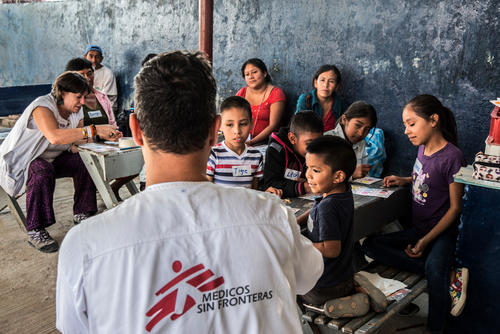
MSF psychologists during a group mental health session for children in a village in Guerrero state. Violence across the region is taking a toll on children’s mental health. In many cases, patients are suffering from night terrors and display aggressive or irritable behaviour. 

ESP Los niños sufren asimismo la violencia y la tensión del ambiente: en muchos casos los niños presentan miedos nocturnos, agresividad o irritabilidad constante.
Mexico

Mobile teams respond to escalating violence and trauma in Guerrero state

As violence escalates in Mexico’s Tierra Caliente region, north and central Guerrero state, we are expanding our mobile teams to provide medical and psychological assistance in more areas more quickly. Project Update - 26 Oct 2018
 
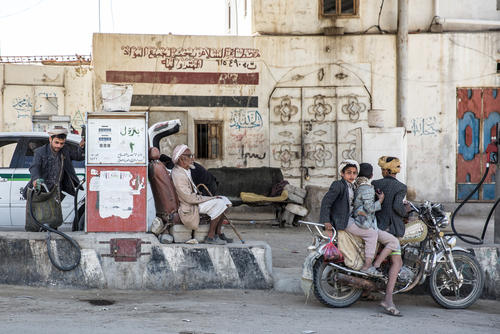
Yemen, gouvernorat d'Amran, Khamer, mars 2018. Des hommes font le plein d'essence dans l'une des stations service de Khamer.

Yemen, governorate of Amran, Khamer, in March, 2018. Men fill up with gas in one of the gas stations of Khamer.
Yemen

Is Yemen on the brink of famine?

MSF operations desk manager Caroline Seguin discusses the recent warnings of famine in Yemen—a country that has been at war for almost four years. Interview - 24 Oct 2018
 
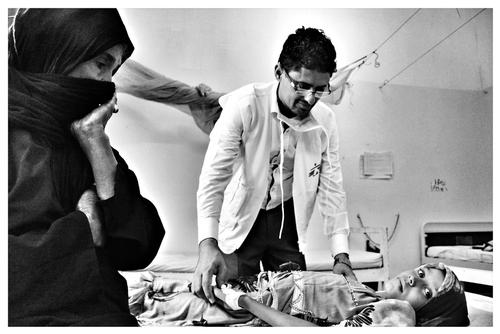
MSF Inpatient Department (IPD) Mansour Al-Ezzi is checking on Ghalia Qaboos who is diagnosed as Kala Azar in MSF supported hospital in Abs on 12th June,2016
Yemen

“Some pregnant women and sick children arrive so late, we can’t save them”

Interview with Gisela Vallès, medical team leader at the MSF hospital in Abs, Yemen, explains the challenges and obstacles her team face in providing assistance to the displaced groups and host communities as increased fighting in the region causes new waves of displacement. Interview - 18 Oct 2018
 
Every week, an MSF team of counsellors and health promoters puts on a play and conducts sensitisation activities with displaced people living outside and inside of Mweso school. Theatre is used as an effective means of health promotion and the performance touches on different themes, among them sexual and domestic violence. The MSF team use theater to present the different healthcare activities that are offered to people in Mweso.
Mental health

World Mental Health Day 2018: Beyond a healthy body

For people who have lived through violence or natural disasters, survival goes beyond ensuring physical well-being. Our professionals are there to provide mental healthcare to help heal our patients' psychological wounds. Project Update - 10 Oct 2018
 
Dans le centre médical de Tshibala (CNTA) les patients ne pouvant se rendre à l'hopital viennent se faire osculter par des médecins MSF. Si les enfants souffrent de malnutrition sévère ils seront ainsi ramenés à la base MSF et hospitalisés.
Democratic Republic of Congo

MSF adapts to changing needs in Greater Kasai region

Since MSF first launched an intervention to respond to the recent crisis in Kasai in May 2017, our teams have established medical projects in a total of five different locations in Kasai and Kasai Central provinces. Project Update - 9 Oct 2018
 
Nadiia, 79. from Mariupol listens to MSF nurse Tetiana as she goes over new treatment options. Nadiia receives medical treatment for heart and kidney problems. "I live alone in Mariupol. It was very hard being by myself during the conflict, as I live on the fourteenth floor of my building. I could hear shooting all the time, and it scared me a lot. It was a trying experience for me, but there are other people who have suffered more than me, so I don't feel I suffered that much. One lady from the village of Shyrokyne lost her entire house and garden. It has ruined her life for good. The conflict has affected many, many people in different ways. It destroyed them."
Mental health

Living with loneliness and trauma

How MSF’s patients cope with fear and hopelessness from four years of conflict in eastern Ukraine. Photo Story - 9 Oct 2018
 
The main street in Yambio Town
South Sudan

Helping Yambio’s demobilised child soldiers come to terms with their past

MSF’s mental health support programme helps some of South Sudan’s estimated 19,500 former child soldiers come to terms with their experiences as they reintegrate their communities. Project Update - 5 Oct 2018
 
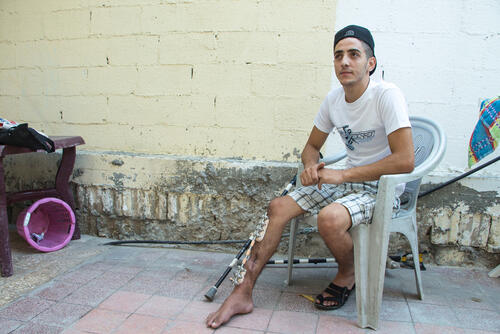
Twenty-two year-old Eyad was shot in the leg during the ‘Great March of Return’ demonstrations in Gaza on the 14th May – one of the deadliest days witnessed by MSF teams in the six months of protests. He needs a bone graft and limb reconstructive surgery which is not currently possible inside the Gaza strip.  Eyad’s case has been accepted for treatment at the MSF’s specialist surgical hospital in Amman, Jordan – but for people living in Gaza, requesting the authorisation to leave from the Israeli authorities is a lengthy, difficult process which often ends with a refusal.

“I still remember vividly the day I was shot: the bullet entered my leg like an injection and then I felt a hot sensation on my other leg. I looked down and saw lots of blood, and I realised I had been wounded. I was in so much pain.

After the bullet entered my leg I started to shake, and it felt like I had electricity coursing through my body.  At first, I was stunned by what I saw. I thought I was going to lose my leg and become an amputee. 

I was shot on the 14 May 2018. Like a lot of Palestinians I was shot in the leg. It just goes to show how barbaric the Israeli army was towards us that day. 

I went to the demonstrations because I love my country and I am trying to defend it. I wanted to show everyone that we have the right to our lands and the right to have our homes back. The demonstration was peaceful. Then the Israeli army started shooting. I knew it was going to be dangerous, so I went alone. I didn’t want to see any of my friends injured or killed. I wanted to free our land, our home, our sacred places. Israel can take all they want; I just want them to give us back our land. 
My mother tried to convince me not to go and begged me to stay at home. She called my grandparents to try and persuade me. But they could not stop me. I had made up my mind. 
Ever since I was shot I’ve had trouble sleeping. When I sleep, it feels like knives are moving inside my leg and electricity is coursing through my body. I don’t move around a lot, I don’t go out; only if I have to. I prefer not to move around a lot because it is just so painful.

My parents and siblings are caring for me – they take good care of me. They bring me whatever I need.

“All I hope is to be able to walk normally again”
 
I go to MSF’s clinic in Gaza three times a week for dressing changes and to have physiotherapy. My condition started to improve after the first debridement operation, which cleaned the gunshot wound and took out the infected blood. I have had about six operations, including the debridement of the wound, attaching the external fixator to stabilise the bone, and a skin graft where they took skin from my thigh to cover the gunshot wound.

The next stages of my treatment must be done in Jordan, at the MSF reconstructive surgical hospital in Amman. They plan to use a bone graft to fix the shattered bone, and a plastic surgeon will then reconstruct my damaged leg. When I heard they wanted to send me to Jordan I was full of fear because I thought the Israeli army wouldn’t let me leave Gaza. I thought I’d have to have an amputation. But once I heard that the Amman hospital had accepted me, I started to feel hopeful again. I started to see that things might be ok. Now I am just waiting to see if I am permitted to leave Gaza.

“I have lost everything”
 
I left school at high school and I don’t have a job. Actually, this is one of the main reasons I went to the border to demonstrate, because I don’t have job and I don’t have anything to do. I wish I could work. 

But there is no work in Gaza. I am a musician, it’s not a profitable job, but I love to play instruments like the flute and drums.

Have I returned to the protests? That is an embarrassing question... no, I haven’t. After experiencing this amount of pain and losing so much of my life from what happened, I don’t want to go back.

I have lost friends, I have lost the ability to go out or move around as I wish. I find it difficult to play my instruments. I have lost everything.
My only hope is to return to how I used to be.
But I know that won’t happen... I can’t swim or play football anymore. I was a really good footballer. I’m not able to run the way I used to. I just hope that, with further surgery, I will be able to walk normally again, without any pain. That’s all I hope.

“It is overwhelming to see your friends die.” 
 
My friends still go to the demonstrations; some of them have also been wounded. One of my friends also got shot and now has almost exactly the same injury as me. Another friend who helped me when I was injured has been killed. He was at a demonstration helping another wounded person when he died.
I am trying to convince other people not to go to the demonstrations. I don’t want them to experience the pain I have. The negatives of protesting outweigh the positives. Going there is so dangerous: people may lose their hopes and futures. They need to stay away: the Israeli army is really violent.

As Palestinians, we want these protests to be peaceful. But Israel sees this as a violation of their freedom. All we want is to return to our lands. We protest to show everyone that we are Arab, that we are all together in this, and that we support each other. That’s why we go to the demonstrations.
Palestine

“When I sleep, it feels like knives moving through my leg”

Eyad, 22, describes how he was shot in the leg during the ‘Great March of Return’ demonstrations in Gaza on 14 May, his treatment since and his hopes for the future. Voices from the Field - 2 Oct 2018
 
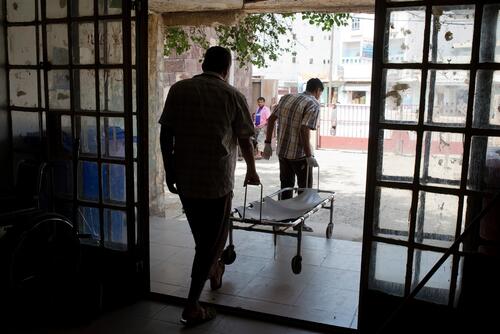
Two Yemeni men carry a stretcher out of Al Salam Hospital to go pick up a patient on July 22, 2015 in Qataba, Yemen.
Yemen

MSF suspends activities after attack in Ad Dhale

MSF strongly condemns attacks against its staff and asks for protection for humanitarian workers and patients. Statement - 2 Oct 2018
Four mothers posing in a corridor of the Hospital in Bili. All four of them are staying in the hospital with their child, that's suffering from a severe case of malaria. Since the beginning of the project in 2016, the pediatric ward already treated more than 4.000 cases of complicated/severe form of malaria.
Médecins Sans Frontières (MSF)

Independent medical humanitarian assistance

We provide medical assistance to people affected by conflict, epidemics, disasters, or exclusion from healthcare. Our teams are made up of tens of thousands of health professionals, logistic and administrative staff - most of them hired locally. Our actions are guided by medical ethics and the principles of independence and impartiality. We are a non-profit, self-governed, member-based organisation.

Learn more