



2109 Results
 
Palestinians in Rafah on the Egyptian border – once a town of 300,000, but now hosting 1.5 million displaced people from all over Gaza – struggle to find clean water for drinking, cooking or washing. Living conditions for people in this part of the enclave are desperate – a result of the overcrowding and of the lack of clean water, toilets, showers and sewerage systems, aggravated by the cold winter weather.
Gaza-Israel war

Ground offensive on Rafah would be catastrophic and must not proceed

Meinie Nicolai, MSF Director General, warns of the potentially catastrophic consequences of a ground offensive on Rafah in Gaza. Statement - 12 Feb 2024
 
Commune of Ranobe, Amboasary District.

People in the south-east of Madagascar are facing the most acute nutritional and food crisis the region has seen in recent years. MSF began setting up mobile clinics in Amboasary district in late March to screen and treat acute malnutrition in remote villages like those of Ranobe commune, providing ready-to-use therapeutic food and medical care.
Burkina Faso

MSF marks one year since the killing of two colleagues in Tougan

MSF pays tribute to our colleagues who were brutally killed while delivering humanitarian aid in Burkina Faso one year ago. Project Update - 9 Feb 2024
 
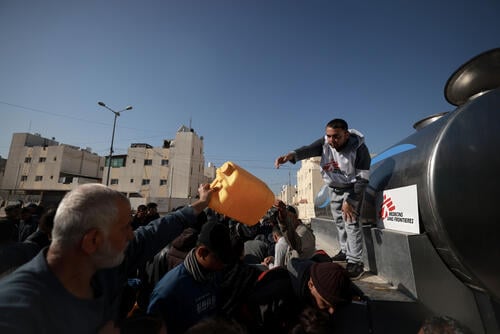
Youssef Al-Khishawi, an MSF water and sanitation agent, oversees a water distribution for displaced people in the southern Gaza town of Rafah’s Saudi neighborhood.
 He says: “In a normal situation, one person needs two to three liters of drinking water per day. Now, with the current shortage, the average for one family of six is one gallon of water (3.8 litres).” 

“The main challenge we face in distributing water is the lack of fuel to pump and transport it,” says Al-Khishawi. “The second is the lack of proper roads for our trucks to drive on, because there are tents even on the asphalt. The third is that there are no water distribution points – even they have been bombed. Water pipes, streets and infrastructures are destroyed.”
Gaza-Israel war

Lack of clean water brings disease and suffering in Gaza

Palestinians in southern Gaza are struggling to find clean water. The flow of humanitarian aid into Gaza must be restored to ensure people have access to essential items such as food, water and healthcare. Project Update - 8 Feb 2024
 
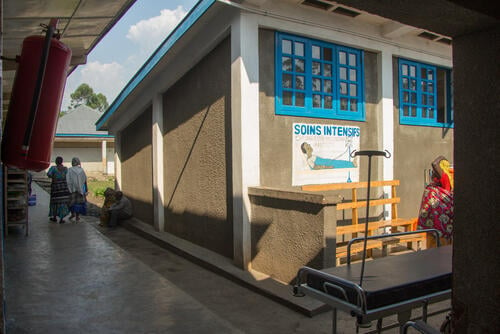
View of the intensive care unit building at the general referral hospital of Mweso, North-Kivu, supported by MSF teams since 2005 in partnership with the Ministry of Health. Between January and June 2023, about 1,400 admissions were recorded in the intensive care unit.
Democratic Republic of Congo

People and medical facilities caught in crossfire as violence escalates in North Kivu

A new wave of armed clashes in North Kivu, DRC, over the past couple of weeks has caused thousands of people to flee and MSF medical teams receiving huge influxes of war-wounded patients. Press Release - 7 Feb 2024
 
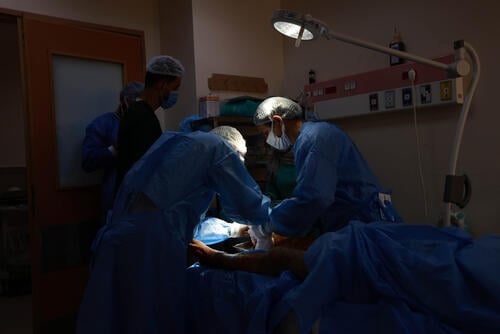
Amir Jibril Abu Al Ata is undergoing a foot surgery. Al Aqsa hospital. 29 November 2023, Middle Area, Gaza.
Gaza-Israel war

The last medics providing healthcare amidst death and destruction in Gaza

Our emergency coordinator, Marie-Aure Perreaut Revial, recently returned from Gaza and describes the unbearable reality on the ground that she witnessed. Voices from the Field - 2 Feb 2024
 
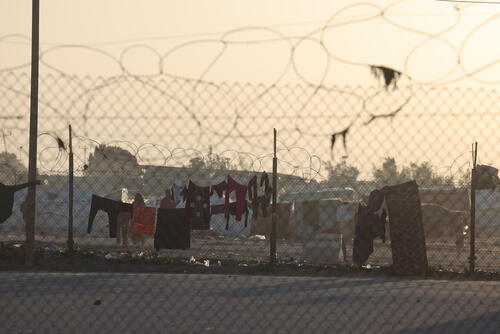
A view of Al-Hol camp from MSF’s facility at the camp in northeast Syria, 13/12/2023.
Syria

Unveiling the mental health crisis at Al-Hol Camp in northeast Syria

The dire conditions faced by people detained at Al-Hol camp, northeast Syria, only exacerbate the traumatic events they have experienced, such as violence and displacement, says MSF. Project Update - 19 Jan 2024
 
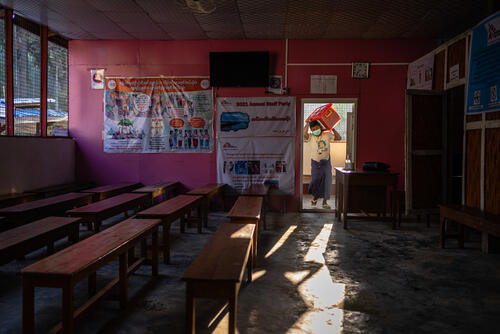
MSF staff carry supplies into the clinic in Sin Thet Maw village in Pauktaw township, 14 March 2022
Myanmar

Health workers struggle to respond amid severe restrictions in Rakhine state

As violence continues to escalate across Myanmar, all parties to the conflict must ensure that health facilities and humanitarian workers can safely provide care to people in Rakhine. Voices from the Field - 16 Jan 2024
 
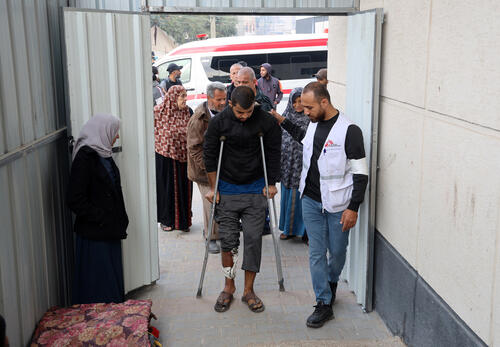
In south Gaza, MSF set up a clinic inside the Rafah Indonesian Field Hospital in December 2023. With its outpatient department and 30 beds, it provides post-operative care to patients displaced from all parts of the enclave to free up beds in emergency rooms in other hospitals.
Gaza-Israel war

Evacuation orders and bombing around Gaza hospitals leaves people with few healthcare options

Three months of intense bombardment and evacuation orders of hospitals and their surrounding areas in Gaza, Palestine, have left people with few options to seek medical care and for MSF to provide it. Press Release - 12 Jan 2024
 
MSF medical mobile team providing medical care to internally displaced people in Nabatiyeh, South Lebanon amid escalation in military activity on the Lebanese southern borders.
Lebanon

Providing healthcare to people displaced by military escalation along Lebanon's southern border

Escalating military activity along Lebanon’s southern border has forced thousands of people to flee border towns. Our mobile team helps provide displaced people with healthcare. Project Update - 10 Jan 2024
 
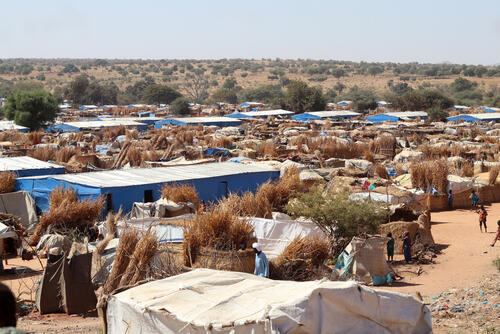
Large view of Ourang refugee camp, eastern Chad
Conflict in Sudan

MSF survey sheds new light on scale and intensity of ethnic violence in Sudan

A retrospective mortality survey carried out among Sudanese people now sheltering in three refugee camps indicates a significant increase in mortality in Sudan from the start of the conflict in April 2023 onwards. Press Release - 9 Jan 2024
Four mothers posing in a corridor of the Hospital in Bili. All four of them are staying in the hospital with their child, that's suffering from a severe case of malaria. Since the beginning of the project in 2016, the pediatric ward already treated more than 4.000 cases of complicated/severe form of malaria.
Médecins Sans Frontières (MSF)

Independent medical humanitarian assistance

We provide medical assistance to people affected by conflict, epidemics, disasters, or exclusion from healthcare. Our teams are made up of tens of thousands of health professionals, logistic and administrative staff - most of them hired locally. Our actions are guided by medical ethics and the principles of independence and impartiality. We are a non-profit, self-governed, member-based organisation.

Learn more