



2109 Results
 
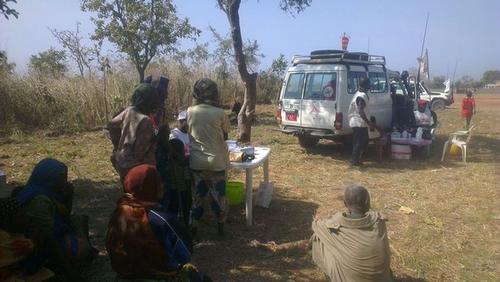
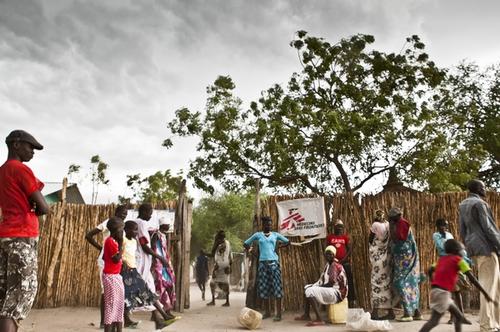
MSF organizes mobile clinic for the displaced populations in the town of Ndélé, following the attack of the towns on December the 10th. As of today 4 of these mobile clinics were organized, and MSF received more than 300 patients in consultation.
Central African Republic

Attack forces people to flee Ndélé town

On Monday 10 December, the town of Ndélé, in the northeastern Central African Republic (CAR), was the target of an attack by the Union of Democratic Forces for Unity (UFDR). There were exchanges of gunfire between the UFDR and Central African Armed Forces (FACA) based in Ndélé. Some casualties were reported among the ranks of the FACA and one wounded civilian was transferred to Ndélé hospital, where he was tended to by a team from MSF. Project Update - 14 Dec 2012
 
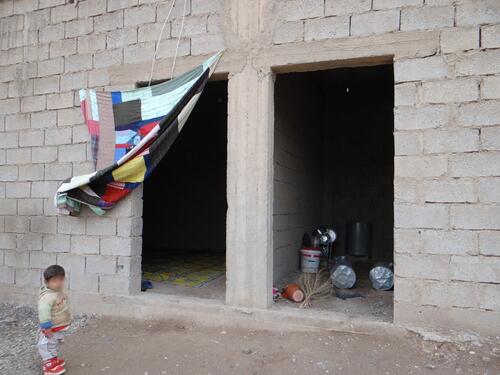
People have fled the shelling in the city of Deir Elzawr to other places in the Deir Elzawr governorate where they are living in very precarious conditions.
The area located in Eastern Syria is remote and pratically inacessible to external assistance.
Syria

Sick and wounded trapped in Deir Azzour

Tens of thousands of people, many of them wounded, are trapped in the city of Deir Azzour, eastern Syria, due to intense fighting and aerial bombardments. MSF calls for the sick and wounded to be evacuated to safer locations and for international medical teams to be given official authorisation to provide impartial assistance to all those who need it. Press Release - 12 Dec 2012
 
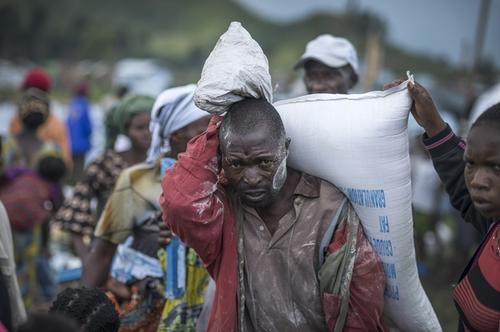
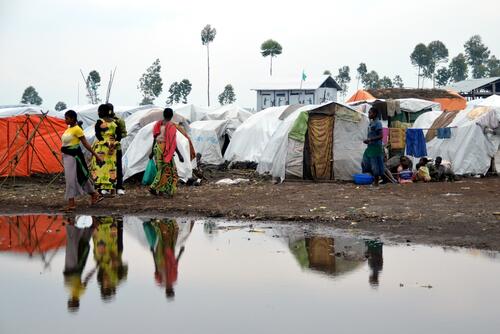
Displaced people. Mugunga 1 camp, Goma, North Kivu.
Democratic Republic of Congo

Critical humanitarian situation in east of country

An already fragile humanitarian situation in eastern Democratic Republic of the Congo has deteriorated further after the border city of Goma fell to M23 rebels last week. Teams from MSF have rapidly set up additional emergency response activities, treating victims of violence and providing assistance to newly displaced people in and around Goma. Project Update - 30 Nov 2012
 
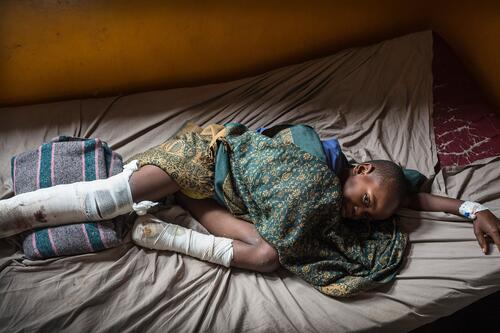
Eden, a nine-year-old boy, was seriously injured in the recent fighting between the Armed Forces of the Democratic Republic of Congo (FARDC) and the M23 rebel group in Goma, eastern Congo. He is one of 60 wounded patients currently being treated by MSF teams and local health staff in Virunga hospital. Goma, North Kivu.
Democratic Republic of Congo

Nine-year-old Eden wounded in Goma violence

Eden, a nine-year-old boy, was seriously injured in the recent fighting between the Armed Forces of the Democratic Republic of the Congo and the M23 rebel group in Goma, eastern Congo. He is one of 60 wounded patients currently being treated by MSF teams and local health staff in Virunga hospital. Voices from the Field - 30 Nov 2012
 
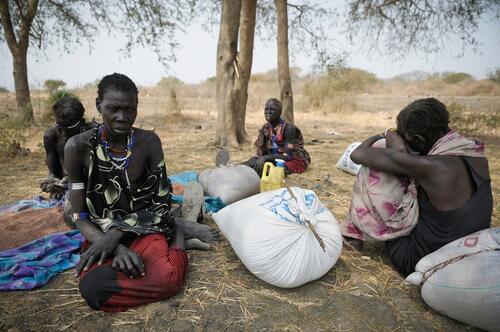
Karajoi Maze (in red skirt) on the outskirts of Lekwongole village. Lekwongole was the scene of the abduction of her daughter and she feels uncomfortable being bak in the village. "My house was burned, totally. And my daughter was taken by the attackers. And our family was scattered, some of them taken away too…

We are not staying at night in the village. We are sleeping in the bush because we are afraid. When you come to the village, you hear people saying they have heard that the attackers are coming again from this direction or that direction, and you run away again. That is why we are not coming back to town, but are just staying away. Since the attack, we are living in fear." Full testimony available from OCB Cell 3 comms advisor.

Jonglei State in South Sudan is in the grip of a cycle of extremely violent inter-communal fighting. Since 2008 MSF has witnessed in increase in intensity of the generations-old cattle-rustling between communities of different ethnicity. Over Christmas and New Year of 2011 a particularly violent attack in the area around Pibor and the outreach location of Lekwongole village displaced tens of thousands and left Lekwongole and some surrounding villages razed to the ground. MSF's hospital in Pibor was looted and the clinic in Lekwongole was largely destroyed. MSF treated 108 trauma victims in the following weeks, many women and children with gunshot wounds. But the consequences of fear and displacement in the bush continued long after, with malaria and malnutrition at very high levels in MSF's hospital.
South Sudan

South Sudan’s hidden crisis: how violence against civilians is devastating communities and preventing access to life saving healthcare in Jonglei

MSF report reveals medical consequences of violence and the impact on healthcare. Report - 27 Nov 2012
 
MSF hospital in Lankien South Sudan. Patients come and go from the main entrance of the hospital.
South Sudan

Violence a 'hidden crisis' in Jonglei

A report released today by MSF highlights the devastating impact of violence on the lives and health of civilians in South Sudan’s Jonglei state. Women and children as young as four months old are among the victims. Healthcare is threatened as medical facilities are targeted and destroyed. Press Release - 27 Nov 2012
 
msf-placeholder
Palestine

In Gaza, 'the wounded are stuck at home'

Virigine Mathieu, MSF head of mission, talks to Libération about the situation for people in Gaza since the launch of Operation 'Pillar of Defence'.

In the Media - 21 Nov 2012
 
 *** Local Caption *** Depuis Juillet, près de 60 000 personnes ont fui les affrontements entre le groupe du M23 (mouvement du 23 mars), formé d'ex-combattant de la milice CNDP et les FARDC sur le territoire de Rutshuru, pour trouver refuge dans le camp de déplacés de Kanyaruchinya, à une quinzaine de kilomètres au nord de Goma. 
MSF supporte le personnel du centre de santé de Kanyaruchinya pour la prise en charge des soins de santé primaire et a établi un centre de traitement du choléra. <br/>

Since July, nearly 60,000 people have fled fighting between the M23 group (Movement of March 23), formed by ex-combatant of the CNDP militi and the FARDC in the territory of Rutshuru, to find refuge in the IDPs camp of Kanyaruchinya, about fifteen kilometers north of Goma.
MSF supports the health center of Kanyaruchinya for primary health care and established a cholera treatment center.
Democratic Republic of Congo

Thousands flee as rebels advance on Goma

As a rebel advance reaches the outskirts of Goma, the provincial capital of North Kivu province in the Democratic Republic of Congo, tens of thousands of people have fled, leaving villages and displaced persons camps empty. Around 60,000 people – many of whom had previously been displaced – fled Kanyaruchinya camp, where MSF is working, in panic. Statement - 20 Nov 2012
 
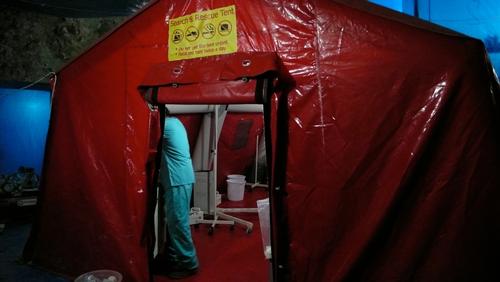
The entrance of the inflatable surgical unit inside a MSF field hospital in northern Syria. This hospital was set up in a cave and provided medical and surgical care. Inside, there was a hermetic inflatable tent used as surgical unit and six emergency beds. The MSF field hospital was later entirely moved the cave to another location.
Syria

'A more oppressive type of danger'

British surgeon Paul McMaster is just back from Syria where he treated the wounded in an operating theatre set up in a cave and then a farm. Experienced in working in war zones, in Syria he found a ‘more oppressive type of danger’. Voices from the Field - 15 Nov 2012
 
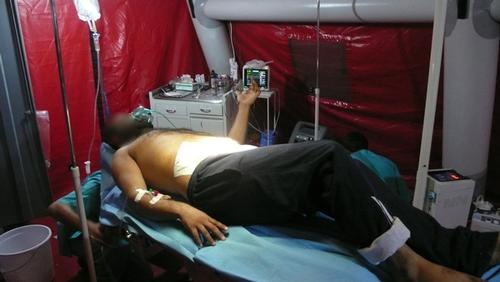
A wounded patient lies on the operating table at a MSF field hospital in northern Syria.
Syria

"In addition to many civilians, we treated both wounded rebel fighters and soldiers from the Syrian army"

Dr Martial Ledecq is a surgeon who is just back in Belgium from a one-month mission in one of the four makeshift medical facilities set up by MSF in the north of Syria. Since the end of June 2012, MSF teams have treated more than 2,500 patients and carried out some 550 surgical procedures. Voices from the Field - 15 Nov 2012
Four mothers posing in a corridor of the Hospital in Bili. All four of them are staying in the hospital with their child, that's suffering from a severe case of malaria. Since the beginning of the project in 2016, the pediatric ward already treated more than 4.000 cases of complicated/severe form of malaria.
Médecins Sans Frontières (MSF)

Independent medical humanitarian assistance

We provide medical assistance to people affected by conflict, epidemics, disasters, or exclusion from healthcare. Our teams are made up of tens of thousands of health professionals, logistic and administrative staff - most of them hired locally. Our actions are guided by medical ethics and the principles of independence and impartiality. We are a non-profit, self-governed, member-based organisation.

Learn more