



3451 Results
 
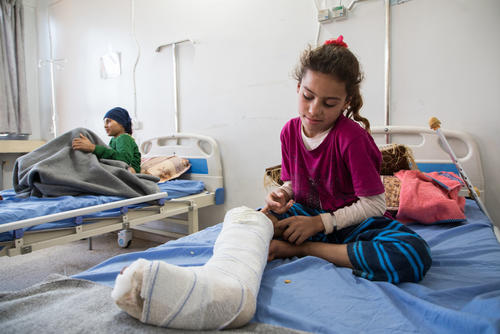
Humaid, 45 years old, is from Dhiban, in Deir ez-Zor. Five of his daughters (Sedar (4 years old), Dumua (5), Butul (6), Arimas (9) and Lamis (13)) were on the rooftop of the house when they were severely injured by a booby-trap. Sedar, the youngest, has been partially amputated of both legs, and Lamis, the eldest, of one leg.

“We fled Dhiban because of the clashes. Once the situation calmed down I went back by myself to check the house and did not see any suspicious device, so I brought my family as well.” The accident that almost killed the girls happened two month later. “The girls had never seen a mine before, how could a child know about a mine? They put the mines in the fridge, in the door handle, under the carpet, inside the Quran. The hospital is full of people who have amputated legs. What was the fault of the children? They are not part of the conflict. This is not a war, it’s a war against human.”
Syria

Patient numbers double in northeast as more people return home to landmines

“These explosive devices do not choose their targets. They do not respect peace treaties or ceasefires and can stay concealed for months or years after a conflict ends.” Project Update - 3 Apr 2018
 
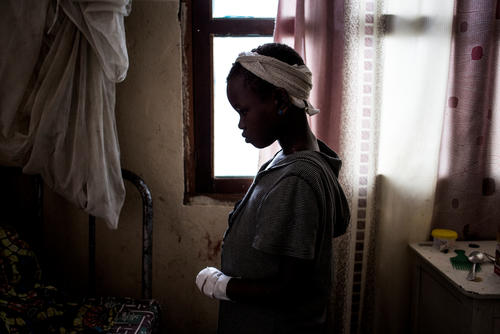
Mace-Grace (11) recovers in a hospital room on 2 March 2018 in Bunia. She lost her mother, three siblings and her left hand after an attack on her village. Fighting in Ituri province has left thousands of Congolese displaced and some 100 have lost their lives.  PHOTO/JOHN WESSELS
Democratic Republic of Congo

Stories of flight across Lake Albert

“It’s different this time. In the 2000s our homes were torched too, but we were able to go back to our villages. Now people are being hunted down and killed." Project Update - 23 Mar 2018
 
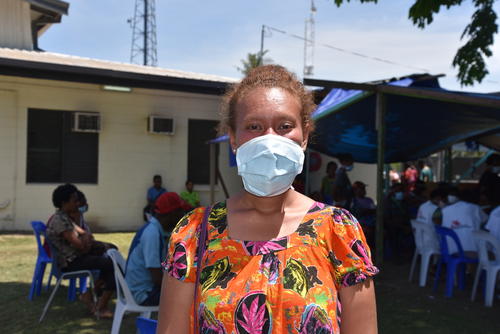
Giakila was diagnosed with drug-resistant TB at Gerehu Hospital, Port Moresby, where MSF supports TB treatment and diagnosis.

Giakila was five months’ pregnant when she became seriously ill, and ended up losing her baby.
She visited private hospitals where she was diagnosed with malaria and pneumonia, before coming to Gerehu Hospital, where MSF supports TB screening, treatment and diagnosis.
“Losing a child was very hard for me, and I really wanted to know what was going on with me. So we came to Gerehu clinic and they advised me that I had TB.”
Giakila was diagnosed with multidrug-resistant TB, which involves two years of treatment including daily injections in the early stages.
“I was scared at first, because there were too many medicines that I was taking. But then it started helping me to recover some of the loss that I encountered, so I was happy taking these medicines.”
Papua New Guinea

Bringing TB treatment closer to home

An estimated 30,000 new cases in 2016, expanding and improving TB care in PNG is an uphill battle. Project Update - 23 Mar 2018
 
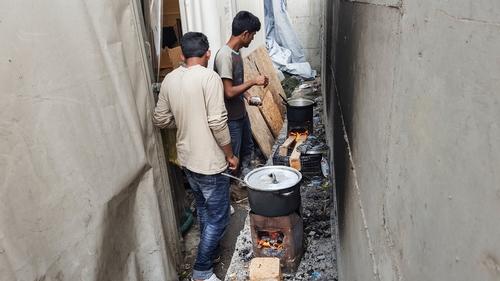
Aiful 25 years old from Bangladesh prepares food outside a large accommodation tent.

Sail was a taxi driver in his country. After some political issues he fled to Iraq. Because of the war he wasn’t able to stay there and he went to Turkey where he was tortured. He decided to reach Greece, and he arrived in Lesvos on July 2016. He has been living in Moria camp since 8 months.

“…here we are really scared for what they decide for us, many of us are getting reject answer from asylum department and after they’ll send us back to turkey, and turkish forces keep us for two years in prison so we are voluntarily returning back to our country, even if our life are in danger…this is totally torturing our mind and life.”
Greece

MSF activity update – March 2018

MSF has been providing medical and humanitarian assistance to asylum seekers and migrants in Greece since 1996. In 2014, MSF expanded its activities in Greece to meet the needs of asylum seekers arriving on the Greek islands and mainland from Turkey. Project Update - 16 Mar 2018
 
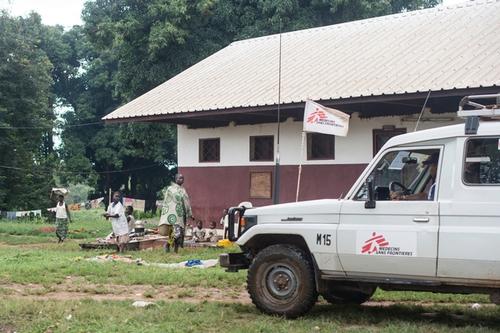
IDPs taking refuge in the MSF hospital in Bossangoa, CAR. The new wave of violence that is engulfing the Central African Republic has left tens of thousands of displaced people and many wounded. More than 30.000 are sheltered in precarious conditions in different locations in Bossangoa and in Bouca and the majority of towns in the area of Bossangoa are completely deserted. MSF providing emergency medical care at Bossangoa hospital, as well as emergency humanitarian support in three makeshift camps.
Central African Republic

Survivors describe a mass rape ordeal outside Bossangoa

“What’s most concerning about the number of sexual violence cases we have recorded is that the real number is likely to be much higher." Project Update - 8 Mar 2018
 
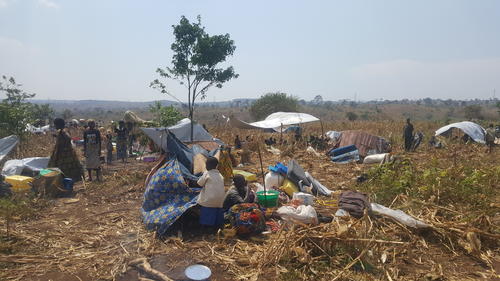
Marutatu settlement (part of Kyangwali) currently cannot cope with the influx of refugees. New arrivals already made vulnerable by their flight and the violence experienced back in Ituri end up sleeping in the open air, exposed to the rains that have started, with inadequate access to water and food, in appalling hygiene and sanitation conditions. Health authorities recently confirmed a cholera outbreak in the region, with over 1000 severe cases, including 30 fatalities since mid-February. MSF runs 2 Cholera treatment centers, supports health centers and implement water and sanitation activities to help control the outbreak, waiting from the national authorities to get a greenlight to perform cholera vaccination.
Democratic Republic of Congo

Violence in Ituri province forces tens of thousands from their homes

“New arrivals tell us of attacks at night, and a small number have deep cuts and wounds. Many arrive traumatized and exhausted, with sick children” Project Update - 28 Feb 2018
 
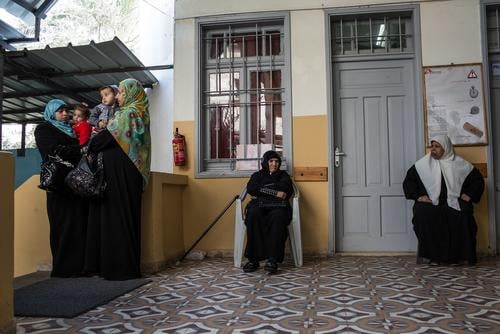
Dans le patiot de la clinique MSF de Gaza City, les femmes attendent leur tour.
Palestine

Gazans’ wounds bear witness to their living conditions

“Everything you earn here, you end up losing.” Project Update - 26 Feb 2018
 
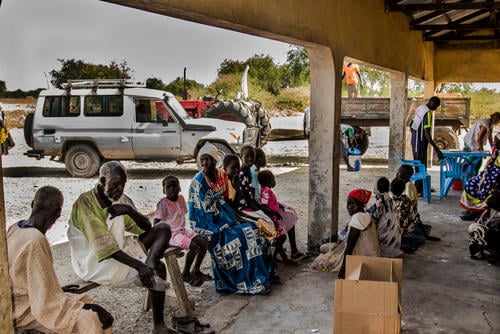
Those that arrive have a multitude of different problems, from broken fingers, to strokes, to diabetes. What is clear is that for most of them their conditions are somewhat neglected. For most the arrival of MSF is a lifeline. Despite the long wait everybody gets to see the a doctor or nurse
South Sudan

The stark choices facing displaced people in Aburoc

"This constant fleeing from one town to another has taken its toll on the community. While some are planning ahead, others are still mentally and physically exhausted by the ordeal of last year." Project Update - 13 Feb 2018
 
Simphiwe holds his medication, he takes up to 26 pills a day to treat XDR-TB. Here he holds his morning selection, which includes delamanid, one of the newest DR-TB drugs, which Simphiwe is taking for the first time today. 

Simphiwe Zwide, 43 years, lives in a one-bedroom house with his wife, Nomonde Tyala, and children in Kuyasa, Khayelitsha. Simphiwe was first diagnosed with MDR-TB in 2011. He completed six months of treatment, but when he learned that he had pre-XDR-TB and would need even more treatment, he lost heart and returned to work. 
In June 2016, he presented back to his Khayelistha clinic as he had fallen ill again. This time test results showed he had XDR-TB. He took his first delamanid tablets on 12 October, as part of a strengthened regimen for XDR-TB.
Simphiwe’s current regimen: Delamanid, bedaquiline, linezolid, levofloxacin, terizidone, clofazimine, ethionamide
Simphiwe Zwide:

“In 2011, my wife had TB and they admitted her into Jooste District Hospital. I visited her for over a week. When she came out of hospital, I fell sick. 
I couldn’t eat, my body was painful, my throat was sore – I thought I had a virus. My wife tried to cook – sour milk and maize meal. I couldn’t swallow. I had to drink many cups of water. I was sweating – I couldn’t walk even couple of metres. 
My wife was very supportive of me. She would leave me taxi money and go and stand in the hospital queue for me from 5am.
I started to feel my health returning and I felt like I could work again. I’m the breadwinner, and we were all suffering. I was the only one who could work for my family. I was taking clofazamine injections which meant that I had to attend the clinic every day and this was preventing me from finding a job.  
I was between Johannesburg and Cape Town looking for work between 2012 to the end of 2016. Then in January 2016, I started to get sick again. I couldn’t work like I’m used to.  I came back to Khayelitsha, now I’m here at Kuyasa clinic getting treated for XDR-TB. I’m joining a support group soon. 
I’m a jack of all trades - I learned to be a cleaner, I was piping donuts down at Monte Vista. I do construction, I bake cakes. My big brother taught me how to bake and my cousin is a confectioner. 

I’ve been on treatment (including linezolid and bedaquiline ) for  two months now. Sometimes I take 26 pills a day. 

When I take them, I have to sleep the whole day. But I’m feeling much better, I can’t say I’m 100% but this is only my third month. I know who I am, I’m strong and I want my health back.”
Tuberculosis

Drug-resistant TB: “Some of our patients simply can’t wait for clinical trials"

Drug-resistant tuberculosis (TB) remains a major threat to global health: Of the ten million people who fell ill with TB in 2016 alone, over half a million are estimated to have resistance to the most effective drugs used to treat TB, rifampicin and isoniazid. For those with highly resistant strains of TB, very few treatment options exist. Project Update - 9 Feb 2018
 
Bardnesville Junction Hospital, on the outskirts of Monrovia, Liberia
Liberia

MSF opens paediatric surgery programme

Médecins Sans Frontières (MSF) opened a paediatric surgical programme at Bardnesville Junction Hospital (BJH) on the outskirts of Liberia's capital Monrovia on 11 January, with a goal of making surgical care more available for children in the country.
Project Update - 31 Jan 2018
Four mothers posing in a corridor of the Hospital in Bili. All four of them are staying in the hospital with their child, that's suffering from a severe case of malaria. Since the beginning of the project in 2016, the pediatric ward already treated more than 4.000 cases of complicated/severe form of malaria.
Médecins Sans Frontières (MSF)

Independent medical humanitarian assistance

We provide medical assistance to people affected by conflict, epidemics, disasters, or exclusion from healthcare. Our teams are made up of tens of thousands of health professionals, logistic and administrative staff - most of them hired locally. Our actions are guided by medical ethics and the principles of independence and impartiality. We are a non-profit, self-governed, member-based organisation.

Learn more