



3451 Results
 
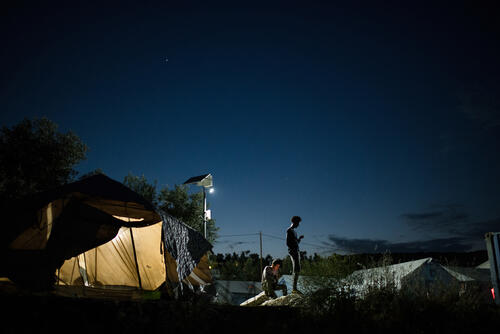
Thousands of people seeking safety after fleeing countries such as Syria, Afghanistan, Iraq, Sudan, and Congo continue to risk their lives to reach Europe. Those who try to arrive via Turkey and the Aegean Sea have been trapped for an indefinite period of time on islands in Greece as part of the EU/Turkey deal and its deterrence and containment approach. 
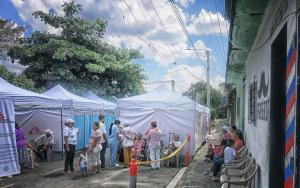
In Moria refugee camp, on Lesbos island, there are currently more than 7,500 people in a camp made for a maximum of 2,500. With the camp so full, refugees are now staying in an informal extension of the camp known as Olive Grove. The awful conditions at Moria camp/Olive Grove and arbitrary administrative situations have had a dramatic impact on their health and in particular their mental health. 
Médecins Sans Frontières teams provide medical and mental health support outside Moria camp and run a clinic for severe mental health cases in Mytilene, the capital of the island.
Greece

Confinement, violence and chaos: How a European refugee camp is traumatising people on Lesbos

MSF calls for vulnerable people to be moved out of Moria into secure accommodation, and continues to call for a decongestion of the camp. Project Update - 18 Jul 2018
 
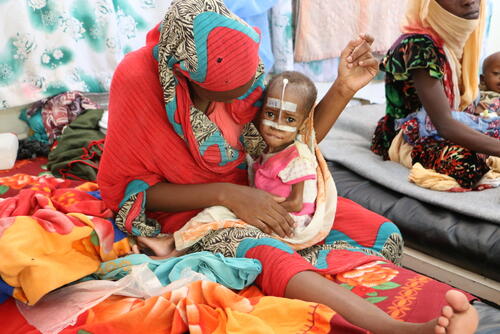
A child affected by severe malnutrition, treated in the therapeutic nutrition center (CNT), in the MSF-supported hospital.


By May 2018, the nutritional feeding centre (CNT), run by MSF, was already over its capacity of 60 beds with 325 malnourished children admitted in that month alone. 
It’s expected that this number will only increase over the coming months. But despite the high numbers of children requiring treatment, and the strains on medical staff, this crisis is not unexpected nor is it the first time the region has been hit by such worrying levels of undernourished children. From May to September each year, hundreds of thousands of people in Chad and in the entire Sahel region endure extreme food insecurity due to the lean period, a result of the dry season coupled with low food stocks. A recurrent nutritional crisis has just started in the Salamat region, and has spread to other regions of the country.

In order to combat the high mortality rates, in the nutritional feeding centre in Am Timan hospital, during their treatment patients receive special food, in order to recover their appetite and respon-siveness. They’re fed with therapeutic milk containing sugar, oil, minerals and vitamins and with a high-protein peanut paste fortified with vitamins and minerals. The children admitted to this program have very low weight for their height and severe muscle wasting. They may also have nutritional oedema – characterized by swollen feet, face and limbs. The hope is that they can be discharged when they’re able to eat again, without medical assistance.
Chad

Tackling malnutrition in Am Timan

MSF teams in Am Timan are responding to this nutritional crisis by providing support to three local health centres in screening and treating cases of malnutrition. Project Update - 17 Jul 2018
 
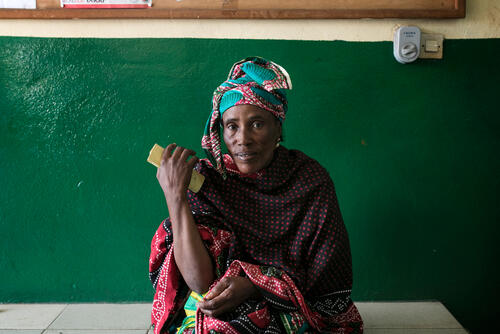
R6M visit– Finda at the end of her six-monthly R6M consultation at the MSF-supported HIV outpatient department at Matam health centre, Conakry, Guinea 

Finda Oulare, 49 years has three children and lives nearby Matam health centre, where MSF provides HIV TB outpatient and ambulatory services. As a member of R6M, she comes to Matam health centre twice a year for a consultation and to collect her ARVs. 

Finda was diagnosed with HIV in 2010. She suspects she may have contracted HIV in Luanda, Angola, where she had surgery.

“Every time I take my meds on time, I feel better. R6M helps with this because I don’t have delays in coming to the hospital.”

R6M (Rendez-vous de Six Mois) is an MSF-developed model of care where stable patients come for appointments every six months (rather than the standard 1-2 months for a medical consultation) where they pick up six-months of ARV supplies. They also have a yearly VL screening. R6M members significantly reduce costs and time for stable HIV patients, while freeing up health centers for other patients who need more dedicated care.
Patients are eligible for R6M if they met the following criteria:  older than 15years, on first line ARVs, no opportunistic infections, VL
HIV/AIDS

MSF at AIDS 2018

Details of how to find info on MSF publications, materials, and sessions at the 22nd International AIDS Conference in Amsterdam, 23-27 July 2018. Follow on Twitter: @MSF_HIV Project Update - 16 Jul 2018
 
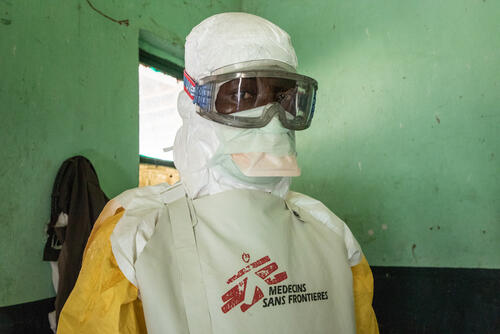
Staff getting dressed in full PPE in the ETC (Ebola Treatment Centre) in Bikoro.
DRC Ebola outbreaks

MSF hands over Ebola response activities in DRC

Project Update - 3 Jul 2018
 
MSF activities in El Salvador
El Salvador

MSF facilitates access to healthcare in communities of San Salvador and Soyapango

MSF has launched health initiatives in San Salvador and Soyapango, focusing on socially vulnerable people whose access to health services has been affected by insecurity. Project Update - 3 Jul 2018
 
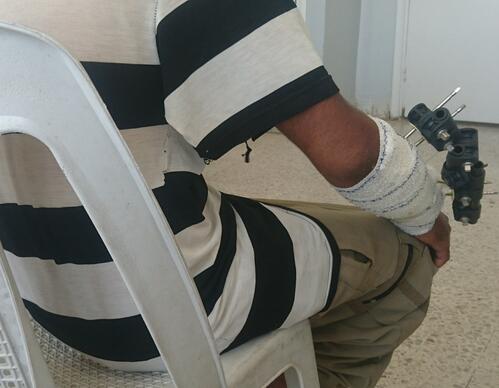
Survivor of an airstrike in al-Dashisha area, in north east Syria, receiving treatment at an MSF hospital in Hassakeh governorate. The airstrike that injured them killed 14 others.
After a period of relative calm, airstrikes on the Islamic State group in Der ez-Zor and Hassakeh governorates intensified in June 2018. As a result, and over a period of ten days in early June, 17 people arrived to the MSF hospital with injuries related to airstrikes, compared to 7 between January and June.
For those who survived the airstrikes and reached the MSF hospital, they had to travel for hours. The meandering frontlines between armed groups can turn a mere one-hour journey into a six hour trek, as people often have to take detours and travel through rural parts of the governorates to avoid checkpoints. In parallel, the few remaining and functioning health centers in the region are either private and very expensive, or they lack specialized teams.
Syria

MSF Hassakeh hospital seeing an increase in casualties of airstrikes in northeast Syria

Between 4 and 14 June, MSF-supported hospital in Hassakeh received 17 survivors of airstrikes, including 6 children and 3 women. Project Update - 21 Jun 2018
 
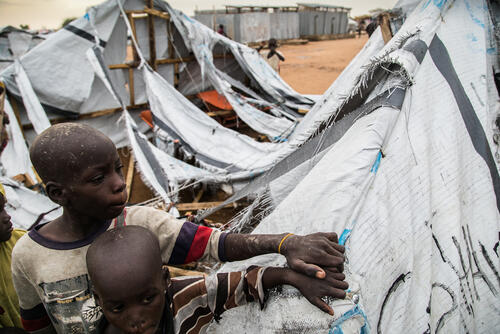
Two children stand next to a destroyed shelter inside a camp for internally displaced people in the town of Pulka, northeast Nigeria.
Nigeria

“There is no place to take cover or hide from the rain”

Around 5,000 internally displaced people are living in precarious conditions in 38 shared shelters in the transit camp in Pulka, northeast Nigeria. Project Update - 18 Jun 2018
 
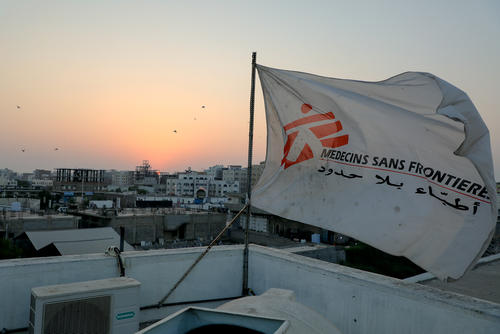
MSF flag over the top of the hospital
Yemen

MSF provides support to hospitals treating wounded from Hodeidah

On Wednesday 13 June, forces loyal to President Hadi, backed by the Saudi and Emirati-led international coalition (SELC) have launched a military offensive on Hodeidah, whose strategic port on the Red sea remains one of the few lifelines left for people living in northern Yemen. Project Update - 14 Jun 2018
 
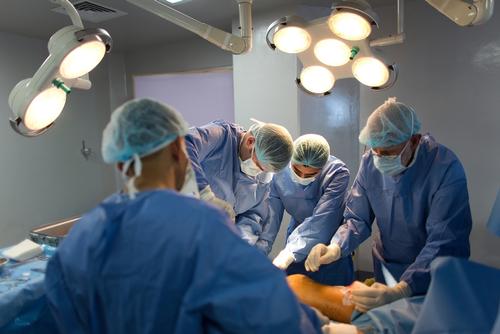
Surgery with Surgeon Dr Hayder Alwash 

MSF Medical staff are working in Ramtha hospital in Jordan (5 km from Syrian border) where war wounded patients from Syria are being treated. Majority of patients require emergency surgery. Due to the severity of the injuries, patients require multiple complex surgery and long rehabilitation. The surgery runs 24 hours a day, 7 days a week.
Jordan

Lack of patients forces closure of Ramtha surgical project

After more than four years of emergency lifesaving activities in which over 2,700 war-wounded Syrians underwent medical treatment, Médecins Sans Frontières (MSF) has taken the difficult decision to close the Ramtha surgical project in northern Jordan. Project Update - 11 Jun 2018
 
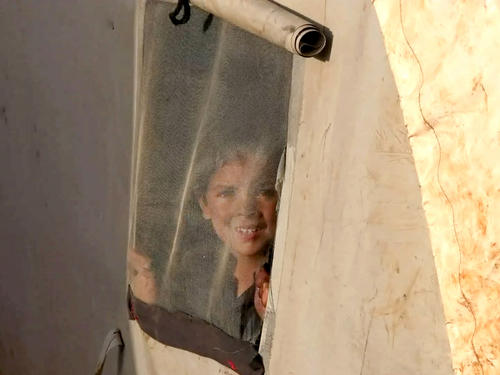
Ahmed, a Syrian boy looks out from the window of a tent in a camp for displaced people in Idlib, Syria.
Syria

In dust and despair, displaced Syrians wait

More than half of Idlib’s population of roughly two million people are displaced. The arrival of 80,000 more people in the last two months from east Ghouta, rural Damascus and north Homs is further stretching the ability of local residents and humanitarian organisations to address their needs. Project Update - 8 Jun 2018
Four mothers posing in a corridor of the Hospital in Bili. All four of them are staying in the hospital with their child, that's suffering from a severe case of malaria. Since the beginning of the project in 2016, the pediatric ward already treated more than 4.000 cases of complicated/severe form of malaria.
Médecins Sans Frontières (MSF)

Independent medical humanitarian assistance

We provide medical assistance to people affected by conflict, epidemics, disasters, or exclusion from healthcare. Our teams are made up of tens of thousands of health professionals, logistic and administrative staff - most of them hired locally. Our actions are guided by medical ethics and the principles of independence and impartiality. We are a non-profit, self-governed, member-based organisation.

Learn more