



3451 Results
 
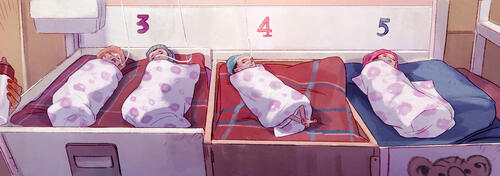
In Afghanistan there is a lot of pressure on women to become pregnant, and to become pregnant quickly after marriage. This has led to an abuse of fertility medication which you can buy, unregulated, at the market. As a result we see many twins, triplets, quadruplets and even quintuplets born in our hospital. These babies are often born prematurely and so are very small – sometimes weighing no more than a bag of sugar. These four babies, and their brother who sadly passed away after birth due to an infection, were born to a surprised mum who thought she was having triplets. When she went into labour she got the shock of her life when it turned out she was carrying five babies (3 boys and 2 girls). Their dedicated mother lived at the hospital for weeks to express milk to feed all four of them every two hours with a syringe. Unfortunately after some months she eventually decided to take the babies home before they were ready to be discharged as she had other children to care for.
Afghanistan

Illustrating MSF’s busiest maternity ward

Illustrator Aurélie Neyret and her comic ‘Hila: Born in Afghanistan’ help tell the stories of patients and staff at MSF’s maternity ward in Khost, eastern Afghanistan. Project Update - 3 Oct 2018
 
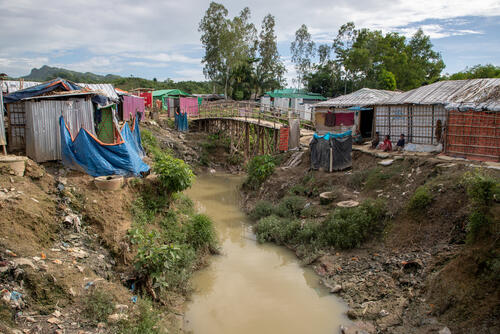
Makeshift shelters and structures built on a sandy slope in Unchiprang refugee camp in Cox’s Bazar, Bangladesh. Thousands of hand-built shelters are threatened by high winds, storms and landslides during the monsoon season.
Bangladesh

Shanti Khana: Bringing peace to Rohingya refugees

Prodjut Roy, a mental health supervisor with MSF, describes the mental health needs among Rohingya refugees and what has been done to break down the stigma associated with mental health services. Project Update - 28 Sep 2018
 
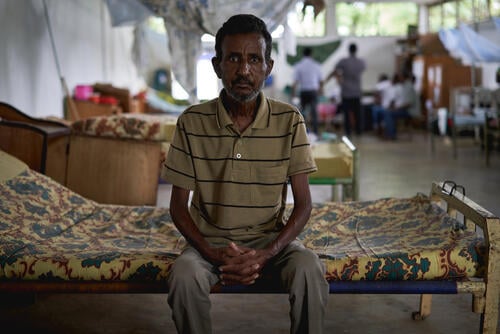
Wubet, 48, is a primary kala azar patient with HIV co-infection. He is being treated by MSF in Abdurafi and is part of the kala azar research program led by MSF and Antwerp Institute of Tropical Medicine (ITM).
Wubet is from Abdurafi. He was diagnosed with TB in 2016. After the completion of TB treatment he was still experiencing fever, poor appetite and weight loss, so he visited the health center several times to understand why. He was found to be HIV positive, but this alone could not explain his health status. The clinicians suspected kala azar and referred him to the MSF health center. Here he was finally diagnosed with visceral leishmaniosis. At that point, he was feeling so sick that he had to be on oxygen and he believed that he was going to die. Ever since he started receiving specific treatment, both for kala azar and HIV, his health has been improving. He says he already knew about kala azar before getting sick because the MSF teams had been doing health education within the community. However, at the time, he didn’t take it too seriously and did not take any of the preventive measures that were recommended, such as using a mosquito net, insect repellant and more protective clothing. He is a farmer and spends a lot of time outdoors, which greatly increases the risk of infection. Now he knows that the risk is real and he wants to help spread the word among his farmer friends. He also decided to join the ongoing study on the prevalence and incidence of kala azar in HIV patients. He wants to contribute to the development of new preventive methods and treatments and help his community.
Kala azar

Diagnosing, treating and researching HIV-kala azar co-infection in Ethiopia

MSF teams in Abdurafi, Ethiopia, talk about the challenges of diagnosing and treating kala azar in people living with HIV, and are collaborating on research into ways to better understand and prevent the neglected tropical disease. Project Update - 20 Sep 2018
 
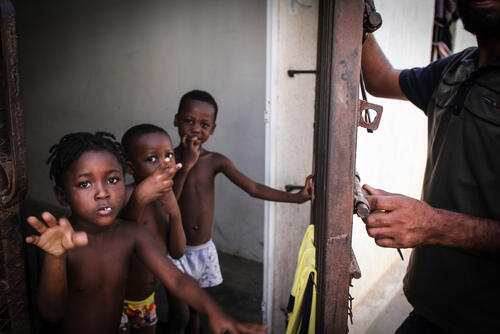
Children in detention centre.
On September 2nd, 276 people were brought by the Libyan coast guard to Khoms (120 km east of Tripoli) - among them 181 men, 42 women and 24 children including 2 babies less than 12 months old. They were then transferred to detention center where MSF works. Reportedly, they were in two rubber coats, one stopped due to engine failure, while the other boat continued to navigate for several hours before deflating and sinking. Survivors told MSF teams that over a hundred people died in the shipwreck.
Mediterranean migration

Refugee Libya shipwreck survivors condemned to drown at sea or face arbitrary detention

More than a hundred people have reportedly died in a shipwreck off the Libyan coast one week ago. MSF has been providing urgent medical assistance following disembarkation. Project Update - 10 Sep 2018
 
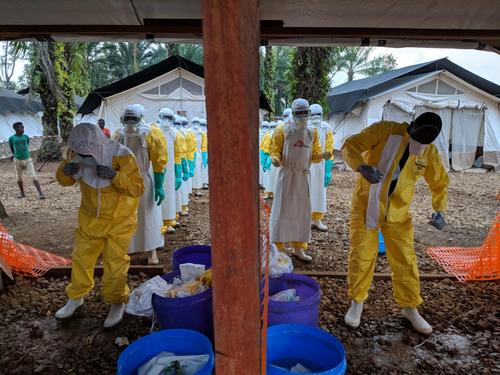
A team that has just finished setting up a tent in the high-risk zone in the Ebola treatment centre, getting out of their personal protective equipment (PPE). It’s hard work, and harder still in such attire. 

Une équipe retire son équipement de protection individuelle après avoir monté une tente dans la zone de haut risque dans le centre de traitement Ébola. C’est un travail difficile a faire avec l’équipement de protection.
DRC Ebola outbreaks

North Kivu: MSF treats 65 Ebola patients in first month

Médecins Sans Frontières (MSF) has treated 65 patients confirmed to be diagnosed with Ebola in the first month of intervention in the latest Ebola outbreak, in North Kivu, Democratic Republic of Congo (DRC). Project Update - 7 Sep 2018
 
Tatiana was held imprisoned by armed men in her hometown of Bambari after her husband was killed. She was raped over the course of several days until she was able to flee to Bangui. She has been receiving treatment at the clinic for 3 months.
Central African Republic

“The tip of the iceberg”: Stream of patients offer glimpse into scale of sexual violence

In December 2017, MSF responded to the clear need for medical and psychological care for survivors of sexual violence by opening a clinic at the Hopital Communautaire in Bangui. Project Update - 7 Sep 2018
 
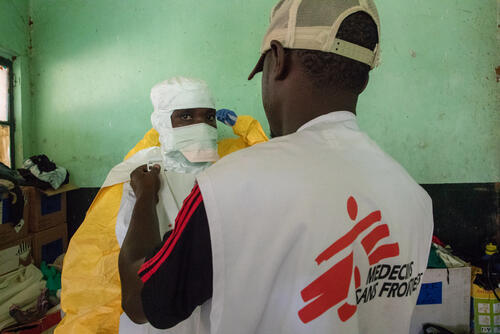
Staff getting dressed in full PPE in the ETC (Ebola Treatment Centre) in Bikoro.
DRC Ebola outbreaks

New Ebola outbreak declared in North Kivu

On 1 August 2018, Democratic Republic of Congo (DRC) declared an outbreak of Ebola in the northeastern North Kivu province. Project Update - 5 Sep 2018
 
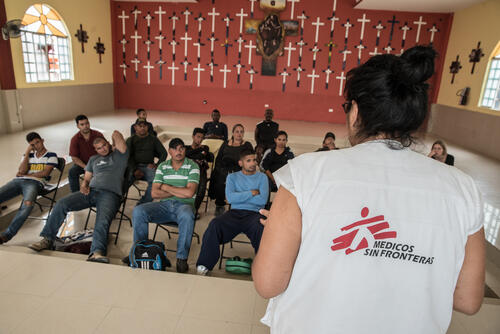
A large number of those attempting the crossing, especially the minors, have no information about the extent of the route, the available assistance and their rights during transit. Here Anabel, an MSF social worker, explains basic information to a group of newly arrived migrants.
Mexico

Abductions and violence, the price to pay to cross Mexico

Eight years after the San Fernando massacre, a 22-year-old Honduran patient in the Coatzacoalcos shelter where MSF works shares his story of violence and abductions as he attempts to cross Mexico. Project Update - 3 Sep 2018
 
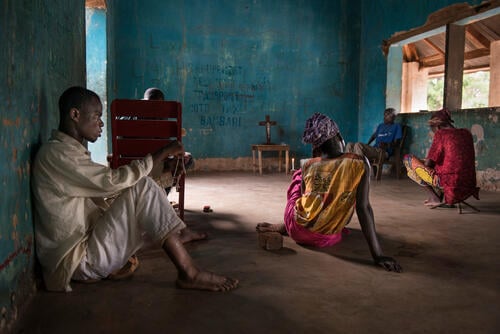
A church in an abandonned administrative building near the Alternatif IDP camp, Bambari. A group of IDP believers meet once a day to pray.
Central African Republic

Suffering mounts as armed groups return to Bambari

Following an upsurge in violence in May, indiscriminate criminality has increased in Bambari, affecting civilians and medical facilities. Project Update - 31 Aug 2018
 
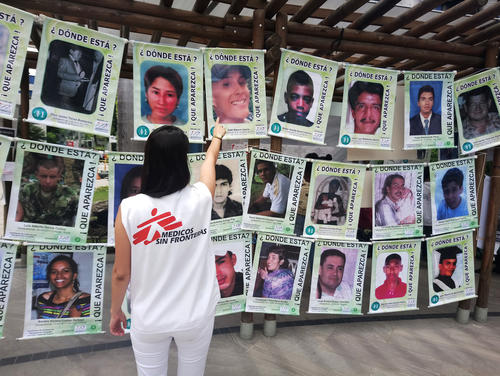
Acto en la Universidad de Santiago de Cali
Colombia

Suspended grief

In 50 years of war in Colombia, 83,000 people disappeared at the hands of guerrillas, paramilitaries, criminal groups and state forces. Giulia Panseri, MSF’s project coordinator in Puerto Asís and Cali, explains what MSF is doing in Puerto Asís and Cali to accompany the family members of those disappeared. Project Update - 30 Aug 2018
Four mothers posing in a corridor of the Hospital in Bili. All four of them are staying in the hospital with their child, that's suffering from a severe case of malaria. Since the beginning of the project in 2016, the pediatric ward already treated more than 4.000 cases of complicated/severe form of malaria.
Médecins Sans Frontières (MSF)

Independent medical humanitarian assistance

We provide medical assistance to people affected by conflict, epidemics, disasters, or exclusion from healthcare. Our teams are made up of tens of thousands of health professionals, logistic and administrative staff - most of them hired locally. Our actions are guided by medical ethics and the principles of independence and impartiality. We are a non-profit, self-governed, member-based organisation.

Learn more