3451 Results
 
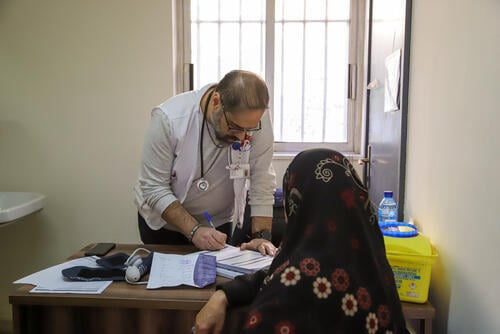
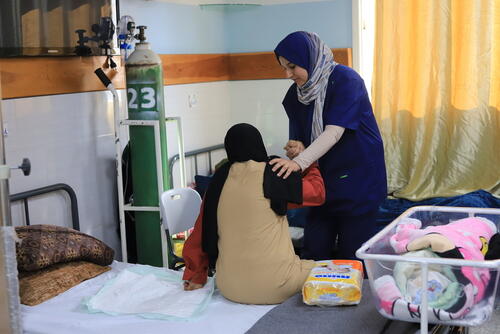
MSF nurse is assisting patient in the Emirati maternity hospital, Rafah. MSF is supporting the hospital with postnatal care to increase the monitoring period of post-delivery. Due to the lack of medical supplies and the overwhelming needs the Emirati hospital is forced to discharge patients only a few hours post-delivery or caesarian sections.
“Without enough supplies and too many patients, the healthcare system is overstretched, and mothers are forced to be discharged just hours after giving birth”, explains MSF midwife activity manager Rita Botelho da Costa. “The first 24 hours of postpartum are the riskiest for complications, and with people living in dire conditions, it´s important to keep the patient in the hospital as long as possible.”  
The war in Gaza has completely disrupted access to maternity care, exposing both mothers and their children to serious and even life-threatening health risks. In the south of Gaza in the Rafah area, the Emirati hospital stands as the main remaining facility catering to the maternal health needs of over 1.5 million displaced people.
Gaza-Israel war

Displaced pregnant women at high risk amid dire conditions in Rafah

As pregnant women face severe health risks in Gaza, we stress the urgency to restore the flow of humanitarian aid into Gaza upon which the survival of mothers and children critically depends. Project Update - 29 Jan 2024
 
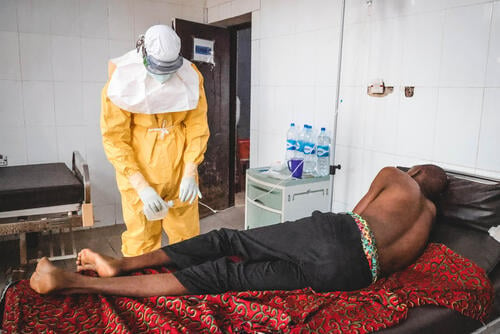
A Ministry of Health doctor administering intravenous injection to a Lassa fever patient admitted at the confirmed cases’ ward of the virology unit at Federal Teaching Hospital Abakaliki 1, Ebonyi state.
Nigeria

Tackling the spread of Lassa fever in Nigeria

Our teams play a crucial role in responding to Lassa fever in Nigeria, providing assistance and early detection measures to improve patient outcomes in affected regions. Project Update - 25 Jan 2024
 
Beatriz*, at left, a midwife trainee, speaks with colleagues at Chingussura health center in Beira, Mozambique, where MSF supports Ministry of Health staff providing safe abortion care and maternity services. A year ago when she was still in school, she came to the health center as a patient for safe abortion care. She had heard about the center's services from other health workers. "I had support from my family, from my husband. At first he didn’t accept it, but after we discussed my situation, that I was studying, he accepted it. It is a myth that you cannot get pregnant again after having a [safe] abortion. Because I got pregnant again normally," she said.  
*Name has been changed
Safe abortion care

Breaking barriers to safe abortion care in Mozambique

Our teams are expanding access to safe abortion care in Mozambique. Our aim is to create safe, trusting environments where all people feel comfortable accessing the healthcare they need.
Project Update - 23 Jan 2024
 
A view of Al-Hol camp from MSF’s facility at the camp in northeast Syria, 13/12/2023.
Syria

Unveiling the mental health crisis at Al-Hol Camp in northeast Syria

The dire conditions faced by people detained at Al-Hol camp, northeast Syria, only exacerbate the traumatic events they have experienced, such as violence and displacement, says MSF. Project Update - 19 Jan 2024
 
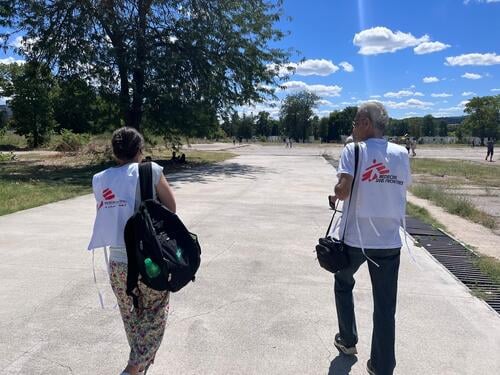
MSF HP team in the Harmanli Refugee Center. Harmanli is the first arrival point in Bulgaria for refugees crossing through Turkey. Situated just 50 km from the triple border crossing with Greece and Turkey, it is the largest open Reception and Registration Center in Bulgaria, with a capacity of up to 1,710 individuals. The occupancy rate has surged by 300% since 2020 and MSF initiated a clinic within the Harmanli Reception Center in July 2023.
Bulgaria

MSF provides medical care to asylum seekers arriving in Harmanli

Our teams are currently responding to the rising number of refugees arriving in Harmanli, Bulgaria, by providing essential medical services to people cut off from healthcare. Project Update - 19 Jan 2024
 
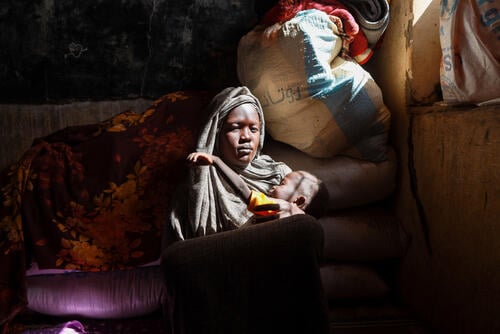
"I'm worried about the future of my children." I'm thinking about returning to Abyei so that I could provide an education for my children.
But if the war comes to an end I'll return to Khartoum and my house as soon as possible, and my husband will be able to work."
Conflict in Sudan

Severe humanitarian needs after half a million people flee violence in Wad Madani

Over half a million of people who have fled violence in Wad Madani, seeking refuge in hundreds of locations across Al Jazirah state, are in dire need of humanitarian assistance, which remains woefully inadequate. Project Update - 15 Jan 2024
 
MSF medical mobile team providing medical care to internally displaced people in Nabatiyeh, South Lebanon amid escalation in military activity on the Lebanese southern borders.
Lebanon

Providing healthcare to people displaced by military escalation along Lebanon's southern border

Escalating military activity along Lebanon’s southern border has forced thousands of people to flee border towns. Our mobile team helps provide displaced people with healthcare. Project Update - 10 Jan 2024
 
Aliyah*, a Palestinian woman holds tight her daughter in her arms. She lived for 25 years in the old city of Hebron, one of the most restricted areas within the West Bank, Occupied Palestinian Territories. 

“Since I became a mother, my anxiety level has only increased”

Aliyah, 25, was born and grew up in the old city of Hebron. In 2015, the Israeli army deemed her neighbourhood as a “closed military zone”. Since then, only registered residents have been allowed to enter the area. When she got married, she left and is now living outside the area while the rest of her family remained there. 

“I cannot compare the level of intensity of today with before [the war]. It has continuously gotten worse, but October 7th marked a turning point. The first weeks following that date were terrible. Restrictions of movements have increased and gotten worse. The level of violence increased as if the [Israeli] settlers and the army had no more limitations. Hence, following October 7th, people were thinking that the same situation of Gaza will come soon to the West Bank” says Aliyah. 

“I am pregnant and for example, before the war, I could negotiate at the [Israeli] checkpoint to not go through the x-ray machine for the safety of my baby. This morning, they asked me to pass through the machine three times and they would not listen about my condition” says Aliyah. “Women here need to adapt their clothing to pass the checkpoints, cause if there is any metallic thing in the bra stays or in the jean pocket, you will ring and go through a long screening,” she says. 

Tel Rumeida, Hebron’s old city area that Aliyah mentions, is one of the most restricted areas within the West Bank. In the past months, Israeli forces allowed movements in and out only for two days an hour in for a few days a week. At times, Palestinians are not permitted to go out of their homes/leave the area for four days at a time - not even to bring out the trash or open their windows. “At the beginning of the war, most of the essential goods were not accessible. Today, they only have a few hours a day to go to the shop” says Aliyah. 

“People live in constant fear. [Israeli] settlers and soldiers will come at night, knock, and yell at their doors. This has always happened but since the war, these intrusions are almost daily. Can you imagine the level of stress and insecurity this creates? Children are terrified and suffer from mental health symptoms such as bedwetting, persistent nightmares, behavioural changes, and isolation” describes Aaliyah. “I am a mom, and soon will have a second child. The moment I became a mother, my perspectives changed, and my anxiety level only continued to increase. It breaks my heart to raise children in this environment. You know what my daughter told me the other day? ‘Mom I am so scared’ – and she is only two years old” concludes Aliyah.
Palestine

Palestinians in Hebron live in constant fear as violence surges

Increased violence and harassment by Israeli settlers and soldiers against Palestinians in Hebron have created an environment filled with intimidation, forced evictions and restrictions of movements. Project Update - 3 Jan 2024
 
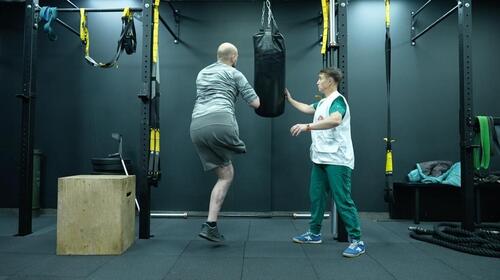
MSF physiotherapist, Inna Didych, is working with Andrii, a 27-year-old patient preparing for prosthetics after sustaining injuries during fighting on the frontlines in Ukraine. Andrii lost his right arm, leg, and nearly all of his vision.

"Andrii and I are navigating a challenging journey together. After he was injured, he was hesitant to leave his bed and had difficulty imagining a future for himself. With the support of a psychologist and active involvement from his mother, we began our rehabilitation efforts," explains Inna. 

"After our session, Andrii went to the prosthesis centre. He sent me a video of himself being measured up for a new leg and arm, saying 'Well, now I can't be stopped!' We both felt happy at that moment," Inna continued.
Ukraine

The long road to recovery for Ukraine's war wounded

Following Russia's invasion of Ukraine there has been a surge of patients with complex injuries and disabilities, requiring multidisciplinary medical care and rehabilitation. Project Update - 29 Dec 2023
 
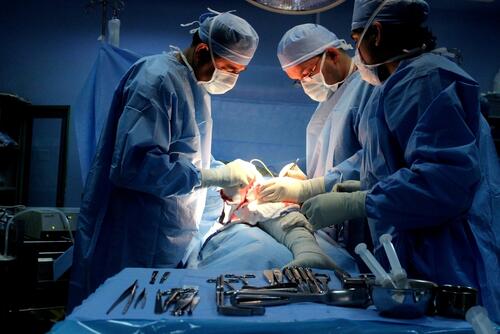
Dr Rasheed Fakhri (in the middle) and a MSF surgical team performing surgery on a patient suffering serious leg injuries in the MSF-run reconstructive surgery hospital in Amman.
Iraq

Rebuilding hope: From war-torn Baghdad to healing lives in Amman

Dr Rasheed Fakhri recounts his journey from fleeing war-torn Iraq to rebuilding lives at the MSF Reconstructive Surgery Hospital in Amman, Jordan. Project Update - 27 Dec 2023
Four mothers posing in a corridor of the Hospital in Bili. All four of them are staying in the hospital with their child, that's suffering from a severe case of malaria. Since the beginning of the project in 2016, the pediatric ward already treated more than 4.000 cases of complicated/severe form of malaria.
Médecins Sans Frontières (MSF)

Independent medical humanitarian assistance

We provide medical assistance to people affected by conflict, epidemics, disasters, or exclusion from healthcare. Our teams are made up of tens of thousands of health professionals, logistic and administrative staff - most of them hired locally. Our actions are guided by medical ethics and the principles of independence and impartiality. We are a non-profit, self-governed, member-based organisation.

Learn more