




3451 Results
 
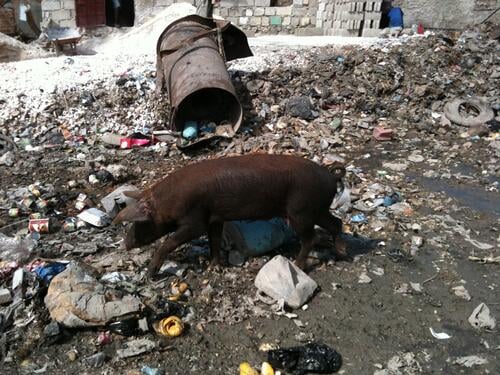
Scene de rue a Martissant
Haiti

Cholera emergency in Haiti far from over

Cases still increasing in north and south of the country . Project Update - 24 Dec 2010
 
msf-placeholder
Tuberculosis

Meet the first MSF patient to have recovered from XDR-TB

While one in five patients under treatment for moderately resistant strains of the disease do not survive, patients with extensively resistant cases, if they can get treatment at all, usually must rely on less effective and more toxic medicines, with lower success rates. For these reasons and others, Xoliswa Armans is a remarkable patient. Project Update - 23 Dec 2010
 
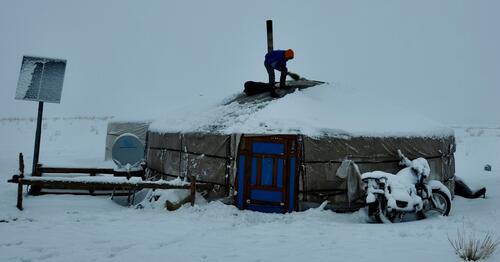
Uvs Province, Mongolia: The first snows of the winter of 2010 coat a ger in Uvs province. A pilot project in a remote province in northwest Mongolia has assisted health authorities and the local population prepare for the harsh winter. Last year, the country was hit by a devastating Òdzud,Ó which is a devastating winter that follows a particularly dry summer. Access to healthcare was impossible for large swathes of the population, and infant mortality rates doubled. The government of the impoverished and sparsely-populated country declared a national emergency, and once the snows melted in spring, MSF sent an exploratory team to see what assistance could be offered. 
<br/>
In Between September and November, the team worked in five districts of Uvs province, where some 70 per cent of the population was affected by the dzud. The project pilot involved a range of activities. These included improving infrastructure in five regional health facilities, providing a back-up supply of essential drugs and supplies in provincial and county hospitals, distributing basic first aid kits to 3,000 herder families and giving refresher training and drugs to 16 community-based medical officers.
Mongolia

Preparing for winter in a remote Mongolian province

The harsh winter has now begun in Mongolia, and in the spring, MSF team will return to evaluate the project. In the meantime, MSF is looking into starting projects in the capital Ulan Bator focused on tuberculosis, as well as the health needs of thousands of families who live in “ger” shanty settlements on the outskirts of the capital. Project Update - 20 Dec 2010
 
msf-placeholder
South Sudan

'A people way too used to suffering'

Award-winning photographer, Cedric Gerbehaye, travelled to Southern Sudan to visit Médecins Sans Frontières clinics and document the humanitarian crisis. Project Update - 16 Dec 2010
 
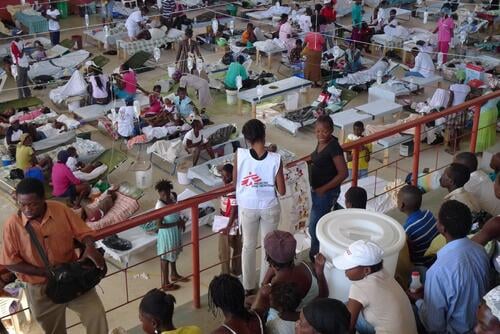
Two weeks after the opening of the CTC in Cap Haitien Gymnasium, the sensitization team has moved from 6 members to more than 40 community health workers. They sensitize the population inside the CTC as well as in the streets of Cap Haitien.
Haiti

In Haiti's rural north, cholera rate shows the "tip of the iceberg" as outbreak spreads

“In areas newly affected by the disease, the population of areas is really scared,” said Alan Lefebvre, MSF emergency coordinator. “The population fears that a cholera treatment centre will bring the disease to the community. The challenge is to inform, to raise awareness, and to demonstrate that we are there to treat the sick and that this is working.” Project Update - 9 Dec 2010
 
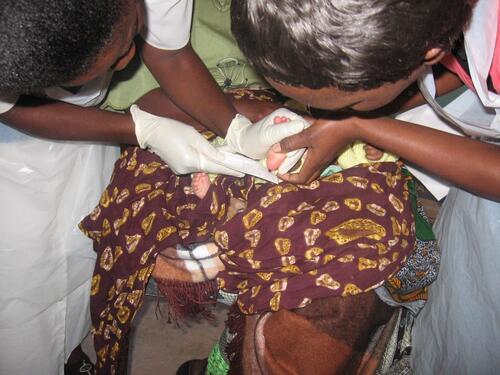
Dans le district de Chiradzulu - ou MSF mene un programme VIH/sida depuis 2001 - le test de dépistage DBS (Dry Blood Spot) a ete mis en place au cours de la derniere semaine de juillet 2009, dans 3 centres de sante du district et en collaboration avec le MOH. Ce test rapide ne necessite pas de chaine du froid : quelques gouttes de sang sont prelevees sur un buvard et envoyees dans un laboratoire ; la, le buvard est dissout et le sang teste en seulement une quinzaine d¿heures. Il permet un depistage precoce des nourrissons nes de meres seropositives des l'age de 6 semaines.
HIV/AIDS

Denied funding puts HIV patients in low-income countries at risk of death

Several low-income countries, highly affected by HIV, risk being entirely or partly disqualified from the current funding round by the Global Fund to Fight AIDS, Tuberculosis and Malaria, warns the international medical humanitarian organisation Médecins sans Frontières (MSF). Project Update - 8 Dec 2010
 
msf-placeholder
Malawi

Health workers, government and civil society at joint MOH and MSF conference address health professional gaps in Malawi

Like many countries in Africa, South Asia and Asia-Pacific, Malawi has been facing a critical shortage of healthcare workers, with an average ratio of two doctors for every 100,000 people. This low number of physicians, as well as nurses, in the health care system means that treating Malawi’s 920,000 people living with HIV, of whom 59% are women, is a massive challenge. Project Update - 6 Dec 2010
 
msf-placeholder
Global

Licensing deal threatens cheap pharmaceuticals

Stella is four, and lives on HIV drugs. Next week, the EU may cut her supply. Project Update - 1 Dec 2010
 
msf-placeholder
Global

Frontlines podcast: Giving children with HIV the support they need

Frontlines podcast: Giving children with HIV the support they need Project Update - 1 Dec 2010
 
msf-placeholder
Pakistan

Relief for some flooded areas of Pakistan but work continues in the south

Three months after the floods that inundated Pakistan, MSF has stopped the emergency response activites in some parts of the country, such as in Khyber Pakhtunkhwa and in northern Sindh provinces, where flood-affected people have started returning to their homes. Project Update - 24 Nov 2010
Four mothers posing in a corridor of the Hospital in Bili. All four of them are staying in the hospital with their child, that's suffering from a severe case of malaria. Since the beginning of the project in 2016, the pediatric ward already treated more than 4.000 cases of complicated/severe form of malaria.
Médecins Sans Frontières (MSF)

Independent medical humanitarian assistance

We provide medical assistance to people affected by conflict, epidemics, disasters, or exclusion from healthcare. Our teams are made up of tens of thousands of health professionals, logistic and administrative staff - most of them hired locally. Our actions are guided by medical ethics and the principles of independence and impartiality. We are a non-profit, self-governed, member-based organisation.

Learn more