




3451 Results
 
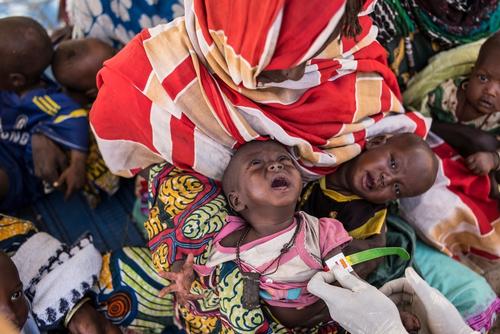
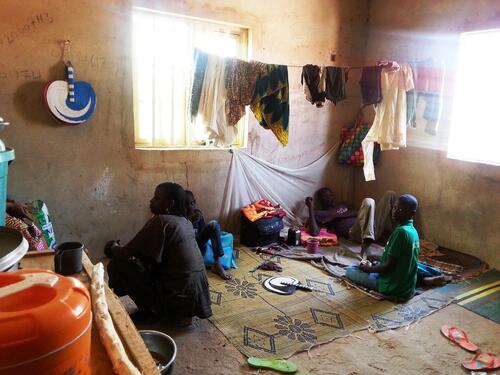
Situated in the Lake Chad region, the site of Koulkimé in Chad hosts approximately 1,800 displaced people according to OCHA. They have fled Islamic State's West Africa Province (ISWAP), also known as Boko Haram, as well as military operations carried out by the Chadian government.  MSF is working together with the Chadian Ministry of Health to support the primary health centre in Koulkimé.
Chad

Plunging from one nutrition crisis to the next

MSF's medical teams are responding to a nutrition crisis in Bokoro, in the Hadjer-Lamis region of central Chad.“Providing feeding programmes and medical assistance to acutely malnourished children is essential, but it is simply not enough to stop hundreds of thousands of children across Chad repeatedly descending into emergency levels of malnutrition,” says Alberto Jodra, MSF head of mission in Chad. “Far more needs to be done to address malnutrition’s multiple structural causes and to ease the suffering of communities like Bokoro from plunging from one hunger crisis to the next.” Project Update - 16 Oct 2015
 
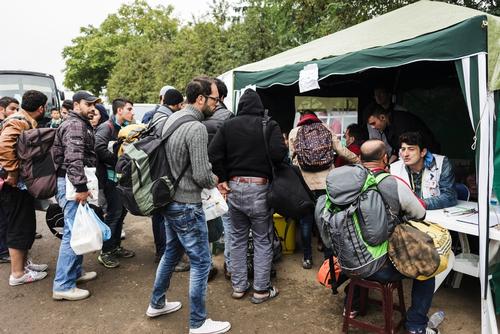
Refugees waitt to be examined at a MSF mobile clinic at the Bapska border crossing in Serbia.
Mediterranean migration

Thousands crossing the Balkans exposed to unnecessary suffering

MSF warns that thousands of refugees and migrants in the Balkans have been exposed to conditions that pose a real threat to their health as assistance fails to meet minimum standard.“The lack of basic services is already having an impact on their health, and the situation will only get worse this winter if adequate shelters, warm food and hygiene facilities at registration and transportation points are not rapidly provided," says Aurelie Ponthieu, MSF’s Humanitarian Adviser on Displacement. "We cannot wait for a dramatic event to happen, safe and adequate transit conditions, adapted to the coming low temperatures, need to be guaranteed now”. Project Update - 15 Oct 2015
 
msf-placeholder
Mediterranean migration

Beyond the rescue: saving a life means preserving a story

Testimonies from refugees on board of Dignity I. Project Update - 15 Oct 2015
 
msf-placeholder
Central African Republic

Thousands flee latest violence in Bangui

40,000 people have fled from their neighbourhoods. “They left with nothing and now they’re living in the most appalling conditions. Most have no shelter, no food and almost no access to medical care”, says Jean-Guy Vataux, MSF head of mission in Bangui. Project Update - 14 Oct 2015
 
MSF set up operations in Borno in May 2013 but had to pull out because of the security situation. In August 2014, MSF returned to Maiduguri on a permanent basis. The security situation in Borno continues to be extremely volatile with regular reports of clashes between the military and insurgents, particularly in rural areas. The government is planning the return of IDPs to their home communities by January 2016.  But this plan encounters resistance from IDPs as the security situation in the surrounding areas remains tense. 

Since 28 September 2015, an MSF team has been working in the 11-bed emergency room at Umaru Shehu hospital in Maiduguri. MSF continues its sanitarian and health surveillance/monitoring in 15 IDP camps. MSF also continues its medical activities in 2 camps – ATC and Teachers Village camps – where we provide primary healthcare and antenatal consultations.  MSF also carries out water & sanitation activities in 9 of the 15 IDP camps. In late September 2015 MSF transferred secondary healthcare activities from Maimusari clinic to the Infectious Diseases Hospital. MSF continues to run two clinics in urban districts in Maimusari and Bolori to provide primary healthcare.
Nigeria

A new MSF emergency project in Maiduguri

Since 28 September 2015, MSF has been working at Umaru Shehu hospital in Borno State capital Maiduguri in northeast Nigeria, treating patients referred from smaller health facilities and providing care to people wounded during attacks. Project Update - 13 Oct 2015
 
view on main entrance
Afghanistan

Factsheet: Kunduz Hospital Attack

From around 2:00-2:08am until 3:00-3:15am on Saturday, 3 October, MSF’s trauma hospital in Kunduz, Afghanistan came under precise and repeated airstrikes. Project Update - 7 Oct 2015
 
msf-placeholder
Yemen

Naji, landmine victim in Aden, Yemen

Project Update - 29 Sep 2015
 
msf-placeholder
Greece

MSF teams help create a transit camp for refugees arriving to Idomeni

A team of MSF logisticians has helped build a transit camp with the capacity to accommodate more than 1,000 people in the Idomeni area in Greece, close to the border with the Former Yugoslav Republic of Macedonia (FYROM). The structures will serve as a facility for the thousands of refugees and migrants that pass through the area every day.

MSF has set up four large 240 square metre tents and two tents of 45 square metres to be used for our medical activities. The camp is also equipped with basic sanitation facilities and water supply.
Project Update - 26 Sep 2015
 
msf-placeholder
Access to Healthcare

Sustainable Development Goals

SDGs under the motto “Leave no one behind” are replacing MDGs, which have guided development policies, including health, since 2000. Project Update - 25 Sep 2015
 
After long months of intensive work, the new Médecins Sans Frontières (MSF) hospital for specialized reconstructive surgery for war victims from the Arab region is almost ready to run. The hospital will be the largest structure of its kind MSF is currently running.
Jordan

Upgraded reconstructive surgery hospital for victims of war in Amman

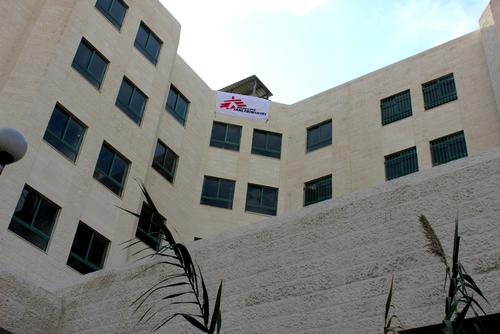
Médecins Sans Frontières (MSF) officially opened its newly upgraded reconstructive surgery hospital in Amman, Jordan. Project Update - 24 Sep 2015
Four mothers posing in a corridor of the Hospital in Bili. All four of them are staying in the hospital with their child, that's suffering from a severe case of malaria. Since the beginning of the project in 2016, the pediatric ward already treated more than 4.000 cases of complicated/severe form of malaria.
Médecins Sans Frontières (MSF)

Independent medical humanitarian assistance

We provide medical assistance to people affected by conflict, epidemics, disasters, or exclusion from healthcare. Our teams are made up of tens of thousands of health professionals, logistic and administrative staff - most of them hired locally. Our actions are guided by medical ethics and the principles of independence and impartiality. We are a non-profit, self-governed, member-based organisation.

Learn more