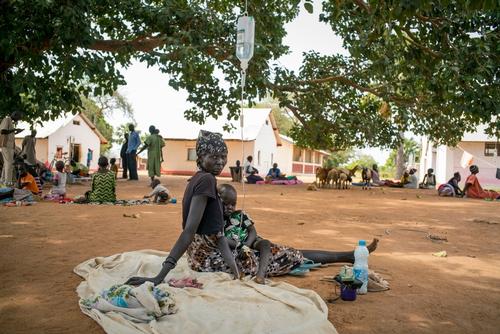
Three-year-old Atiel Akech lies in his mother's lap in the yard outside the government-run (Ministry of Health) community health center at Aquem town, Aweil Center county. Patients here lie on mattresses outside, with IVs hanging from trees, because the wards have very few beds and it is very hot inside. Severe cases are supposed to be referred to the MSF hospital in Aweil city, a one-hour drive away. The center has a very low supply of ACT, and has rapid detection tests (RDTs) and quinine in stock. These should be given for free to patients; however, Achol Ariath, the little girl's mother, said that she had been asked to pay 10 SSP for the RDT, but she did not have the money. So Atiel was clinically diagnosed with malaria based on the symptoms she was experiencing: vomiting and fever. The nurse then told Achol to go purchase quinine from the pharmacy in town and bring it back to the health center so that it could be administered to Atiel intravenously. Atiel had no money for this either, so Achol was only given an IV of glucose. Achol has two children.  She lost three other children in miscarriages. Her family lives in Mayiel village, which is an hour's walk away. She first brought Atiel to the health center at Aquem yesterday. After receiving one IV treatment of glucose, she went home. They returned again today for another IV as Atiel is still quite sick. This doesn't come as a surprise if indeed Atiel is only receiving glucose intravenously, as the IV bottle indicates.  The hospital administrator said there was quinine in the IV, but Achol told us she hadn't been able to purcahse any and quinine wasn't noted on the bottle. Other patients at Aquem had stories identical to that of Achol and Atiel, indicating that patients who weren't able to afford the RDT test or malaria medication at the parmacy rate would receive no treatment. Even if Atiel were receiving a dose of quinine every day, the treatment would not be completely effective because quinine is supposed to be administered in three 8-hour doses in one uninterrupted 24-hour period.
© Diana Zeyneb Alhindawi

Searching for malaria care in South Sudan

© Diana Zeyneb Alhindawi
Ebola disease in DRC: find out how we're responding
Learn more

South Sudan’s Northern Bahr el Ghazal State sits in the remote northwestern corner of the country. It is South Sudan’s poorest state and it has only one full service hospital—a facility in the town of Aweil run by by Doctors Without Borders/Médecins Sans Frontières (MSF), in conjunction with the Ministry of Health—serving an estimated population of 1.2 million people.

The lack of health care in Northern Bahr el Ghazal is now painfully apparent, as an unprecedented malaria outbreak spreads throughout the region. Some people find treatment at community health centers near their homes, but the options are limited and plagued by drug shortages that force others to journey for hours or even days in search of care. MSF staff in Aweil treated more than 2,000 patients with severe malaria between June and September, but many patients arrived in critical condition due to the distances they had to travel.

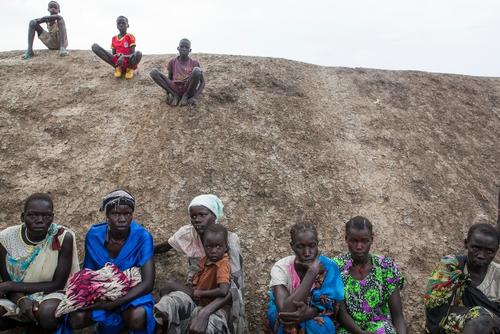
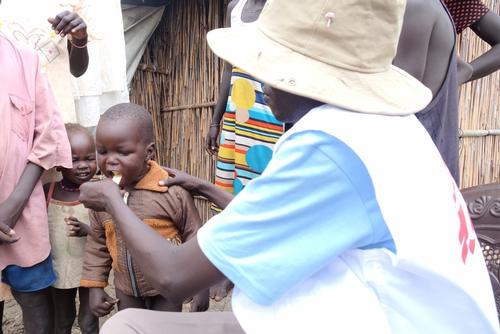
The images below make clear the consequences of living in a place where a disease outbreak can exploit a shortage of treatment options, and the lengths to which some people will go to get care for themselves and their families.