After years of working in Ciudad Juárez, northern Mexico, with a focus on addressing the needs of people on the move, Médecins Sans Frontières (MSF) teams are shifting response to serve the city’s residents and communities. The city, on the border with the United States, has not only served as a migration transit point; it is also a territory marked by chronic violence.
In response, our teams are implementing violence prevention activities and providing specialised care to displaced people, deportees, and local people. We are strengthening community support networks and promoting safer, more cohesive and resilient environments.
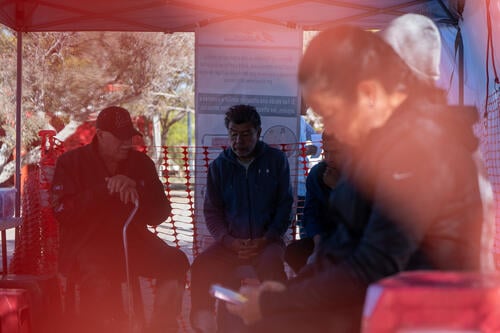
While working with people on the move, our response included providing care through mobile clinics. MSF teams have now broadened this model to include assistance to any survivor of violence in any of its forms, including extreme violence, sexual violence, and extortion.
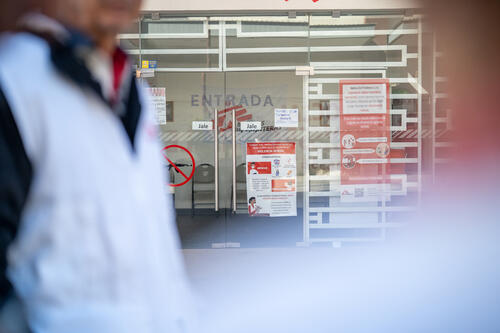
We have also opened a fixed point of care in Ciudad Juárez. The clinic and mobile clinics provide medical and mental health consultations.
“The data is clear: violence is the primary triggering factor in mental health consultations,” says Ricardo Santiago, MSF base manager in Ciudad Juárez. “We witness daily how the environment impacts the mental and physical health of entire families.”
The new model of care allows for closer and more continuous patient follow-up.
“We need to destigmatise mental health and recognise it as a fundamental human right,” continues Santiago. “We reaffirm our commitment to work alongside other groups to strengthen access to care for survivors of all forms of violence, ensuring they can access professional, free-of-charge services delivered under the strictest medical and confidentiality standards.”
We reaffirm our commitment to work alongside other groups to strengthen access to care for survivors of all forms of violence.Ricardo Santiago, MSF base manager in Ciudad Juárez
Between March 2025, when the project began, and January 2026, our teams provided 5,629 consultations, integrating mental health needs, basic healthcare, sexual and reproductive health, and social work services. The new facility serves patients from central Ciudad Juárez as well as nearby areas such as Plutarco and Anapra. We also engage with community groups in Riveras del Bravo and Talamás.
For MSF staff, addressing mental health in Ciudad Juárez requires recognising violence as a phenomenon that demands a broader social and community-based response.
“Our work is not only about treating a diagnosis; it is about validating the suffering and strengthening the resilience tools of the community”, says Nancy Morales, MSF psychologist. “We see patients who have faced chronic violence since childhood. These experiences can lead to structural changes in brain development and affect the ability to assess and respond to risk later in life.”