




Ebola disease in DRC: find out how we're responding
Learn more
8008 Results
 
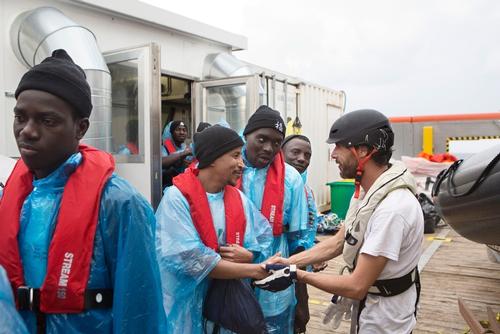
Marco, a logistician with Medecins Sans Frontiers (MSF) says goodbye to refugees and migrants as they disembark the  Bourbon Argos and are transferred to a Norwegian vessel.
Mediterranean migration

“The crossing is more deadly and infinitely more miserable”

The risk of boats capsizing is even higher than before with the sea conditions getting worse. People crossing through the Central Mediterranean in such circumstances are the most vulnerable and those who don't have choice. An interview with Sebastien Stein, Bourbon Argos Emergency Coordinator. Voices from the Field - 24 Nov 2015
 
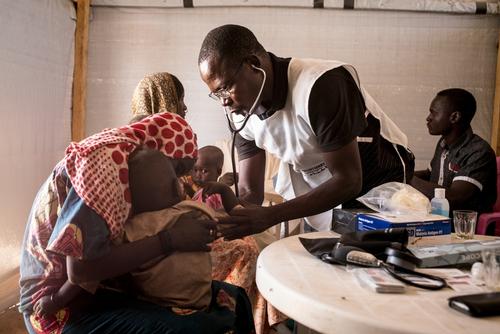
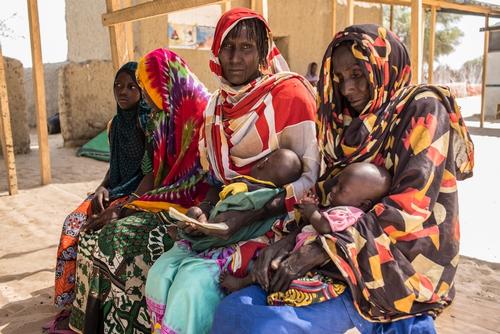
Situated in the Lake Chad region, the site of Koulkimé in Chad hosts approximately 1,800 displaced people according to OCHA. They have fled Islamic State's West Africa Province (ISWAP), also known as Boko Haram, as well as military operations carried out by the Chadian government.  MSF is working together with the Chadian Ministry of Health to support the primary health centre in Koulkimé.
Lake Chad Crisis

“The only certainty is that people will remain uprooted and continue to live in fear”

Interview with MSF Director of Operations in the Lake Chad region about the effect of continued attacks by the Islamic State’s West Africa Province (ISWAP) group, also known as Boko Haram. “In the Lake Chad area, we are seeing a regional crisis with large-scale humanitarian consequences. People continue to flee from violence, across borders and inside their own countries." Voices from the Field - 23 Nov 2015
 
msf-placeholder
Syria

MSF appalled that another supported hospital in Damascus area hit by missiles

At 2:30 pm local time on Thursday 19 November, an aerial attack was launched on Erbin, one of the besieged zones to the east of Damascus, Syria. Statement - 21 Nov 2015
 
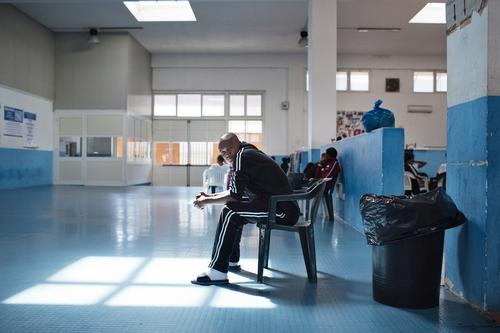
A 20-year old asylum seeker from Eritrea inside the CPSA (Centro di primo soccorso ed accoglienza – first reception centre) in Pozzallo. MSF operates inside the CPSA in Pozzallo, responding to the medical and humanitarian needs of migrants, refugees and political asylum seekers.
Mediterranean migration

Unacceptable conditions for migrants and asylum seekers in Pozzallo reception center, Italy

"A centre that has sanitation facilities that are often out of order, that does not offer an appropriate place to give treatments against scabies and where there is no guarantee of privacy, does not provide decent reception conditions," says Claudia Lodesani, MSF doctor and coordinator in Italy. "Today more than ever before, we need a reception system that takes into consideration the needs of those who have suffered traumatic experiences." Press Release - 20 Nov 2015
 
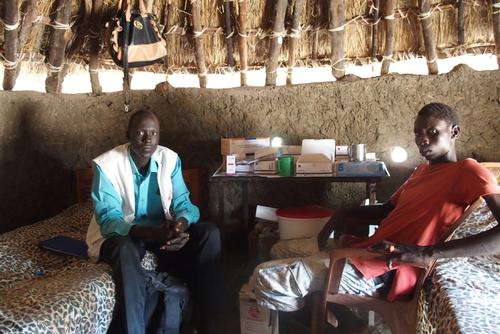
In the village of Rumbekdil, malaria agent Donato and community health worker Valentino start preparing to receive patients. Donato opens up his own home every day to the members of his village who come to seek treatment for malaria.
South Sudan

MSF tackles spike in malaria with help of local communities

An exceptionally severe malaria season is again hitting South Sudan’s Abyei region. But with few health facilities in this remote area, people with severe malaria often end up dying quiet deaths in their villages. MSF is working with local communities to put an end to preventable illness and deaths, with a community-based test and treat programme to provide early malaria treatment for people living in distant rural areas. Project Update - 20 Nov 2015
 
msf-placeholder
South Sudan

Activity Update, October 2015

Médecins Sans Frontières (MSF) employs more than 2,937 South Sudanese staff and 329 international staff to respond to a wide range of medical emergencies and provide free and high quality healthcare to people in need 18 projects in seven out of 10 states in the country and the Abyei Special Administrative Area. Project Update - 18 Nov 2015
 
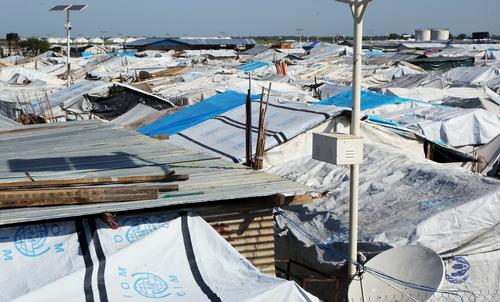
In the daytime it gets stifling hot inside these shelters, but the camp is so packed with thousands of tents and temporary shelters there is very little communal space. In the most
crowded section of the camp, there is less than 4.5 square meters of space per person, less than one seventh of the space required by minimum humanitarian standards. Only about half a square kilometre has been designated by the United Nations for the displaced population to live in, comprising a population the size of a small city.
South Sudan

Malakal, An Inadequate Refuge

The number of patients treated by MSF on a weekly basis in the UN Protection of Civilians Camp (PoC) in Malakal has tripled since June, as the health of the population sheltering in the camp is being jeopardized by overcrowding and substandard living conditions. Presently, almost 48,000 people are living in the Malakal PoC following an influx of more than 16,000 people in July and August. Many came from areas where humanitarian access was cut off by insecurity for months, forcing thousands to flee from conflict and hunger. Most people arrived with nothing. Photo Story - 18 Nov 2015
 
msf-placeholder
Burundi

MSF treats 60 people wounded in grenade explosions

60 injured people were treated by MSF at its trauma centre after grenades exploded in several Bujumbura neighbourhoods. Project Update - 18 Nov 2015
 
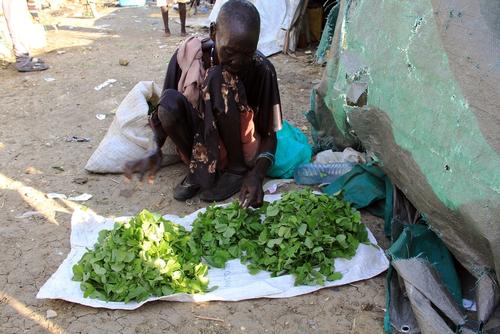
Women supplement the family’s diet with nutrient-poor greens know as Lum, a food source of last resort that is foraged by hand from outside the camp. Others, like this woman, sell their Lum at the market. This amount of greens fetches about six South Sudanese pounds.
South Sudan

"The root cause of these illnesses is overcrowding and sub-standard living conditions"

Each time the three-month-old exhales, it makes a rasping sound as her breath forces its way through her tiny, infected lungs. When the infant cries, her body contorts with the effort of breathing. Until recently, she’s been connected to an oxygen machine to support her breathing. Voices from the Field - 18 Nov 2015
Four mothers posing in a corridor of the Hospital in Bili. All four of them are staying in the hospital with their child, that's suffering from a severe case of malaria. Since the beginning of the project in 2016, the pediatric ward already treated more than 4.000 cases of complicated/severe form of malaria.
Médecins Sans Frontières (MSF)

Independent medical humanitarian assistance

We provide medical assistance to people affected by conflict, epidemics, disasters, or exclusion from healthcare. Our teams are made up of tens of thousands of health professionals, logistic and administrative staff - most of them hired locally. Our actions are guided by medical ethics and the principles of independence and impartiality. We are a non-profit, self-governed, member-based organisation.

Learn more