




Ebola disease in DRC: find out how we're responding
Learn more
280 Results
 
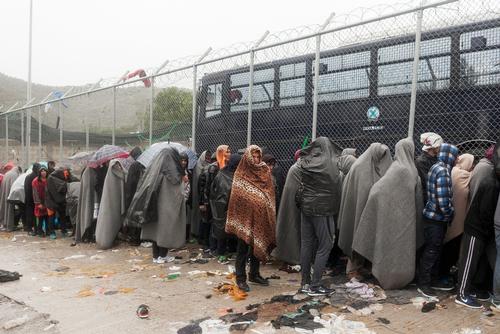
Refugees look through a fence during a rain storm as they wait to be registred at the Moria Reception Centre on Lesbos island.
Greece

As a doctor, I feel outraged

"I’m afraid that European citizens do not know what kind of outrageous deal their states have signed in their behalf. If they knew, they would feel ashamed, sick, angry and betrayed, just like I do," says Federica Zamatto, MSF Medical Coordinator for Migration Programmes. Voices from the Field - 15 Apr 2016
 
Khadija, 42, is a mother of four from Syria who is now detained on Samos island, Greece, along with her children. She spoke to MSF from behind two metal fences. 
“What is going to happen next? Will they kill us here in Europe? My husband was killed and our house was destroyed by a barrel bomb in 2013. Since then we have been moving from village to village looking for safety, until I lost hope and I brought my children to Turkey. I worked many jobs but it was so hard for me to manage with four children so I decided to come here to be safe. Yet here we are behind barbed wire like criminals, this is extremely unjust.
For more details see: https://lc.cx/4BCC
Greece

Will they kill us here in Europe?

Voices from the Field - 13 Apr 2016
 
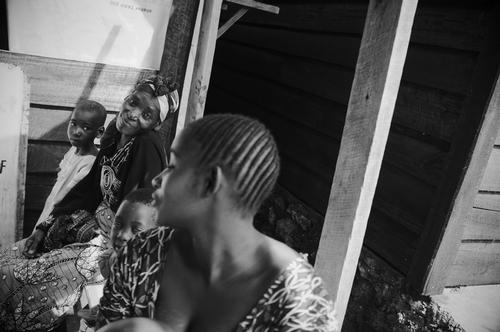
First time today a smile illuminates Jeanine’s face, when she sees her daughter has recovered from cholera Goma camps, March 1st 2016
Democratic Republic of Congo

Suffering has been a part of my life. But I fight. I'm still standing!

Jeanine’s story is not isolated case. It is representative of the incredible will and courage of many of the women of North Kivu, who fight every day to stay standing. Voices from the Field - 10 Mar 2016
 
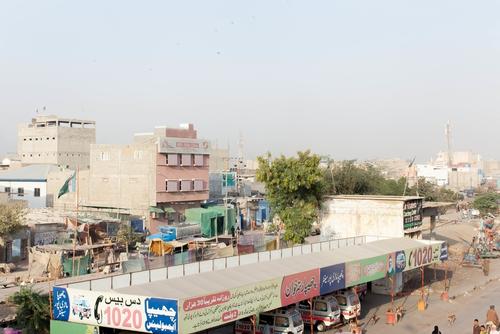
A view of MSF Machar Colony Clinic
Pakistan

When they are diagnosed with hepatitis C, patients think they will die

By Dr Muhammad Khawar Aslam, medical doctor for Médecins Sans Frontières in Karachi Voices from the Field - 9 Mar 2016
 
Between 600 and 620 families are living in the Fariya camp. (=3600 people).
1070 children under 5. Unofficial camp. Until our intervention, they had very little support. Latrines ACF, shleter by IOM. Most people are shuwa arab (ethnic group) coming from Marte. 
ACF just open an OPD on Monday. 
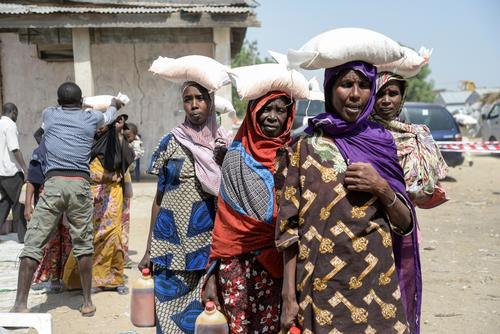
This was our second distribution there. 
300 living in 150 IOM shelters (2 families in 1 shelter). Others live in makeshift tents. 
People have been here for 10 months more or less. 
3 boreholes but only 1 working solar
Nigeria

After two years of crisis, what does the future hold for the displaced in Borno?

Interview with Isabelle Mouniaman-Nara, MSF programme manager in Nigeria Voices from the Field - 3 Feb 2016
 
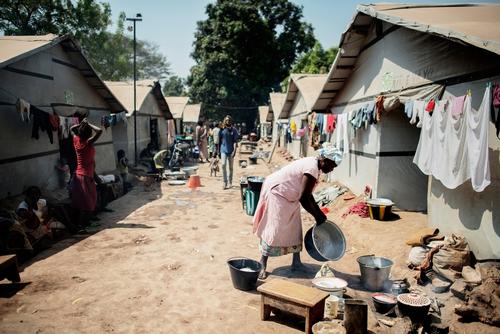
General view of a displaced persons camp in Benzvi, Bangui.
Central African Republic

No hope of returning home anytime soon

"The living conditions in the sites are very difficult. They live in tents built of waste tarpaulins that are full of holes," says Reims Pali, MSF Assistant Field Coordinator in CAR."They sleep on mats on the ground and are exposed to mosquitoes which may carry malaria. Unless the security situation gets better, they will have to stay here in these camps.” Voices from the Field - 27 Jan 2016
 
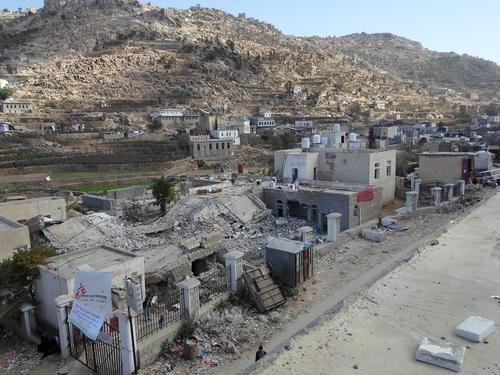
The Shiara hospital, an MSF-supported facility in Razeh district (Northern Yemen), was hit by a projectile in northern Yemen on January 10thm resulting in five deaths, eight injured and the collapse of several buildings of the medical facility. One of the critical injured victim, passed away on Sunday 17th after being transferred to the ICU at the MSF hospital in Saada. More than 130 health centres and hospitals have been affected by the conflict ravaging the country in the last ten months.
Yemen

Our patients and staff need to feel safe

Interview with Juan Prieto, general coordinator of MSF projects in Yemen Voices from the Field - 18 Jan 2016
 
msf-placeholder
Ebola and haemorrhagic fevers

End of Ebola outbreak in West Africa: World must learn lesson for future outbreaks

As Liberia celebrates 42 days without any new Ebola infections - effectively marking the end of the Ebola outbreak in West Africa - MSF calls on the global health community to draw on lessons learned in order to be better prepared for similar outbreaks in the future. Project Update - 14 Jan 2016
 
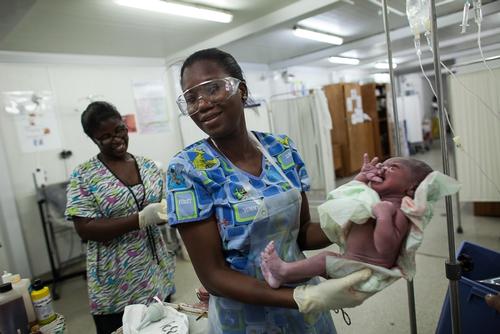
Midwife Judith Coissy holds a newborn of Cherline Pierre, 24, at MSF’s Centre de Référence en Urgence Obstétricale (CRUO) in Port-au-Prince, Haiti, October 16, 2015. She came in the hospital with 8 centimeters dilation and was admitted due to her high blood pressure.
Haiti

An unprecedented birth peak

Unprecedented numbers of pregnant women are seeking medical care at the Centre de Référence en Urgence Obstétricales (CRUO), a hospital in Port-au-Prince run by MSF focusing on complicated obstetrics, following funding cuts by international donors and limited Haitian government spending on healthcare. Photo Story - 8 Dec 2015
 
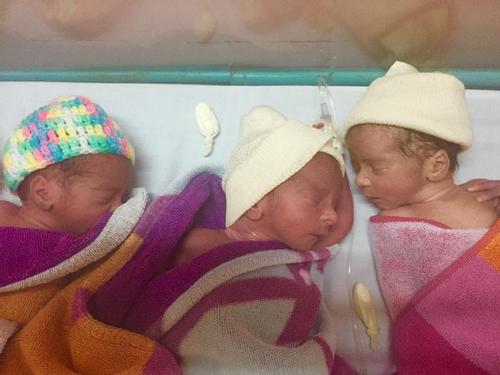
"One day, a woman arrived from Hangu, in the FATA area after a four hour-long drive. She had been referred by the MSF hospital there for "twins". She had already had four children, and when she arrived with her husband and her mother-in-law she was extremely tired, dehydrated and in early pre-term labour. After two weeks, thanks to our ultra sound machine, some specialised medication and the skill of our staff, we were able to plan a safe vaginal delivery and she gave birth to not two but three small but healthy babies from 1.5 to 1.7 kg, two boys and a girl. They stayed in our neonatal unit for another three weeks before finally being able to go home" Midwife Amy Le Compte with a new born in Médecins Sans Frontières (MSF) Women's Hospital in Peshawar.
Pakistan

Delivering healthcare to women and children in the communities

Amy Le Compte is a midwife from Gisborne in New Zealand. She just returned from a six- month assignment in MSF Women's Hospital in Peshawar, in the north of Pakistan where, along with daily maternity work, she supported the launch of a new community outreach program to enable access to quality maternity care for poor and marginalised populations. Voices from the Field - 25 Nov 2015
Four mothers posing in a corridor of the Hospital in Bili. All four of them are staying in the hospital with their child, that's suffering from a severe case of malaria. Since the beginning of the project in 2016, the pediatric ward already treated more than 4.000 cases of complicated/severe form of malaria.
Médecins Sans Frontières (MSF)

Independent medical humanitarian assistance

We provide medical assistance to people affected by conflict, epidemics, disasters, or exclusion from healthcare. Our teams are made up of tens of thousands of health professionals, logistic and administrative staff - most of them hired locally. Our actions are guided by medical ethics and the principles of independence and impartiality. We are a non-profit, self-governed, member-based organisation.

Learn more