



Ebola disease in DRC: find out how we're responding
Learn more
1392 Results
 
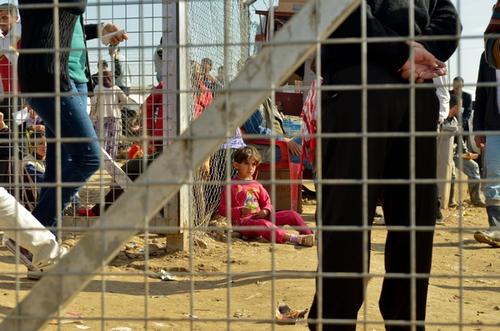
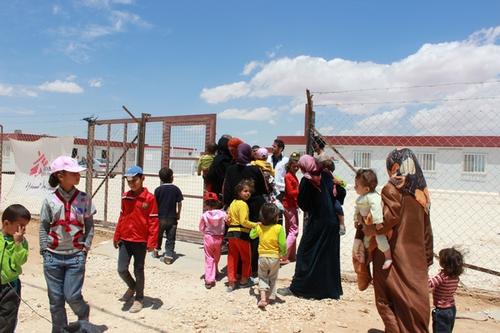
A little girl waiting against the gates of the camp registration center of Domiz. This week, more than 300 families and 650 individuals arrived in the camp.
Since May 2012, MSF is the main healthcare provider in Domeez refugee camp where more than 55,000 people have settled. MSF is providing humanitarian assistance to Syrian refugees in the camp through general health, mental health, and immunization. So far, MSF medical teams have held over 40,000 consultations.   MSF is also providing targeted hygiene kits for refugees, safe water supplies and efficient sanitation.  As well as following up the health situation in case of any emergency break ups in the camp.
Syria

MSF speech at the UN Syria donor conference

Speech delivered by Dr Mego Terzian, MSF president, at the UN donor meeting on Syria. Speech - 7 Jun 2013
 
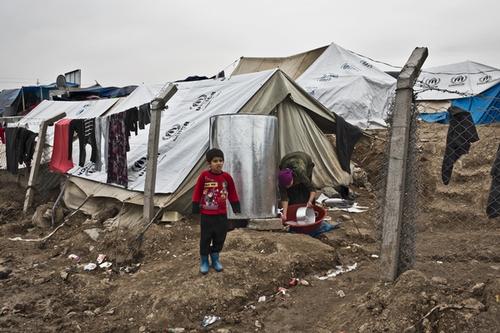
A Syrian Kurdish refugee stands in front of his tent home while his mother washes dishes in the Domeez camp in northwest Iraqi Kurdistan, January 25, 2013.  Most refugee families in the camp have water tanks and clean drinking water is regularly provided, although sanitation and hygiene are lacking in some parts of the camp.  Approximately 32,000 people who have fled conflict and economic insecurity in Syria live in Domeez.
Syria

Words must be turned into humanitarian action for Syrians

After more than two years of raging conflict in Syria, humanitarian assistance inside the country and in neighbouring states hosting Syrian refugees remains far below massive and growing needs. As the United Nations convenes in Geneva on June 7, MSF calls upon it and all relevant States to urgently increase the level of assistance to the Syrian population, and to fulfil their responsibilities towards the millions of victims of violence. Statement - 5 Jun 2013
 
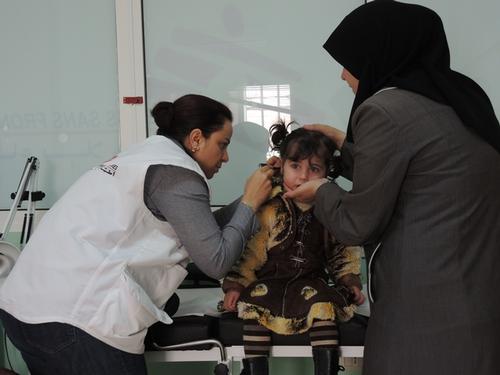
In the Dar-al-Zahraa clinic in Tripoli, Dr Maha Naja from MSF examines a Syrian little girl who came with her mother. 

Dr Maha Naja, MSF: “We see many cases of enuresis (bedwetting) amongst children. We also see a lot of dermatological diseases, like leishmania and scabies that is linked to bad hygiene and the confinement of families in very small living spaces.  We also see other parasitosis, affecting primarily children. There are also nutritional disorders and deficiencies because of the refugees’ big financial problems. As of June, we can expect many gastro-enteritis cases during the period of high humidity and heat, with parasitosis.”
Lebanon

Abundant medical needs among Syrian refugees and victims of local conflict

More than 10,600 Syrian families who have fled their country have taken refuge in Tripoli, Lebanon’s second-largest city, located approximately 30 kilometres from the Syrian border. Its population includes 500,000 Lebanese citizens, Palestinian refugees living in the Baddawi and Nahr el-Bared camps, and, now, more than 42,000 Syrians who have sought refuge in the city. Project Update - 4 Jun 2013
 
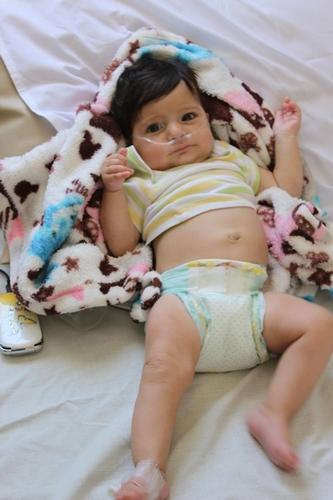
Mostafa is a seven month-old baby from El-Sheikh Miskeen, a small village near Dara’a. He arrived at Zaatari camp a month ago with his father, mother and other five siblings. Mostafa's mother was very concerened about her baby, she said:  “Ever since our arrival at Zaatari camp, my children have been constantly sick for different reasons. We brought Mostafa came to the MSF hospital because of a high fever. The doctors are still checking him up to see why he is so ill. Mostafa also suffers from asthma and has difficulties breathing because of the dust in the camp."
Syria

Syrian refugee narratives: "We had been trying to avoid leaving our country but eventually we had no other choice"

Mostafa is a seven month-old baby from El-Sheikh Miskeen, a small village near Dara’a. He arrived at Zaatari camp a month ago with his father, mother and other five siblings. Mustafa’s mother, Om Mostafa, shared their story with us. Voices from the Field - 30 May 2013
 
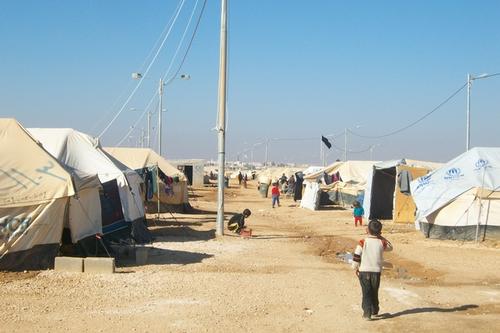
Zaatari Camp, close to the Syrian border, where over 100,000 Syria refugees reside.
Syria

Syrian refugees in Jordan: The limits of assistance

Nearly half a million Syrians are now refugees in Jordan, making up a third of the 1.5 million people who have fled the conflict in Syria to neighboring countries. More than 100,000 of them live in Zaatari camp, situated in the North of the country, less than 20 km from the Syrian border. Press Release - 30 May 2013
 
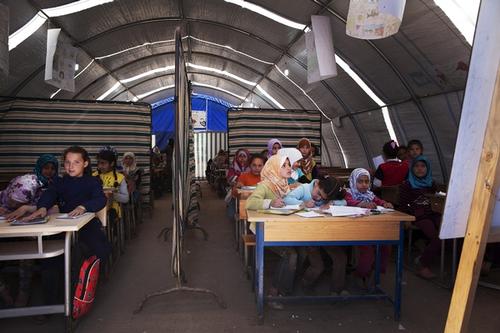
A school in a transit camp in Aleppo province, next to the Turkish border. Around November 2012, 4,000 displaced people were staying in this temporary settlement – in April 2013, there were around 10,000.
Syria

10,000 people at the gates of Turkey

MSF is working in a transit camp in northern Syria with a growing population - from 4,000 to 10,000 internally displaced people in half a year. Project Update - 21 May 2013
 
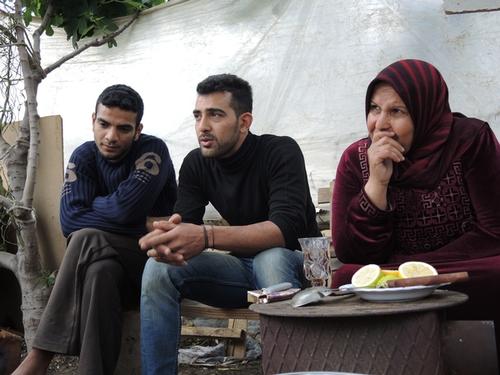
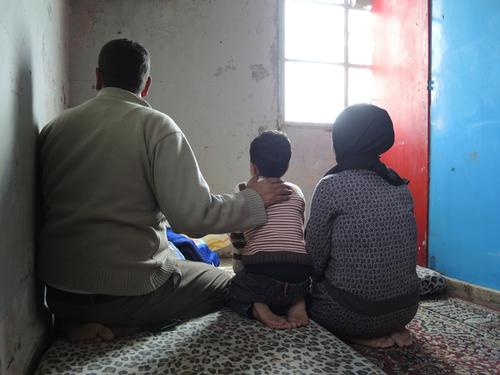
In a small house building, two families live in one room, separated in half: 
Mahmood, Siham and their son Mahmood (6) came from Syria 45 days ago. Mahmood lost two of his five children. “I’m very sad inside but I need to look strong. It’s very difficult. I used to live in Yarmouk camp, I was happy before the crisis started. I used to own a blacksmith shop and help people. But then the camp started to be bombed. My son disappeared. I searched for him everywhere but couldn’t find him. I’m sure he’s dead. One month later, my brother disappeared. I kept looking for them. Seven members of my family were killed by the bombings and shootings. We saw their mutilated bodies. I buried them myself. I also buried my neighbours. My two daughters told me to go to Lebanon, or I would get killed. They are searching for their brother. I don’t know where they live, but they say they are ok. As a Palestinian, I went to seek refuge in a Palestinian camp as I have no family in Lebanon. I have no news of the rest of my family, I’m sure they got killed and this is causing me a lot of sadness”.
Lebanon

From Syria to Ain el-Helweh: Alleviating the suffering of refugees in Saida

MSF runs a mental health program in Ain el-Helweh, in Saida, Lebanon. More and more patients are Palestinian refugees who fled Syria and suffer from a high level of trauma. Project Update - 17 May 2013
 
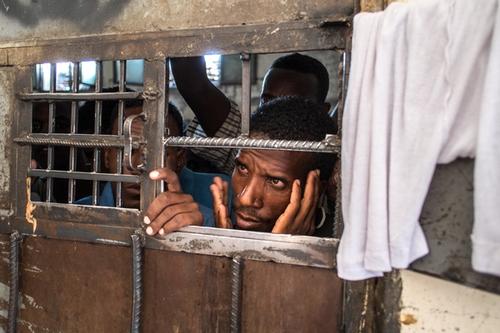
Migrants in the Sana’a detention center. In April 2013, Yemeni authorities started releasing migrants retained in illegal farms in the north of the country, while deportations from Saudi Arabia and the number of migrants that voluntarily wanted to return home increased. Migrants are transferred to a detention center in Sana’a, the capital of Yemen, where they wait to be repatriated to their origin country, mainly Ethiopia.
Yemen

Their dignity has been deeply wounded

Interview with Àngels Mairal, an MSF psychologist, who assisted freed migrants who had been detained on illegal farms, some of them victims of torture. Voices from the Field - 16 May 2013
Four mothers posing in a corridor of the Hospital in Bili. All four of them are staying in the hospital with their child, that's suffering from a severe case of malaria. Since the beginning of the project in 2016, the pediatric ward already treated more than 4.000 cases of complicated/severe form of malaria.
Médecins Sans Frontières (MSF)

Independent medical humanitarian assistance

We provide medical assistance to people affected by conflict, epidemics, disasters, or exclusion from healthcare. Our teams are made up of tens of thousands of health professionals, logistic and administrative staff - most of them hired locally. Our actions are guided by medical ethics and the principles of independence and impartiality. We are a non-profit, self-governed, member-based organisation.

Learn more