



Ebola disease in DRC: find out how we're responding
Learn more
431 Results
 
Refugees in northern DRC
Democratic Republic of Congo

Lives split over the Congolese border

Sébastien Jagla, MSF project coordinator in the north of Democratic Republic of Congo, describes the challenges to provide humanitarian assistance to Central African refugees, constantly on the move between two places and with no real home. Voices from the Field - 6 Apr 2018
 
Areti, 37-years-old from a village called Joo (Mahagoi) in Ituri province  
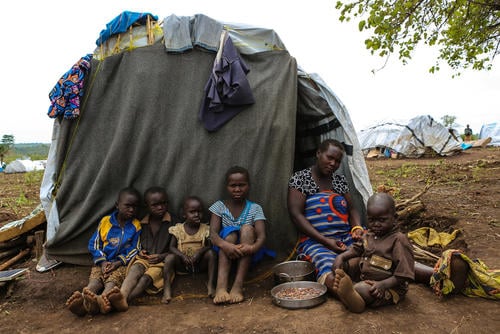
Areiti and six of her children have been in Mara Tatu camp in Uganda since February 2018. They are among the 57,000 people who have fled massacres in Ituri since mid-December 2017 for Uganda, crossing Lake Albert by boat. 

For her, the pain of exile is exacerbated by the fact that the violence separated her from her husband and one of her children. They hope to be reunited, though as the killings rage on in DRC, it is hard for her loved ones to find an escape route.

For now, she and her six children live in hope that their family will be whole again, as they try to forget the horrific scenes they witnessed.
Democratic Republic of Congo

The daily struggles of Ituri’s refugees

The attackers wore masks and used axes, machetes and guns to slaughter civilians in the Democratic Republic of Congo’s strife-torn Ituri province. Voices from the Field - 5 Apr 2018
 
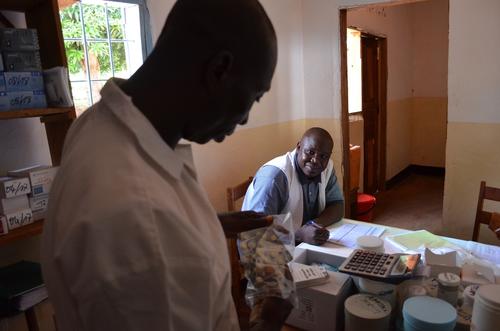
Nurse Pélé and a pharmacist in Mbalazime health centre do an inventory of the latest MSF supply delivery.
Central African Republic

“It was horrible leaving our patients behind when they needed us”

Pelé Hubert has worked in Bangassou, Central African Republic as an outreach nurse supervisor for MSF since 2015. Voices from the Field - 31 Jan 2018
 
Old Fangak, South Sudan, the river gate of the MSF hospital, through which patients arrived during mass casualty events.
South Sudan

“I left my namesake in Old Fangak”

Judith Elavian is a midwife from Kenya. She recently completed her first MSF assignment in Old Fangak, South Sudan. She shares the story of a patient she will never forget. blogs.msf.org - 23 Jan 2018
 
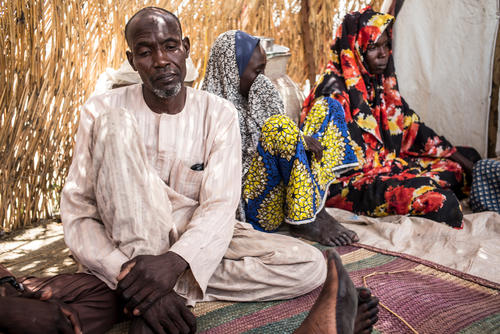
Mallan Ibrahim Kana, 43 years, (04.07.2017) from a village some 15 kms from Ngala. Fled twice before reaching Ngala camp. 

I arrived here with my family yesterday after walking for four days. We first left our village because of Boko Haram. For the past three years, there has been a lot of trouble. Boko Haram were outside our village and came to take our food and belongings. They took what we farmed and fished. They told us we could not go out at night. Many men have been killed in the village. We thought the military would come and bring security it didn't happen. Sometimes we heard planes dropping bombs outside of our village. I know people were injured in these bombings nearby. There was also fighting going on outside and we could not leave for fear of being caught up in the middle.
Life was very difficult and many people were sick and died. There is no hospital there and we could not go anywhere else. Most of the people in our village have fled. Many of them are here. We left empty handed and we have nothing.
Nigeria

“I feel ashamed of relying on others to live, but we can’t go home”

"People are stranded and in need of assistance. It is hard to see how their situation will improve in the near future." Voices from the Field - 17 Jan 2018
 
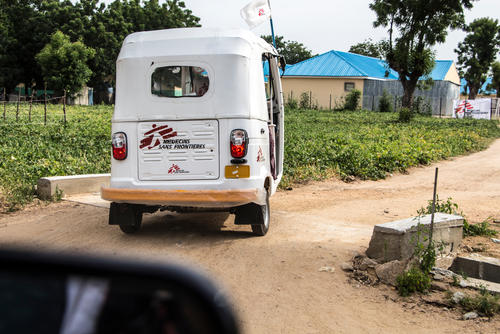
A keke napep carrying patients entering the MSF health centre in the Nigerian town of Gwoza. These three-wheeled vehicles, known as Keke napeps, are customised as makeshift ambulances to ferry patients from their homes to the MSF health centre.
Nigeria

No red lights to saving lives

Innovative use of small, three-wheeled vehicles to transport patients helps MSF overcome restrictions on movement in northeast Nigeria. Voices from the Field - 15 Jan 2018
 
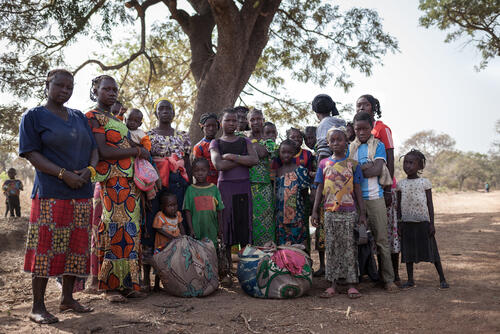
A group of women and children flee threats of attacks by an armed group on the town of Betoko, northwestern Central African Republic. On their way to the town of Paoua, they stopped in Beda village to share informations with the villagers. Beda, December 27, 2017.
Central African Republic

Thousands displaced by fighting north of Paoua

Those forced to flee tell of torched villages, extortion and indiscriminate attacks. Voices from the Field - 8 Jan 2018
 
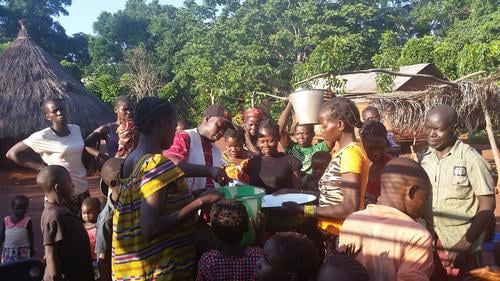
MSF staff distributing water to people who’ve been internally displaced by fighting in Zemio, CAR. They were among 7,000 people who have sought shelter at the local hospital.  
Just weeks after this photo was taken, On Tuesday 11 July, two armed men arrived at Zemio hospital in the southeastern region of CAR.
The men threatened a family, one member of which had been a patient two weeks earlier but had been unable to leave the premises due to ongoing violence. As three members of the family – including a woman holding her baby – attempted to seek cover, the armed men shot at them, striking the child in the head and killing her instantly. A month later, another armed group opened fire in the hospital. Thousand fled into the surrounding bush and across the border to DRC. The site now sits vacant and MSF has ceased its operations in the area, with no patients to treat and the safety situation for our staff remaining precarious.
Central African Republic

“The only people left in Zemio are those who couldn’t run away”

Recent attacks on Zemio, in southeast Central African Republic, have closed down the hospital and forced the city’s population, including MSF staff members, to flee. MSF medical coordinator Wil van Roekel describes the ramifications of the violence, including on some 1,600 HIV patients who need daily medication to survive. Voices from the Field - 9 Dec 2017
 
Auto mechanic, Holger Hornauf, in Bangui, Central African Republic, December 2017.
Central African Republic

My first week in Bangui: A warm welcome!

Holger Hornauf is a trained auto mechanic and in 2016 he went on his first assignment with MSF in the Central African Republic. One year later he’s back in Bangui as our workshop manager and is blogging about his experiences. blogs.msf.org - 7 Dec 2017
 
Joao Martins, general coordinator of MSF projects in Angola.
Angola

“People in the camp had one goal – to stay alive”

People were highly emotional and in shock: many had lost family members to extreme violence or had become separated from family members as they ran away. Many children arrived at the camps alone. Voices from the Field - 6 Nov 2017
Four mothers posing in a corridor of the Hospital in Bili. All four of them are staying in the hospital with their child, that's suffering from a severe case of malaria. Since the beginning of the project in 2016, the pediatric ward already treated more than 4.000 cases of complicated/severe form of malaria.
Médecins Sans Frontières (MSF)

Independent medical humanitarian assistance

We provide medical assistance to people affected by conflict, epidemics, disasters, or exclusion from healthcare. Our teams are made up of tens of thousands of health professionals, logistic and administrative staff - most of them hired locally. Our actions are guided by medical ethics and the principles of independence and impartiality. We are a non-profit, self-governed, member-based organisation.

Learn more