Ebola disease in DRC: find out how we're responding
Learn more
431 Results
 
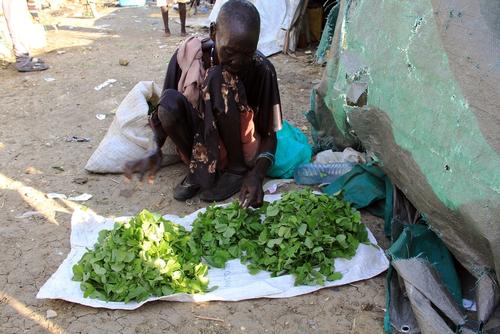
Women supplement the family’s diet with nutrient-poor greens know as Lum, a food source of last resort that is foraged by hand from outside the camp. Others, like this woman, sell their Lum at the market. This amount of greens fetches about six South Sudanese pounds.
South Sudan

"The root cause of these illnesses is overcrowding and sub-standard living conditions"

Each time the three-month-old exhales, it makes a rasping sound as her breath forces its way through her tiny, infected lungs. When the infant cries, her body contorts with the effort of breathing. Until recently, she’s been connected to an oxygen machine to support her breathing. Voices from the Field - 18 Nov 2015
 
Agnes, 30, and her husband escaped Eritrea with the aim of reaching Europe. Unable to raise enough money for both their journeys, her husband was forced to stay in Sudan, and Agnes and her two-year-old daughter continued alone.

“I left Eritrea four years ago with my husband. My husband was made to serve in the army, and he couldn’t provide for us. If he left the army, he’d be put in jail. Many people go to jail for no reason in Eritrea. 

When we left we went to Sudan. We spent three years going from place to place, looking for work and trying to make enough money to come to Europe. Finally we made a bit of money, but it wasn’t enough for all of us, so I left with my daughter. My husband couldn’t come with us. 

Crossing the desert between Sudan and Libya was very difficult. It took seven days, non-stop, in an overcrowded car. 

After crossing the border, we moved from one town to the next until we arrived in Tripoli. We travelled in containers, like animals or objects. It was very dark and hot in the containers. Many people fainted because of the heat and some died. 

Libya is a very dangerous place. There are a lot of armed people. Some of them are Da’esh [Islamic State]. They kill a lot of people and carry out a lot of kidnappings. 

When we arrived in Tripoli they put us in a house with 600 to 700 other people and locked us in. We had no water to wash ourselves, we had very little food and we were forced to sleep one upon the other. It was very difficult for my daughter – she fell sick many times. 

There was a lot of violence. I was beaten with bare hands, with sticks, with guns. If you move, they beat you. If you talk, they beat you. We spent two months like that, being beaten every day. 

They asked us to pay to go to Europe, so I paid US$1,700 for me and my daughter. We were lucky because women and children were put on the deck of the boat. The people below were in the dark and it was really hot down there. I could hear some of them saying they couldn’t breathe.

I knew that the journey would be very dangerous and difficult, especially for my daughter. But what was the alternative? We could not survive in Eritrea or Sudan. Our government does not allow people to leave. With our documents in Eritrea, there was no other way for us to get to Europe.”

ENDS
Mediterranean migration

"The only way you can leave is by sea"

Testimonies collected during search and rescue operations in the Mediterranean. Voices from the Field - 11 Nov 2015
 
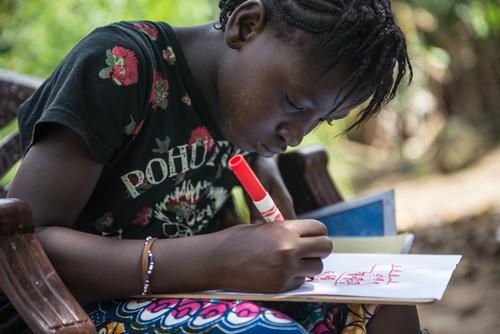
Ebola survivor Isatu Tholley draws a picture during a counseling session as part of a MSF outreach mission to treat survivors of Ebola. Many Ebola survivors still suffer from physical, social and psychological problems after beating the virus. Isatu lost her father to Ebola and has been left with eye problems. Kumrabai, Sierra Leone, 3/11/2015.
Ebola and haemorrhagic fevers

“Science should be at the service of survivors”

Sierra Leone may be declared Ebola-free in early November, but caring for the country's 4,051 Ebola survivors remains a big challenge. Many survivors report joint pain and vision problems. Voices from the Field - 7 Nov 2015
 
MSF is working in the district hospital of Degahbour. Medical help is provided in the fields of Tuberculosis, malnutrition for children under five, maternity and in the emergency room of the hospital.
Ethiopia

"I don’t want to go without my baby!"

One woman’s bravery secures her a safe birth Voices from the Field - 16 Oct 2015
 
msf-placeholder
Mediterranean migration

Alhassane Zaharia from Benin

Alhassane Zaharia from Benin, on board of Dignity I, talks about his journey to Europe: "This journey is too dangerous. Even now I still don´t have enough courage to look at the sea." Voices from the Field - 15 Oct 2015
 
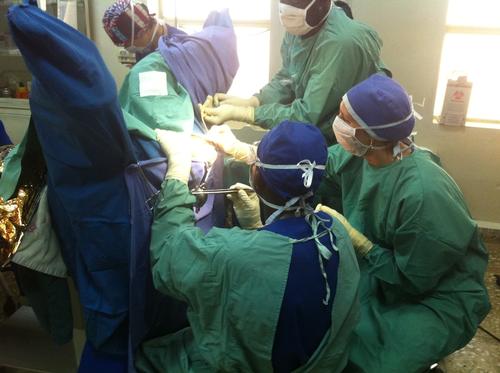
Senior VVF surgeon Dr. Said and VVF Nurse Manager Kate Norgang discuss a VVF repair. Dr. Said is an avid teacher; all staff involved with the VVF program learns from him on a regular basis.
Nigeria

“Providing a safe childbirth to Nigerian mothers”

Interview with Dr Sivapalan Namasivay, MSF anaesthesiologist, back from Jahun Hospital in the North of Nigeria, where MSF is responsible for maternity care. Voices from the Field - 30 Sep 2015
 
msf-placeholder
Central African Republic

MSF brings medicines and basic care to a remote area in the north-eastern province of Vakaga

“When we arrived the first week of September we found a very precarious situation as regards healthcare,” said the MSF's head of the medical intervention, Chiara Domenichini. “The community provided us with mortality data that were very alarming, more than twice what is considered an emergency situation.” MSF's emergency team in CAR has carried out a brief intervention in the remote north-eastern province of Vakaga, where humanitarian aid has been scarce despite the clear effects of years of conflict and displacement and the shortage of health resources in the area, which is home to about 70,000 people. Voices from the Field - 28 Sep 2015
 
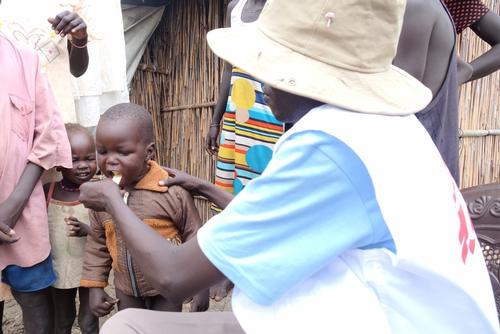
MSF outreach working Paulino goes door-to-door providing malaria treatment to children between the ages of 6 months and 5 years. The malaria medicine is crushed and mixed with RUTF to help the children eat it.
South Sudan

Testimonies from malaria patients & staff during mass malaria campaign in Bentiu PoC

“Seeing this suffering motivates me to work very hard,” Paulino says. “I am very proud of the work we are doing.” He’s one of 210 community health workers congregated next to an MSF clinic inside the crowded displaced persons camp, ready to respond to a devastating outbreak of malaria. Voices from the Field - 21 Sep 2015
 
msf-placeholder
Greece

Testimonies from refugees and staff in Lesbos

Refugee testimonies and MSF emergency team member testimony, Lesbos, Greece. "Now, for the first time, I feel like I am really human. This is the first time that someone has taken care of me," says Mohamed, a Syrian refugee. Voices from the Field - 4 Sep 2015
 
Bruno Duchenne Belgian Head of Mission Burundi speaks French and English
Burundi

“We treat anyone who is injured, whatever their politics.”

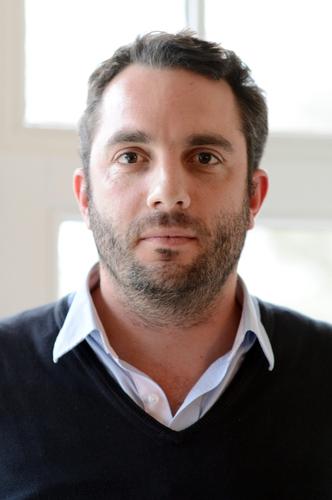
"Wounded patients often fear for their safety in medical facilities, so it is essential to create a place of sanctuary for them, where there is no discrimination," says Bruno Duchenne, MSF Head of Mission in Burundi. "We treat anyone who is injured, whatever their politics." Voices from the Field - 25 Aug 2015
Four mothers posing in a corridor of the Hospital in Bili. All four of them are staying in the hospital with their child, that's suffering from a severe case of malaria. Since the beginning of the project in 2016, the pediatric ward already treated more than 4.000 cases of complicated/severe form of malaria.
Médecins Sans Frontières (MSF)

Independent medical humanitarian assistance

We provide medical assistance to people affected by conflict, epidemics, disasters, or exclusion from healthcare. Our teams are made up of tens of thousands of health professionals, logistic and administrative staff - most of them hired locally. Our actions are guided by medical ethics and the principles of independence and impartiality. We are a non-profit, self-governed, member-based organisation.

Learn more