


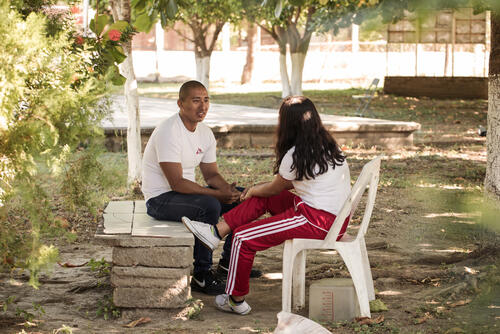
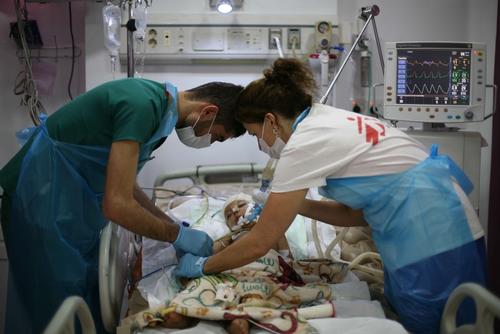
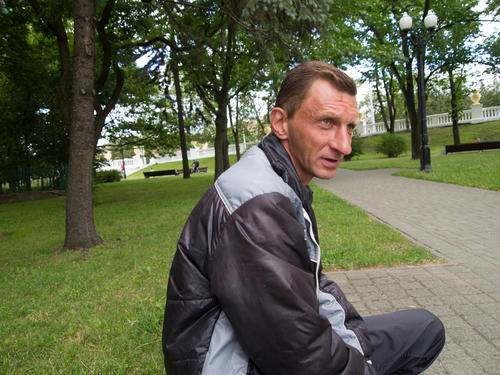
Yury, Bielorrússia
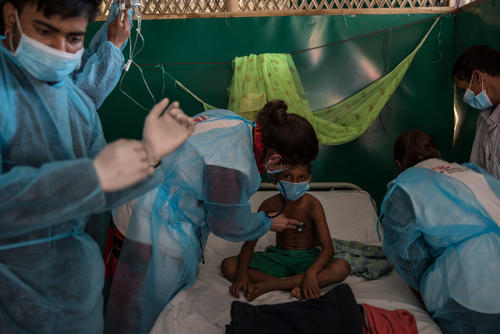
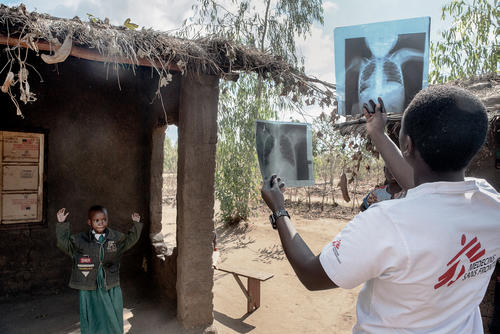
Yury, 38 anos, foi o primeiro paciente a concluir o tratamento no programa de TB de MSF na Bielorrússia, realizado em estreita cooperação com o Ministério da Saúde. Yury descobriu que estava doente em 2013. “Eu me senti fraco. Eu estava perdendo peso. Então eu tive febre. Fui à policlínica pensando que era um resfriado comum ”. Depois de saber o que era, Yury teve muito medo de mencionar a doença pelo nome - não tanto por sua vida ou saúde, era mais pela reação das outras pessoas. "Eu pensei que tudo estava acabado, que todo mundo se afastaria de mim."
Quando MSF estabeleceu o programa de tratamento em 2015, Yury vinha combatendo a doença há dois anos e foi diagnosticado com TB extensivamente resistente a medicamentos. "Meus médicos me disseram, 'esta é a única oportunidade' Eu estava ficando pior e pior”, disse. Yury concordou em ser admitido para tratamento em MSF. “Comecei a melhorar imediatamente: não me sentia melhor, não tinha apetite, mas os exames, os raios X - todos ficaram surpresos! Já em outubro eu tinha exames 'limpos' (negativos). Tudo estava limpo.
“Você certamente se cansa em dois anos. O que dá para fazer? Se não fosse por esse tratamento, eu não estaria falando com você aqui, agora. ”
BM*, República Democrática do Congo
“Vivemos em uma aldeia no território de Walikale. Certa noite, vi homens armados em minha casa - não sei como eles entraram. Assim que os vi, peguei meus dois filhos mais novos e tentei me esconder debaixo da cama. Meu filho de oito anos tentou fazer o mesmo, mas os homens atiraram nele. A bala o atingiu no peito e ele caiu ao lado da cama, morto.
Eles dispararam em direção à cama onde estávamos escondidos. Meus filhos de dois anos e quatro anos foram atingidos por balas. Eu gritei: 'Você está me matando e a todos os meus filhos', e eles responderam: 'Tudo que você tem a fazer é morrer!'
Caminhei por uma hora com meus filhos para um posto de saúde e, em seguida, a ambulância de MSF nos levou ao hospital geral de referência de Masisi, onde eles foram tratados. Eles estão um pouco melhor agora. Espero que eles possam esquecer este trágico incidente. Até agora eles não falaram sobre isso."
*Nome da paciente alterado
Dr Innocent, República Democrática do Congo (RDC)
Você acha que se tornar médico é difícil? Imagine fazê-lo em uma zona de conflito, em uma das áreas mais perigosas e remotas da RDC.
Os pais do dr. Innocent eram analfabetos, mas isso não o impediu de sonhar alto. Ele tem apenas 32 anos, mas já é médico e o primeiro homem congolês a liderar uma equipe de emergência de MSF em Kivu do Sul, uma das províncias mais problemáticas do Congo.
Assista ao vídeo sobre sua história, aqui.
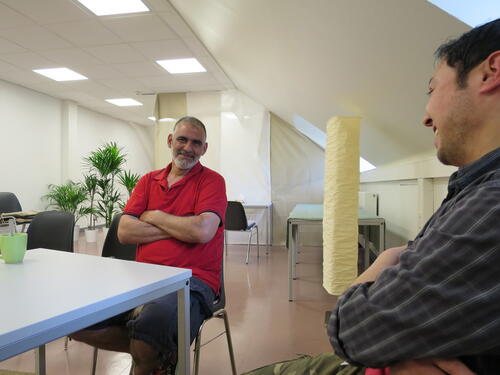
Desde que fugiu de Aleppo, há quatro anos, a busca de Yassin e sua família por uma vida pacífica os levou através da Síria, Líbano, Turquia e pela União Europeia (UE). Em Atenas, um médico de MSF que tratou a esposa de Yassin por problemas mentais disse que ele também precisava de ajuda.
Yassin e sua família agora vivem no centro de acolhimento de requerentes de asilo em Schweinfurt.
“Hoje sei que a saúde mental é importante, mas estive despedaçado. Na Síria, as pessoas acreditam que quem vai ao psicólogo é louco. Mas percebi que precisava de ajuda.
As conversas com os conselheiros aqui me fazem bem. Ajuda quando alguém me escuta. Eu gostaria de aprender alemão e trabalhar como motorista de caminhão novamente. Mas não é fácil para mim. Recentemente, tenho estado muito esquecido e confuso.
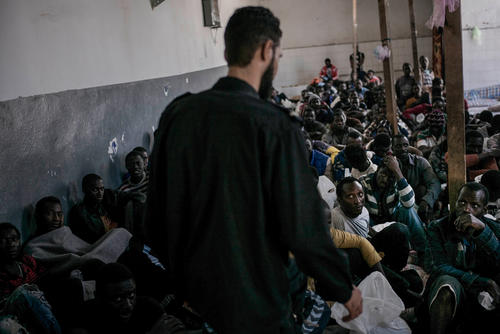
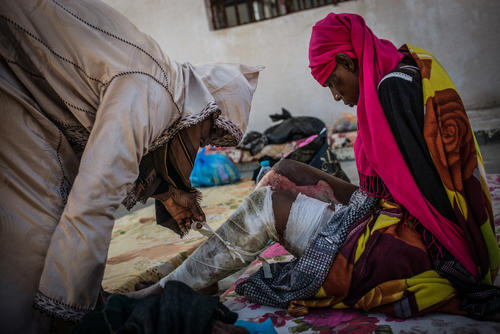
Mulher anônima, Líbia
"Eu não sei o nome dela ou mesmo se ainda está viva."
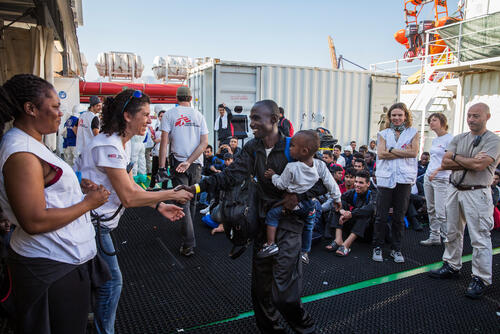
"Ela fazia parte de um grupo de mulheres detidas no pátio de um centro de detenção a cerca de 60 quilômetros a oeste de Trípoli", disse o fotojornalista Guillaume Binet, que teve acesso a vários centros de detenção na Líbia. "Eles foram interceptados no mar pela guarda costeira Líbia enquanto tentavam chegar à Europa. Muitos tiveram queimaduras graves nas pernas. A água do mar espirrava nas laterais do bote de borracha e reagia com o combustível derramado no chão do barco onde as mulheres estavam sentadas.
Eu não sei o que aconteceu com a mulher do lenço rosa. Mas, sem os cuidados médicos de que ela tão desesperadamente precisava, duvido que ainda esteja viva.
“Por 29 anos, eu sofri abuso físico e mental nas mãos do meu marido.”
Eu fiquei com ele porque, em nossa cultura, nós respeitamos os desejos de nossos pais. E minha mãe achava que eu iria humilhá-la se o deixasse. Em 2014 e 2015 eu perdi minha mãe, minha irmã e meu irmão. Minha vida desmoronou. Eu não podia mais encarar minha casa, mas não tinha outro lugar para onde ir.
Nas ruas de Boitekong, encontrei uma profissional de saúde de MSF chamada Rosina, que me falou sobre o atendimento a sobreviventes de violência sexual no centro de atendimento Kgomotso, no centro comunitário de saúde de Boitekong. Pedi emprestado 20 rands (US$ 1,70) e peguei um táxi até o centro, onde fui aconselhada e depois levada até um um abrigo para mulheres e crianças vulneráveis.
Sinto-me forte agora e pronta para sair do abrigo. Se uma mulher abusada ouve a minha história, quero que ela saiba que eu costumava esconder meus problemas e que se você não procurar ajuda, eles podem matar você por dentro. Chegar a uma clínica e conversar com um conselheiro salvou minha vida ”.
![For 29 years Poppy Makgobatlou endured physical and mental abuse at the hands of her husband. She stayed with him because “in our culture, we respect the wishes of our parents, and my mother felt it would humiliate her if I left him”. Makgobatlou’s sister passed away in 2014, and when her mother fell ill a few months later, “things started to get out of control in my life.”
Her husband began removing items from the house one by one – where he was taking their things she did not know.
“He would just come and go, and when he was home he would fight me. He broke my shoulder, and the doctors tell me it is still broken.”
In 2015 Makgobatlou lost her brother.
“I remember what hurt the most, besides the beatings, was taking my brother to the hospital on the Saturday, and my husband was nowhere to be found. He came back home on the Monday, but only to ask for my wedding ring. I told him I did not know where it was, and when he left the house he said he was going to kill me when he returned. Around 2pm I received a call from the hospital to say that my brother had passed on - they wanted to know which mortuary they should take his body to,” she recalls.
After her brother’s funeral Makgobatlou lived with her sister’s two daughters for a time, unable to face her home. She received a summons for divorce from the Sherriff of the court, and learned that her husband was living with another woman. She received a divorce decree on the same day as her nieces kicked her out. Earlier in the week on the streets of Boitekong she had met a healthcare worker from Doctors Without Borders, who had told her about the Kgomotso Care Centre (KCC) at Boitekong Community Health Centre. With nowhere else to turn Makgobatlou borrowed R20, and caught a taxi to the KCC, where she was counseled and then transported to the Grace Help Centre near Mooinooi, which provides shelter for vulnerable women and children.
“What I liked about the KCC counselors is that they did not dump me. Even now they visit if they are in the area. I can feel that I am strong now, and ready to leave the shelter. I have no money but I do not need much – I want to know what it is like to live on my own in a little mokhukhu [shack], with just one plate and one cup – that will be fine for me,” she says
Asked if she would like her name to be changed to preserve her anonymity, Makgobatlou emphatically says, “No!”
“If an abused woman hears my story, I want them to know that I, Poppy Makgobatlou, used to hide my problems, but it kills you from inside to do that. You must speak out.”
* Médecins Sans Frontières/Doctors Without Borders (MSF) has been working with the North West Provincial Department of Health since 2015 to capacitate designated facilities on the platinum belt as ‘Kgomotso Care Centres’, providing a complete essential package of medical and clinical forensic services to survivors of sexual violence.](https://img.msf.org/AssetLink/k60i2804fg2jaa0k2cj840gobi02bb71.jpg "Kgmotso Care Centre")
Bakhtilie Akhmadullova, Ucrânia
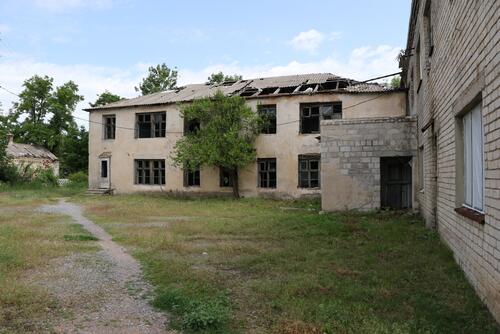
Bakhtilie, 73 anos, vive em granitne, uma aldeia na linha de frente da ucrânia oriental. Os dois filhos de bakhtilie e suas famílias tiveram que abandonar suas casas depois que foram danificadas pelas chuvas e os telhados desabaram.
Graças à ajuda de organizações da sociedade civil, eles estão lentamente reconstruindo suas casas, mas Bakhtilie continua a dormir vestida (com roupas de sair), por medo de que novos bombardeios possam forçá-los a se refugiar no porão escuro e estreito.
Após um pesado bombardeio em 2015, Bakhtilie começou a perder a voz e agora fala muito baixo. Ela não entende porque isso aconteceu. Bakhtilie também sofre de hipertensão e, para evitar uma deterioração de sua saúde, recebe aconselhamento médico e medicação em uma das clínicas móveis de MSF, que visita a aldeia duas vezes por semana.
Arzubay, Uzbequistão
Arzubay, 24, completou um tratamento de curta duração para tuberculose multirresistente (mdr-tb) em setembro de 2014 e agora não tem sinais ou sintomas da doença. Mas ele ainda se lembra de quando recebeu o diagnóstico.
“Eu não queria acreditar. Eu queria ignorar o que o raio-X mostrava, dizendo que talvez eu tivesse engolido ar durante o exame. Eu enviei amostras de expectoração (fluido dos pulmões) duas vezes para análise laboratorial. Quando os médicos confirmaram o diagnóstico de TB, não tive mais como negar. A equipe médica me apresentou o tratamento simplificado, de curta duração, e disse que eu preenchia os critérios.
Eu comecei o tratamento em setembro de 2013. Fiquei muito feliz por me oferecerem este tratamento porque sabia que algumas pessoas lutavam com tratamentos de dois anos, com muitos efeitos colaterais, e que outras não tinham sequer opção de tratamento. Além disso, nove meses não pareceram tanto tempo nem me impediram de ajudar minha família nas tarefas diárias. Eu não tive que escolher entre sustentar minha família e me curar. ”
Joel*, Zimbábue
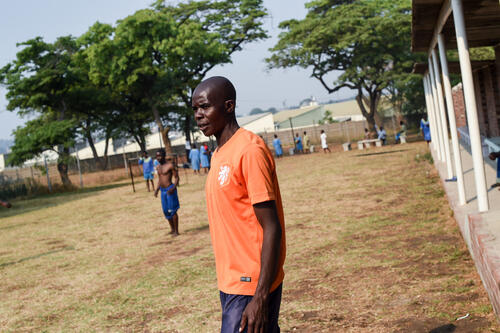
Joel estava trabalhando como faxineiro de uma empresa em harare quando, de repente, ficou muito violento no trabalho. Ele foi levado ao hospital e internado na unidade psiquiátrica para tratamento.
Quando ele finalmente voltou ao trabalho, percebeu que seus colegas sabiam que ele havia sido internado na unidade psiquiátrica. Eles começaram a olhar para ele. Ele se sentiu estigmatizado e acabou se demitindo.
"O estigma ainda é frequente na comunidade e até mesmo no local de trabalho", diz Joel. “Eu sempre vejo pessoas com doenças mentais na comunidade e isso realmente me dói porque eu percebo que elas não receberam o tipo de ajuda e assistência que eu recebi”.
Apesar do treinamento como soldador, Joel não conseguiu emprego porque as pessoas não queriam contratar alguém com histórico de doença mental. Ele finalmente foi contratado com a indicação de um psiquiatra.
A condição de Joel estabilizou-se devido à medicação que ele continua a tomar.
"Eu gostaria de pedir ao governo para ajudar pacientes com doenças mentais para que eles possam iniciar projetos de geração de renda", diz. "Se eles tiverem algo para fazer, vão se manter ocupados e isso vai evitar que abusem de substâncias que podem levá-los a uma recaída."
*Nome do paciente alterado