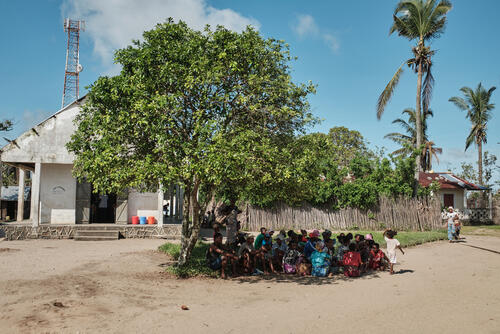
People waiting under a tree in the yard of the hospital in Nosy Varika which has been partially destroyed by the cyclones, as numerous health centres in this remote area, where people have very limited access to healthcare and other essential services.
MSF teams are supporting medical activities and rehabilitating the hospital, as well as 5 other health centres damaged by the cyclones.
People waiting under a tree in the yard of the hospital in Nosy Varika which has been partially destroyed by the cyclones, as numerous health centres in this remote area, where people have very limited access to healthcare and other essential services. MSF teams are supporting medical activities and rehabilitating the hospital, as well as 5 other health centres damaged by the cyclones.
© iAko M. Randrianarivelo/Mira Photo

Monthly Meetings - Climate Adaptation Community of Practice (CACoP)

People waiting under a tree in the yard of the hospital in Nosy Varika which has been partially destroyed by the cyclones, as numerous health centres in this remote area, where people have very limited access to healthcare and other essential services. MSF teams are supporting medical activities and rehabilitating the hospital, as well as 5 other health centres damaged by the cyclones.
© iAko M. Randrianarivelo/Mira Photo
Ebola disease in DRC: find out how we're responding
Learn more

MSF’s Climate Adaptation Community of Practice (CACoP) meets on the first Wednesday of every month.

This initiative underscores the urgent need to integrate climate resilience into humanitarian operations, as climate crises disproportionately impact vulnerable populations in MSF’s areas of work. Key priorities include:

  1. Proactive Adaptation: Embedding climate foresight into planning, adapting medical interventions to climate-driven health risks, and strengthening emergency preparedness with early warning systems.
  2. Knowledge & Capacity: Investing in MSF-specific training, research, and partnerships to address climate-aggravated crises and share localized solutions.
  3. Community-Centered Action: Collaborating with affected communities and revising operational guidelines to ensure contextually relevant, sustainable responses.

The vision aligns with MSF’s Environmental Pact, emphasizing adaptation as critical to maintaining effective, ethical humanitarian action in a rapidly changing world.

Please contact Léo Tremblay if you'd like to get involved.