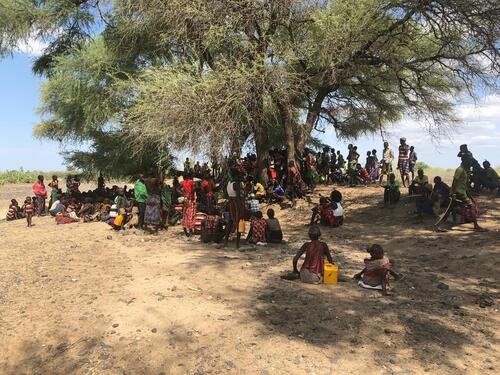
The floods prevent nomadic communities from reaching the places they usually go to sustain their living. The waters rose so fast that pastoralist communities had to leave their belongings and animals behind. Many families lost everything; their animals, their stores, their homes. Surviving cattle are now dying because the floods overflew grasslands and destroyed pasture.

Knowledge Generation

The floods prevent nomadic communities from reaching the places they usually go to sustain their living. The waters rose so fast that pastoralist communities had to leave their belongings and animals behind. Many families lost everything; their animals, their stores, their homes. Surviving cattle are now dying because the floods overflew grasslands and destroyed pasture.
© MSF
Ebola disease in DRC: find out how we're responding
Learn more
msf.lu

About operational research:

Issues related to climate change and health are at the heart of MSF's operations, and give rise to constant questioning as to the best practices to adopt in order to adapt to these changing contexts. In response to these questions, MSF's Luxembourg Operational Research Unit (LuxOR) is focusing on the integration of climate and environmental data into health surveillance, particularly in humanitarian contexts. LuxOR supports MSF teams in their operational research projects related to the environmental and health consequences of climate change. 

About capacity building:

MSF's Luxembourg operational research and epidemiology support unit (LuxOR) regularly organizes operational research training courses. In 2024-2025, a special session was organized on climate, environmental degradation and health (CEH). This training aims to strengthen the research skills of MSF teams and their partners in order to improve humanitarian response to environmental challenges. It has given rise to several research projects, the results of which should enable MSF to better adapt its operational response in these contexts.

For further information www.msf.lu/luxor


For further information, visit MSF LuxOR
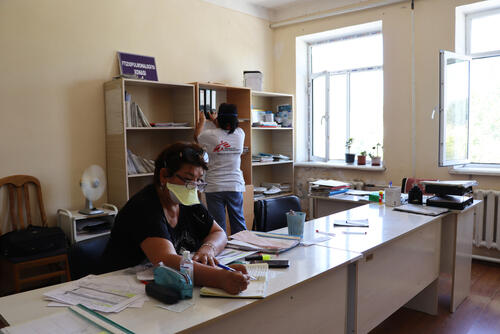
MSF staff in the TB consulting room at the Phthisiopulmonological (TB and lung diseases) department of Turtkul district hospital (Karakalpakstan, Uzbekistan). 
 
In Karakalpakstan, western Uzbekistan, MSF is focusing on the implementation of a comprehensive care programme for drug-resistant and drug-sensitive tuberculosis(DR and DS-TB), as well as conducting SMARRTT (Six-Month All-Oral Regimens for Rifampicin-Resistant Tuberculosis Treatment) operational research in close collaboration with the Ministry of Health. It is based on the successful results of the TB-PRACTECAL clinical trial. The trial proved that the new regimen was not only shorter, but safer and more effective at treating multidrug-resistant tuberculosis than the current options for people with drug-resistant TB (DR-TB). Based on this evidence the WHO included the new shorter regimen into updated DR-TB treatment guidelines.

MSF staff in the TB consulting room at the Phthisiopulmonological (TB and lung diseases) department of Turtkul district hospital. Uzbekistan, August 2023.

© Victoria Gendina/MSF

If you would like to share a research project linked to climate and environment, please contact Léo Tremblay, HACE Lead.